


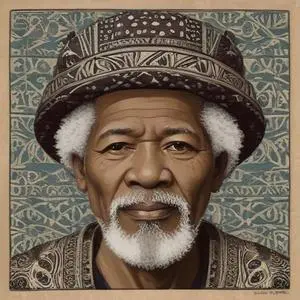
A Nigerian literary giant, renowned for his powerful writings that explore the complexities of African identity, culture, and politics. His works often blend traditional Yoruba mythology with modernist experimentation.
Wole Soyinka, the Nigerian playwright, novelist, poet, and essayist, is renowned for his profound literary works that have not only reshaped the African literary landscape but also garnered him the prestigious Nobel Prize in Literature in 1986. His writing, characterized by a unique blend of cultural perspective and poetic flair, has been hailed for its ability to "fashion the drama of existence."
Born on July 13, 1934, in Abeokuta, Nigeria, Soyinka hails from a Yoruba family and was raised in a culturally rich environment. He pursued his education at Government College in Ibadan, University College Ibadan, and later at the University of Leeds in England. This multicultural educational background would later influence his writing, which often explores the intersection of African culture and Western ideals.
A prolific writer, Soyinka's literary repertoire includes plays, novels, poetry, and essays that tackle complex themes such as identity, politics, and social justice. Some of his notable works include The Lion and the Jewel, The Trials of Brother Jero, and Death and the King's Horseman, which have been praised for their masterful storytelling and nuanced exploration of the human experience.
Soyinka's writing is deeply rooted in his philosophical beliefs, which emphasize the importance of social justice, human rights, and individual freedom. He has been an vocal critic of oppressive regimes, particularly in Nigeria and Africa, and has used his platform to advocate for democratic values and the protection of human dignity.
Soyinka's contribution to modern society extends beyond the literary world. He has been a beacon of cultural consciousness, inspiring many to engage in critical thinking and social activism. His influence can be seen in various aspects of pop culture, from music to film, with many artists drawing inspiration from his works.
Wole Soyinka's literary legacy is a testament to the power of words to shape our understanding of the world and ourselves. His writing has not only enriched African literature but has also contributed significantly to the global literary canon. As a cultural icon, Soyinka continues to inspire new generations of writers, thinkers, and social activists, ensuring that his impact will be felt for years to come.
Soyinka's literary style and philosophical beliefs are often compared to those of his contemporaries, including fellow African writers such as Chinua Achebe and Ngugi wa Thiong'o. While each has their unique voice and perspective, they share a common commitment to using literature as a tool for social commentary and critique.
Soyinka's personal relationships have played a significant role in shaping his writing and worldview. His friendships with writers and intellectuals, including Christopher Okigbo and Femi Oyeyemi, have influenced his literary style and philosophical beliefs.
Soyinka's life and work are deeply rooted in the historical context of Nigeria and Africa. His writing has responded to the complexities of colonialism, nationalism, and post-independence politics, providing a nuanced understanding of the African experience.
As Soyinka continues to write and engage with the world, his legacy is likely to endure, inspiring new generations of writers and thinkers. His influence will continue to be felt in literature, pop culture, and beyond, shaping our understanding of the world and ourselves.
95 Years Old
A renowned African literary voice, celebrated for his poignant and thought-provoking works that explore the complexities of Nigerian culture and the human experience.
Born in 1923
A South African writer and activist, known for her powerful novels and short stories that explored the complexities of apartheid and racial segregation. Her works often blurred the lines between politics and literature.
95 Years Old
A celebrated author and editor, renowned for crafting powerful, poignant novels that explore the African American experience, particularly the lives of black women, and the horrors of slavery and racism.
99 Years Old
A Colombian journalist and author who crafted magical realism, a literary style that blends fantasy and reality, and won the Nobel Prize in Literature in 1982. His works are known for their vivid storytelling and exploration of human experience.
79 Years Old
A celebrated author of magical realist fiction, known for provocative and imaginative novels that explore cultural identity, politics, and history. His writing often sparks controversy and debate.
Born in 1919
A Nobel Prize-winning writer who explored themes of politics, psychology, and social issues through novels, poetry, and plays, leaving a lasting impact on 20th-century literature.
86 Years Old
A Nobel Prize-winning author and academic, known for lyrical and poetic writings that explore the human condition, cultural identity, and the relationship between nature and humanity.
82 Years Old
A celebrated author of powerful, poignant stories and poems that explore the experiences of African American women, delving into themes of identity, oppression, and social justice. Her works are known for their emotional depth and lyrical prose.
