


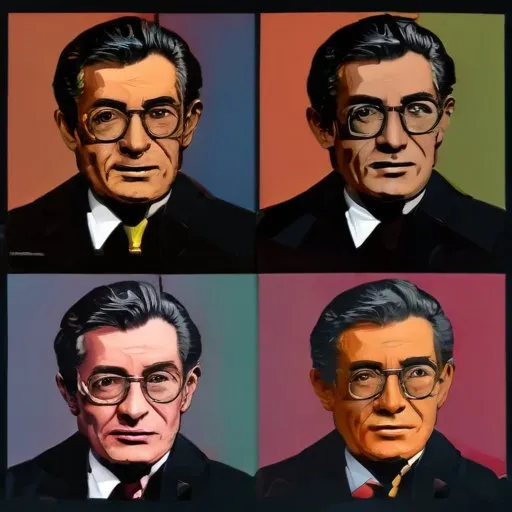
A Nobel Prize-winning author and academic, known for lyrical and poetic writings that explore the human condition, cultural identity, and the relationship between nature and humanity.
Jean-Marie Gustave Le Clézio, commonly known as J. M. G. Le Clézio, is a French-Mauritian writer and professor, celebrated for his rich and evocative literary works that embark readers on a poetic adventure, exploring the human experience beyond and below the reigning civilization. He was awarded the prestigious Nobel Prize in Literature in 2008, recognizing his lifetime contribution to the world of literature.
Le Clézio was born on April 13, 1940, in Nice, France, to a French mother and a Mauritian father of Breton descent. His family's cultural heritage is a fascinating blend of French, Breton, and Mauritian influences, which significantly shaped his literary identity. His father's ancestors fled France in 1798 and settled in Mauritius, then a French colony, where they maintained their French customs and language. This unique cultural background has had a profound impact on Le Clézio's writing, infusing his works with a distinct sense of diversity and multiculturalism.
Le Clézio's literary journey began with his debut novel, Le Procès-Verbal, published in 1963, which earned him the Prix Renaudot. This critically acclaimed novel marked the beginning of a long and illustrious career, with over 40 works that have captivated readers worldwide. Some of his notable works include Desert, The African, and Onitsha, which is partly autobiographical and reflects his experiences growing up in Nigeria.
Le Clézio's literary philosophy is characterized by a deep sense of humanism, empathy, and a quest for cultural understanding. His works often explore the complexities of human relationships, the struggles of identity, and the search for meaning in a rapidly changing world. Through his writing, he advocates for a more inclusive and compassionate world, where diversity is celebrated and cultural boundaries are bridged.
Le Clézio's personal life has been marked by a sense of wanderlust, with stints in Nigeria, England, and France, which have greatly influenced his writing. He holds dual French and Mauritian citizenship, reflecting his deep connection to both cultures. As a professor, he has taught at several prestigious institutions, sharing his knowledge and passion for literature with students worldwide. His literary legacy continues to inspire generations of writers and readers, solidifying his place as one of the most important literary voices of our time.
Today, Le Clézio's work remains a testament to the power of literature to bridge cultural divides, evoke empathy, and inspire understanding. His remarkable life and literary achievements serve as a beacon, illuminating the importance of cultural exchange, diversity, and human connection.
Born in 1905
Existentialist philosopher and playwright who argued that humans have complete freedom to choose their actions and create their own meaning in life, influencing modern thought on morality and individual responsibility.
Born in 1913
A French novelist, philosopher, and journalist who wrote influential works like "The Stranger" and "The Plague", exploring absurdism and the human condition.
Born in 1906
A pioneering absurdist writer who crafted avant-garde novels, poems, and plays that probed the human condition, often with dark humor and existential themes. His works are renowned for their complexity and influence on modern literature.
Born in 1910
A French writer and activist who explored themes of morality, sexuality, and social justice in his works, often drawing from his experiences as a thief and prisoner.
Born in 1926
A French historian and philosopher who critiqued power structures and social norms, arguing that knowledge and truth are shaped by those in power. He's known for his concepts of power, discipline, and surveillance.
Born in 1915
A French philosopher, theorist, and critic who challenged traditional notions of culture, literature, and identity through his influential writings on semiotics, mythology, and structuralism. He's most known for his critical theories on modern society and culture.
85 Years Old
A Bulgarian-French psychoanalyst and author who developed the concept of intertextuality, exploring the relationship between language, culture, and the human psyche. Her work has influenced literary theory, feminist thought, and cultural studies.
96 Years Old
A French sociologist, anthropologist, and philosopher who developed the concept of "cultural capital" and critiqued social inequality, highlighting how power and privilege are maintained through cultural and symbolic means.
