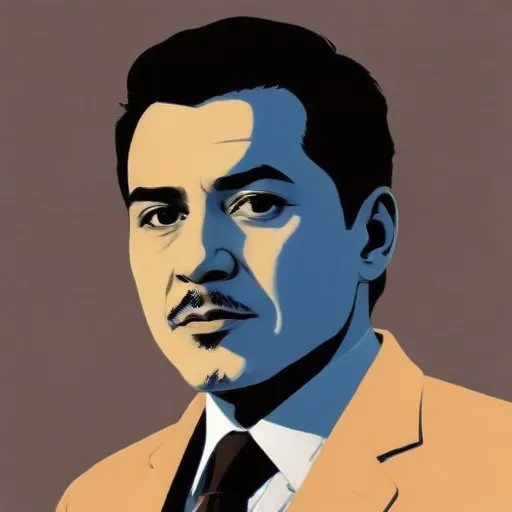
Daniel De Leon: The Father of Revolutionary Industrial Unionism
Daniel De Leon, a Curaçaoan-American socialist, politician, Marxist theoretician, and trade union organizer, is widely regarded as the forefather of revolutionary industrial unionism. He was the leading figure in the Socialist Labor Party of America from 1890 until his death in 1914, and his ideas and philosophy contributed significantly to the creation of Socialist Labor parties across the world.
Early Life and Academic Career
Born on December 14, 1852, in Curaçao, De Leon was the son of Salomon de Leon, a surgeon in the Royal Netherlands Army, and Sarah Jesurun De Leon. His family ancestry is believed to be Dutch Jewish of the Spanish and Portuguese community. De Leon's father died when he was just 12, and he left Curaçao in 1866 to pursue his education in Europe. He studied at the Gymnasium in Hildesheim, Germany, and later at the University of Leiden in the Netherlands, where he developed fluency in multiple languages, including German, Dutch, French, English, ancient Greek, and Latin.
Rise to Prominence
De Leon immigrated to New York in the early 1870s, where he found work as an instructor in Latin. However, it was his involvement in the socialist movement that propelled him to prominence. In 1890, he became the editor of the
Socialist Labor Party's newspaper,
The People, and soon became the party's leading figure. De Leon's unwavering commitment to Marxist theory and his advocacy for industrial unionism earned him recognition as a prominent socialist thinker.
Co-Founding the Industrial Workers of the World
In 1905, De Leon co-founded the Industrial Workers of the World (IWW), a radical labor union that aimed to unite all workers in a single, industrial union. The IWW's platform, which called for the abolition of the wage system and the establishment of a socialist society, was heavily influenced by De Leon's ideas. His involvement with the IWW cemented his status as a leading figure in the American socialist movement.
Philosophical Contributions and Beliefs
De Leon's philosophical contributions focused primarily on the concept of revolutionary industrial unionism. He believed that workers needed to organize themselves into industrial unions to challenge the capitalist system and establish a socialist society. De Leon's ideas were rooted in Marxist theory, and he saw the proletariat as the primary revolutionary force in society. His philosophical beliefs emphasized the importance of class struggle and the need for a socialist revolution to overthrow the capitalist system.
Influence on Modern Society
De Leon's influence on modern society is multifaceted. His ideas about industrial unionism and revolutionary socialism continue to inspire labor movements around the world. The IWW, which he co-founded, remains an active organization today, and its influence can be seen in labor movements across the globe. De Leon's philosophical contributions have also had a lasting impact on socialist thought, shaping the ideology of socialist parties and labor movements worldwide.
Personal Milestones and Key Life Events
- 1852: Born on December 14 in Curaçao
- 1865: Father Salomon de Leon dies
- 1866: Leaves Curaçao to pursue education in Europe
- 1870s: Immigrates to New York and begins working as a Latin instructor
- 1890: Becomes editor of The People and leading figure in the Socialist Labor Party
- 1905: Co-founds the Industrial Workers of the World
- 1914: Dies on May 11 at the age of 61
Legacy
Daniel De Leon's legacy extends far beyond his lifetime. His ideas about revolutionary industrial unionism continue to shape labor movements and socialist thought around the world. As the forefather of industrial unionism, De Leon's philosophical contributions have inspired generations of socialists, labor activists, and revolutionaries. His unwavering commitment to Marxist theory and his advocacy for industrial unionism have cemented his place as one of the most important figures in the history of the American socialist movement.
FAQ
What were Daniel De Leons key contributions to the labor movement?
Daniel De Leon was a Curaçaoan-American journalist and politician who made significant contributions to the labor movement. He was a key figure in the Industrial Workers of the World and played a crucial role in shaping the movements ideology and strategy.
How did Daniel De Leons views on socialism shape his labor activism?
Daniel De Leons views on socialism deeply influenced his labor activism, informing his critique of capitalism and his vision for a more equitable society. He believed that socialism was the key to achieving true economic and social justice for the working class.
What was Daniel De Leons role in the Industrial Workers of the World?
Daniel De Leon was a founding member of the Industrial Workers of the World and served as the organizations leading theorist and strategist. He played a key role in shaping the IWWs platform and was a charismatic speaker and writer who inspired countless workers to join the movement.
How did Daniel De Leon balance his passion for social justice with his commitment to democratic principles?
Daniel De Leon successfully balanced his passion for social justice with his commitment to democratic principles, recognizing that true social change must be achieved through democratic means and not imposed through authoritarian fiat.
What is Daniel De Leons legacy in the history of American labor?
Daniel De Leons legacy in the history of American labor is that of a tireless champion of the working class, a visionary thinker who helped shape the course of the labor movement and inspired generations of activists to fight for social justice.