


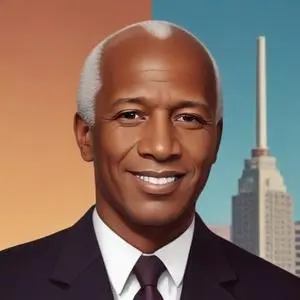
Leader of the Brotherhood of Sleeping Car Porters, pioneering the Civil Rights Movement through nonviolent protests and advocacy for African American workers' rights.
A. Philip Randolph, a pioneering labor unionist and civil rights activist, is renowned for organizing and leading the Brotherhood of Sleeping Car Porters, the first successful African American-led labor union. Through his tireless efforts, Randolph played a pivotal role in shaping the labor and civil rights movements, leaving an indelible mark on American history.
Born on April 15, 1889, in Crescent City, Florida, Randolph was the second son of James William Randolph, a tailor and minister. He was educated at Cookman Institute, where he developed a strong sense of social justice and a desire to challenge the discriminatory practices of the time.
In 1925, Randolph organized and led the Brotherhood of Sleeping Car Porters, which became a beacon of hope for African American workers. Through his leadership, the union fought against racist labor practices, demanding equal pay, better working conditions, and an end to discrimination. Randolph's unwavering commitment to the cause earned him recognition as a prominent voice in the labor movement.
Randolph's crusade against discrimination extended beyond the labor movement. He played a crucial role in the early Civil Rights Movement, using his influence to pressure Presidents Franklin D. Roosevelt and Harry S. Truman to issue executive orders promoting fair employment and anti-discrimination policies. In 1941, his efforts led to the issuance of Executive Order 8802, banning discrimination in the defense industries during World War II.
In 1963, Randolph was the head of the March on Washington, where Reverend Martin Luther King Jr. delivered his iconic "I Have a Dream" speech. Randolph also inspired the Freedom Budget, a comprehensive plan aimed at addressing the economic problems facing the African American community. Published in 1967, the Freedom Budget proposed a range of initiatives to promote economic equality and social justice.
A. Philip Randolph's legacy extends far beyond his numerous achievements. He inspired generations of labor and civil rights activists, including Martin Luther King Jr., who often referred to Randolph as "the grandfather of the civil rights movement." Today, Randolph's contributions to the struggle for social justice and equality continue to inspire and empower individuals from all walks of life.
"Freedom is never given; it is won."
"We must develop huge demonstrations, because the world is used to the Negroes being orderly and law-abiding."
A. Philip Randolph's life and work served as a testament to the power of collective action and grassroots mobilization. His legacy continues to inspire social justice movements, reminding us that the struggle for equality and human rights is ongoing and requires ongoing effort and dedication.
Born in 1912
A pioneering civil rights activist who played a key role in organizing the 1963 March on Washington, where Martin Luther King Jr. delivered his iconic "I Have a Dream" speech.
97 Years Old
A prominent leader in the civil rights movement, advocating for racial equality and social justice through nonviolent means, leaving a lasting impact on American history.
Born in 1926
A prominent leader in the American Civil Rights Movement, he worked closely with Martin Luther King Jr. to advocate for racial equality and social justice through nonviolent means.
Born in 1885
A Dutch-American pastor and activist who advocated for pacifism, labor rights, and civil rights, influencing the development of nonviolent resistance movements.
Born in 1899
A pioneering civil rights activist who organized the Montgomery Bus Boycott, sparking a wave of protests against racial segregation in the 1950s and 1960s.
99 Years Old
African-American activist and author who played a crucial role in the Civil Rights Movement, advocating for racial and gender equality, and wrote extensively on her experiences and the movement.
Born in 1880
Led a powerful miners' union, fighting for workers' rights and fair wages, and was a key figure in shaping America's labor movement. Known for his charismatic leadership and militant tactics.
Born in 1912
A pioneering figure in the struggle for racial and gender equality, she dedicated her life to empowering African American women and promoting education and social justice.
