


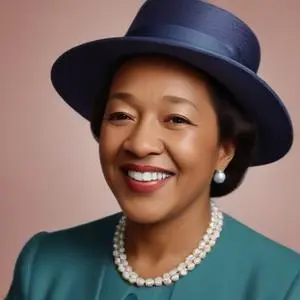
A pioneering figure in the struggle for racial and gender equality, she dedicated her life to empowering African American women and promoting education and social justice.
Dorothy Height, a trailblazing African American civil rights and women's rights activist, is renowned for her tireless efforts to combat inequality, illiteracy, and voter unawareness, particularly among African American women. As the first leader to recognize the intersectionality of racism and sexism, she worked tirelessly to bring about profound change in the lives of countless individuals.
Born on March 24, 1912, in Richmond, Virginia, Dorothy Height grew up in a world where segregation and discrimination were rampant. However, her family's relocation to McKees Rocks, Pennsylvania, at the age of five exposed her to racially integrated schools, setting the stage for her future activism.
Her mother's involvement in the Pennsylvania Federation of Colored Women's Clubs introduced Dorothy to the world of community service and advocacy, sparking a fire that would burn brightly throughout her life. As a teenager, she became actively involved in the antilynching movement, using her exceptional oratory skills to raise awareness about this pressing issue.
Dorothy Height's association with the YWCA, which began in her teenage years, became a cornerstone of her activism. Her election as president of the Girl Reserve Club marked the beginning of her journey to bring about change from within the organization. Though she faced discrimination and racism, including being barred from swimming in the central YWCA branch's pool, she remained committed to her cause.
Height's work with the National Council of Negro Women (NCNW), which she led for 40 years, cemented her position as a champion of women's rights and civil rights. Her presidency oversaw the organization's growth and expansion, enabling her to address a range of issues affecting African American women, including unemployment, education, and voter awareness.
As a member of the "Big Six" civil rights movement, Dorothy Height worked alongside prominent figures like Martin Luther King Jr. and Whitney Young. However, her contributions were often overshadowed by the dominant male figures of the movement, a testament to the sexism that pervaded even the most progressive organizations.
Despite this, Height continued to work tirelessly, playing a crucial role in shaping the movement's agenda and strategy. Her influence was felt in the passage of landmark legislation, such as the Civil Rights Act of 1964 and the Voting Rights Act of 1965.
Dorothy Height's contributions extended far beyond the realm of civil rights. In 1974, she was appointed to the National Commission for the Protection of Human Subjects of Biomedical and Behavioral Research, which led to the publication of the Belmont Report, a seminal bioethics report.
Throughout her illustrious career, Height received numerous awards and honors, including the Presidential Medal of Freedom, the Congressional Gold Medal, and the NAACP's highest honor, the Spingarn Medal.
Dorothy Height's life was a testament to her unwavering commitment to social justice and equality. Her legacy continues to inspire generations of activists, educators, and community leaders, serving as a beacon of hope for a more equitable and just society.
Through her remarkable life and achievements, Dorothy Height reminds us that even in the darkest of times, the power of individual action and collective effort can bring about transformative change.
97 Years Old
A prominent leader in the civil rights movement, advocating for racial equality and social justice through nonviolent means, leaving a lasting impact on American history.
Born in 1913
Refused to give up her seat on a Montgomery, Alabama bus to a white person, sparking the Montgomery Bus Boycott, a pivotal event in the Civil Rights Movement.
Born in 1925
A prominent figure in the Civil Rights Movement, advocating for African American rights and self-defense, and a powerful orator who inspired a generation.
Born in 1908
A trailblazing lawyer and civil rights champion who broke racial barriers in the US justice system, serving as the first African American on the Supreme Court. He fought tirelessly for equality and justice, leaving a lasting impact on American history.
Born in 1902
A renowned poet, novelist, and playwright who powerfully voiced the experiences and struggles of African Americans during the Harlem Renaissance, using jazz and blues rhythms to convey the spirit of his people.
Born in 1891
A celebrated author and anthropologist who explored African-American culture through novels, stories, and folklore, particularly in the rural South during the early 20th century.
Born in 1875
Pioneering educator and civil rights activist who founded a school for African American students in Florida and advised several US presidents on racial issues.
Born in 1924
A trailblazing African American congresswoman who broke racial and gender barriers, advocating for education, women's rights, and the poor. She was the first woman to run for the Democratic presidential nomination in 1972.
