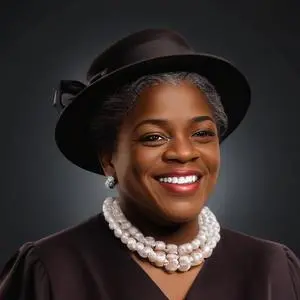
Mary McLeod Bethune: A Beacon of Hope for African American Education and Civil Rights
A Champion of Education and Women's Rights
Mary McLeod Bethune is renowned for her groundbreaking work in establishing a private school for African American students in Daytona Beach, Florida, which later evolved into Bethune-Cookman University. As a pioneering educator, philanthropist, and civil rights activist, Bethune dedicated her life to promoting better lives for African Americans, earning her the esteemed title of "First Lady of Negro America."
Early Life and Education
Born on July 10, 1875, in Mayesville, South Carolina, to parents who had been slaves, Bethune was instilled with a strong desire for education from a young age. With the help of benefactors, she attended college, hoping to become a missionary in Africa. However, her calling lay in serving her own community, and she redirected her efforts towards educating African American girls.
Founding of Bethune-Cookman University
In 1904, Bethune founded the Daytona Educational and Industrial Training School for Girls, which later merged with the Cookman Institute for Men in 1923, becoming the Bethune-Cookman School. Bethune's vision was to provide African American students with a comprehensive education, emphasizing academic excellence, moral values, and social responsibility.
Philanthropic and Civil Rights Work
Bethune's tireless efforts extended beyond education to philanthropy and civil rights activism. She founded the National Council of Negro Women (NCNW) in 1935, establishing the organization's flagship journal,
Aframerican Women's Journal. She also served as a national advisor to President
Franklin D. Roosevelt, contributing to the creation of the Federal Council on Colored Affairs, also known as the Black Cabinet.
Leadership and Honors
Throughout her illustrious career, Bethune held leadership positions in numerous African American women's organizations, including the National Association of Colored Women and the National Youth Administration's Negro Division. In 1949, Ebony magazine dubbed her the "First Lady of Negro America," and she was known as the "Female
Booker T. Washington" by the Black Press.
Legacy and Impact
Mary McLeod Bethune's enduring legacy is a testament to her unwavering commitment to education, women's rights, and civil rights. As the sole African American woman officially part of the US delegation that created the United Nations charter, she paved the way for future generations of leaders. Her remarkable life serves as an inspiration, solidifying her place as a beacon of hope in the struggle for racial equality.
Timeline of Milestones
- 1875: Born in Mayesville, South Carolina
- 1904: Founded the Daytona Educational and Industrial Training School for Girls
- 1923: Merged the school with the Cookman Institute for Men
- 1935: Founded the National Council of Negro Women (NCNW)
- 1949: Named "First Lady of Negro America" by Ebony magazine
- 1955: Passed away on May 18, leaving behind a legacy of hope and empowerment
Quotes and Memorable Sayings
- "The whole world opened up to me when I learned to read."
- "Invest in the human soul. Who knows? It might be a diamond in the rough."
FAQ
What was Mary McLeod Bethunes role in education?
Mary McLeod Bethune was a pioneering educator who dedicated her life to promoting education for African Americans, particularly women. She founded the Daytona Educational and Industrial Training School for Negro Girls in 1904, which later merged with the Cookman Institute to become Bethune-Cookman University.
What was Mary McLeod Bethunes involvement in the Civil Rights Movement?
Mary McLeod Bethune was an active participant in the Civil Rights Movement, working closely with prominent leaders like Dr. Martin Luther King Jr. and serving as an advisor to President Franklin D. Roosevelt on minority affairs. She was also a founding member of the United Negro College Fund.
What was Mary McLeod Bethunes legacy?
Mary McLeod Bethunes legacy is one of educational innovation, social justice, and female empowerment. She inspired generations of African American women to pursue education and leadership roles, and her work continues to influence contemporary debates about education, equality, and social justice.
How did Mary McLeod Bethune overcome obstacles in her life?
Mary McLeod Bethune overcame numerous obstacles in her life, including poverty, racism, and sexism. She persevered through determination, hard work, and strategic partnerships, often leveraging her relationships with powerful individuals to advance her goals.
What awards and honors did Mary McLeod Bethune receive?
Mary McLeod Bethune received numerous awards and honors, including the Spingarn Medal, the highest award given by the NAACP. She was also inducted into the National Womens Hall of Fame and has been recognized by the U.S. Postal Service with a commemorative stamp.