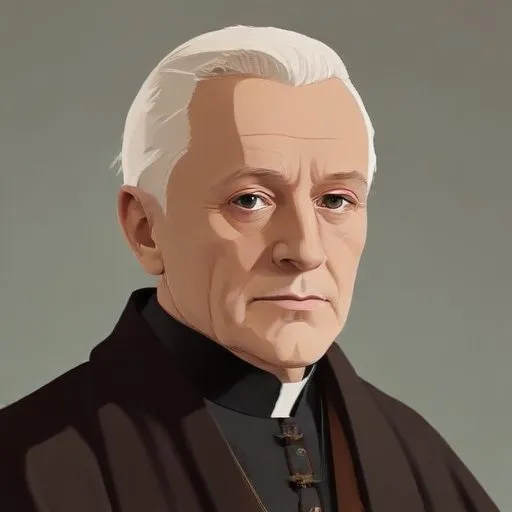
Daniel Ernst Jablonski: A Pioneering Theologian and Uniter of Protestantism
The Quest for Unity
Daniel Ernst Jablonski, a German theologian of Czech origin, is renowned for his tireless efforts to bridge the divide between Lutheran and Calvinist Protestants, thereby laying the groundwork for a more unified Protestantism. Through his writings, sermons, and diplomatic endeavors, Jablonski worked relentlessly to foster a spirit of cooperation and understanding among the disparate Protestant factions of his time.
Life and Career
Born on November 20, 1660, in Nassenhuben, Royal Prussia, Crown of Poland (present-day Mokry Dwór, Poland), Jablonski was the son of Peter Figulus, a minister of the Unity of the Brethren (also known as the Bohemian Brethren). His maternal grandfather, Johann Amos Comenius, was the last bishop of the Unity. Jablonski's family ties to the Brethren movement would have a profound impact on his future endeavors.
Education and Early Career
Jablonski pursued higher education at Frankfurt an der Oder and Oxford, where he immersed himself in the intellectual and theological currents of his time. In 1683, he began his career as a preacher in Magdeburg, subsequently becoming the head of the Brethren college at Leszno (Polish Lissa) from 1686 to 1691. This position had previously been held by his grandfather, underscoring the significance of family ties in shaping Jablonski's vocational path.
Rise to Prominence
Consecrated a bishop of the Unity for the churches in Poland, Jablonski's reputation as a theological leader and mediator began to spread. He was encouraged by the Elector Friedrich Wilhelm I of Brandenburg, King in Prussia, to secure the Apostolic Succession to the Renewed Unity of Brethren, the Moravian Church. In 1735, Jablonski consecrated David Nitschmann bishop in Berlin, solidifying his connection to the Moravian Church.
Philosophical Contributions and Beliefs
Jablonski's theological convictions were deeply rooted in the principles of ecumenism and the pursuit of Protestant unity. He believed that the fragmentation of Protestantism was a hindrance to the spread of Christianity and that a united Protestant front was essential for countering Catholicism. Through his writings and diplomatic efforts, Jablonski sought to create a shared theological platform that would enable Lutheran and Calvinist Protestants to coalesce around a common set of beliefs and practices.
Influence on Modern Society
Daniel Ernst Jablonski's legacy extends far beyond the ecclesiastical spheres of his time. His tireless efforts to unite Protestantism have inspired generations of theologians, ecumenists, and activists. Today, his work serves as a testament to the power of theological dialogue and the importance of cooperation in the face of religious diversity.
Major Works
- Orationes et Scripta Theologica (Theological Oration and Writings)
- Epistolae Theologicae (Theological Letters)
- Historia Verorum Christianorum (History of True Christians)
Personal Relationships and Anecdotes
Jablonski's connections to prominent intellectuals and theologians of his time, such as Gottfried Leibniz, demonstrate the extent to which his work was intertwined with the intellectual currents of the 17th and 18th centuries. His relationships with influential figures, including the Elector Friedrich Wilhelm I of Brandenburg, King in Prussia, further underscore the significant impact of his endeavors on the theological and political landscape of his era.
Historical Context and Legacy
Daniel Ernst Jablonski's life and work are inextricably linked to the tumultuous religious landscape of the 17th and 18th centuries. His commitment to Protestant unity and cooperation resonated deeply with the aspirations of his contemporaries. Today, Jablonski's legacy serves as a beacon of hope for those seeking to transcend theological divisions and forge a more united Christian community.
FAQ
What was Daniel Ernst Jablonskis role in the Protestant Reformation?
As a Czech-German theologian and reformer, Daniel Ernst Jablonski played a significant role in the Protestant Reformation, seeking to unite Protestant denominations and promote ecumenical dialogue.
What were Daniel Ernst Jablonskis contributions to the field of theology?
Jablonski made notable contributions to the field of theology, including his work on the history of the early Christian church and his efforts to promote theological education.
How did Daniel Ernst Jablonskis views on church unity influence the Protestant movement?
Jablonskis emphasis on church unity helped to shape the Protestant movement, encouraging cooperation and dialogue among various Protestant denominations.
What was Daniel Ernst Jablonskis relationship with King Frederick I of Prussia?
Jablonski enjoyed a close relationship with King Frederick I of Prussia, serving as his court preacher and advisor on ecclesiastical matters.
What is Daniel Ernst Jablonskis legacy in modern Protestantism?
Today, Jablonski is remembered as a pioneering figure in the Protestant Reformation, whose efforts to promote ecumenical dialogue continue to inspire Christian unity and cooperation.