


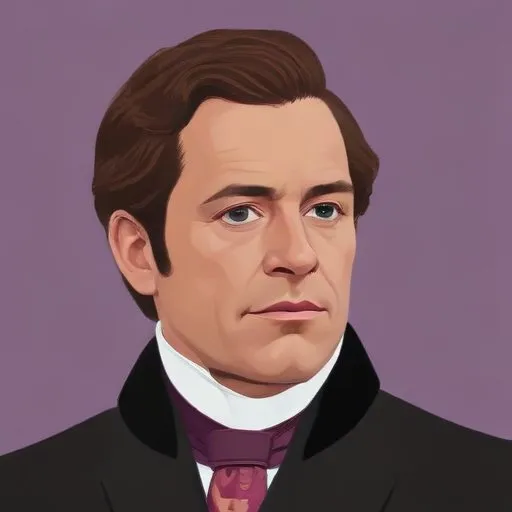
A 17th-century English politician who served as Lord President of the Council, playing a key role in shaping the country's government and policies. He's most known for his influential position during the Glorious Revolution.
Daniel Finch, 2nd Earl of Nottingham, was a prominent English Tory politician and peer who played a significant role in supporting the Hanoverian Succession in 1714. He is best known for his unwavering loyalty to the British monarchy, earning him the respect and admiration of his contemporaries.
Daniel Finch was born on 2 July 1647, to Heneage Finch, 1st Earl of Nottingham, and his wife Elizabeth Harvey. His great-grandmother, Elizabeth Finch, 1st Countess of Winchilsea, was a notable figure in British history. Finch's brother, Heneage Finch, 1st Earl of Aylesford, would go on to make his own mark in politics.
Finch's educational background was marked by excellence. He attended Westminster School in 1658, where he boarded for three years under the guidance of Dr. Richard Busby, the headmaster and his father's former tutor at Christ Church, Oxford. Finch's academic prowess was so impressive that his father questioned its authenticity. He later matriculated at Christ Church as a Gentleman Commoner in 1662.
In 1665, Finch embarked on his Grand Tour, visiting prominent European cities such as Frankfurt, Munich, Venice, Florence, Naples, Rome, and Paris. This experience broadened his horizons and helped shape his worldview. After his return to England, he was appointed a Fellow of the Royal Society, a testament to his intellectual curiosity.
Finch's cousin, Sir Roger Twysden, wrote to his father, praising Daniel's gentlemanly demeanor, which boded well for his future. Indeed, Finch went on to play a significant role in British politics, earning the respect of his peers and the monarchy.
In 1714, Finch supported the Hanoverian Succession, which marked a significant turning point in British history. His loyalty to the monarchy and his commitment to the Succession earned him the respect of King George I, who recognized Finch's efforts.
Finch's unwavering support for the monarchy was rooted in his strong sense of duty and allegiance. He believed in the importance of maintaining stability and continuity in British politics, and his actions reflected this conviction.
Daniel Finch, 2nd Earl of Nottingham, passed away on 1 January 1730, leaving behind a legacy of loyalty, duty, and commitment to the British monarchy. His life serves as a testament to the importance of upholding traditional values and supporting the institutions that shape our society.
Throughout his life, Finch remained dedicated to his family and his country. His story serves as an inspiration to those who value loyalty, duty, and service to others.
Finch's father, in a letter to him, wrote, "Nothing can make you truly wise but such a religion as dwells upon your heart and governs your whole life." This quote reflects the values that Finch inherited from his family and upheld throughout his life.
54 Years Old
Australian rules football legend who played 137 games and coached three teams, including the Melbourne Football Club, leading them to a premiership in 1964.
Born in 1914
A British naval officer who played first-class cricket, known for his athletic achievements and military service. He was a multifaceted figure who excelled in both sports and warfare.
