


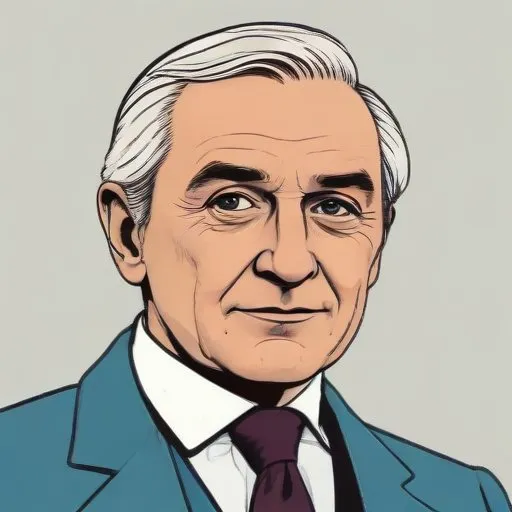
A 17th-century scholar who wrote extensively on English history, particularly the Stuart period, and served as a Member of Parliament. His works remain valuable sources for historians today.
Sir Roger Twysden, 2nd Baronet, is best known for his significant contributions to English history and politics during the 17th century. As a historian, politician, and antiquarian, Twysden's works and endeavors had a lasting impact on the country's development.
Born on August 21, 1597, at Roydon Hall, near East Peckham, Kent, Twysden was the son of Sir William Twysden, 1st Baronet, and Anne Finch, daughter of Sir Moyle Finch, 1st Baronet and Elizabeth Finch, 1st Countess of Winchilsea. His father, a courtier and scholar, shared in some of the voyages against Spain during Queen Elizabeth I's reign, while his mother was a writer.
Twysden received his education at St. Paul's School and later at Emmanuel College, Cambridge, where he was admitted on November 8, 1614. He then entered Gray's Inn on February 2, 1623, to pursue his interest in law and the constitution.
In 1625, Twysden was elected Member of Parliament for Winchelsea, a position he held until 1626. He succeeded to the baronetcy on January 8, 1629, after his father's death. During this period, Twysden dedicated himself to studying antiquities, the law of the constitution, and natural history, often focusing on his estate at Roydon Hall.
In 1640, he was elected MP for Kent in the Short Parliament. Although initially supportive of Parliament's efforts to restrict the king's prerogative, Twysden became disillusioned with the Long Parliament's measures, particularly the attainder of Lord Strafford, which he saw as a tyrannical use of power. This led him to become a strong supporter of the king's party during the English Civil War.
Twysden's historical works, although not widely published during his lifetime, had a significant impact on the understanding of England's past. His manuscripts, now housed at the British Library, contain valuable information on medieval history, heraldry, and genealogy. His studies on the history of Kent, in particular, remain an essential resource for historians today.
Through his writings and political endeavors, Twysden left a lasting legacy in English history, shaping the country's development during a tumultuous period. His contributions to the fields of history, politics, and antiquarianism continue to inspire and inform scholars to this day.
Twysden's life and works serve as a testament to his dedication to understanding and preserving England's rich history. His legacy continues to inspire historians, politicians, and scholars alike, offering valuable insights into the complexities of 17th-century England.
Born in 1632
A 17th-century thinker who laid the groundwork for modern democracy, arguing that governments derive their power from the people and that individuals have inherent rights to life, liberty, and property.
Born in 1588
A 17th-century philosopher who introduced the concept of social contract, arguing that people voluntarily give up some rights to a sovereign power in exchange for protection and stability. His ideas shaped modern political thought and the nature of government.
Born in 1611
Developed the concept of utopian socialism, advocating for a classless society where property is communally owned, and is considered a key figure in the development of modern democratic thought.
Born in 1623
A 17th-century republican thinker who advocated for individual liberties and constitutional government, influencing the development of modern democratic thought.
Born in 1608
Wrote epic poems, including "Paradise Lost", that explored themes of morality, free will, and the human condition.
Born in 1584
A renowned 17th-century jurist and scholar who made significant contributions to the fields of law, history, and literature, earning him a reputation as one of the most learned men of his time.
