


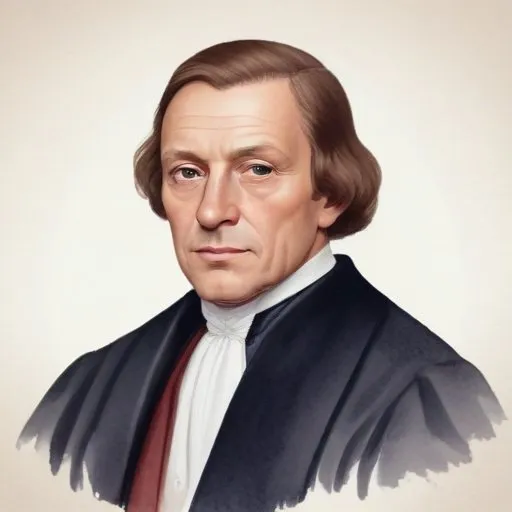
A renowned 17th-century jurist and scholar who made significant contributions to the fields of law, history, and literature, earning him a reputation as one of the most learned men of his time.
John Selden, a luminary of 17th-century England, is revered for his profound contributions to the realm of law, scholarship, and politics. As a jurist, a scholar of England's ancient laws and constitution, and a scholar of Jewish law, Selden's erudite mind left an indelible mark on the intellectual landscape of his time.
Born on December 16, 1584, in Salvington, West Sussex, Selden's early life was marked by an insatiable thirst for knowledge. His father, a small farmer, and his mother, Margaret, from a knightly family of Kent, instilled in him a love for learning that would stay with him throughout his life.
Selden's academic journey began at the free grammar school in Chichester, followed by his enrollment at Hart Hall, Oxford, in 1600. He was admitted to Cliffords Inn, London in 1603, and later moved to the Inner Temple, where he was called to the bar in 1612. His scholarly pursuits took him from Oxford to London, where he became acquainted with Sir Robert Bruce Cotton, the antiquary, who employed him to copy and summarize parliamentary records at the Tower of London.
Selden's mastery of law was evident in his early work, particularly in his treatise, History of Tithes, published in 1618. Although it sparked controversy among the bishops and the king, James I, his work demonstrated a profound understanding of the historical basis of the tithe system. Despite the backlash, Selden's reputation as a legal scholar grew, and he became a sought-after conveyancer and consulting counsel.
Selden's entry into politics was marked by his involvement in the Parliament of 1621, where he became a vocal advocate for the rights of the common man. His interventions in Parliament often centered around issues of religion, law, and the monarchy, showcasing his commitment to protecting individual liberties and promoting reform.
John Selden's impact on modern society is still felt today. His contributions to the fields of law, scholarship, and politics have left an enduring legacy. As a polymath, his work continues to inspire and educate generations of scholars, lawyers, and policymakers.
In the midst of the English Renaissance, Selden's work embodied the spirit of intellectual curiosity and inquiry that defined the era. His legacy serves as a testament to the power of human curiosity and the importance of interdisciplinary learning.
John Selden's remarkable life and work continue to captivate scholars and historians alike. As a champion of knowledge, he remains an enduring symbol of the Renaissance mind, inspiring generations to come.
Born in 1561
A 16th-17th century Renaissance figure who pioneered the scientific method and empiricism, and served as a prominent government official.
Born in 1552
A prominent figure in English law, he played a significant role in shaping the country's legal system and is remembered for his contributions to the development of common law.
Born in 1564
Renowned playwright and poet behind iconic works like Romeo and Juliet, Hamlet, and Macbeth, whose writings continue to influence literature and theater to this day.
Born in 1572
A prominent figure in the English Renaissance, known for his witty plays and poems that explored themes of love, power, and morality. His works continue to influence literature and theater to this day.
Born in 1573
A 17th-century poet and cleric who penned powerful, metaphysical sonnets that explored themes of love, death, and spirituality. His works are celebrated for their complex, intricate language and profound insights into the human experience.
Born in 1608
Wrote epic poems, including "Paradise Lost", that explored themes of morality, free will, and the human condition.
Born in 1599
Leader of the Parliamentarian forces during the English Civil War, who later ruled England, Scotland, and Ireland as a republican dictator, known for his military victories and radical reforms.
Born in 1632
A 17th-century thinker who laid the groundwork for modern democracy, arguing that governments derive their power from the people and that individuals have inherent rights to life, liberty, and property.
