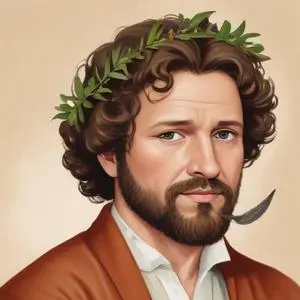
Ben Jonson: The Master of Satire and Comedy
A Lasting Legacy in English Literature
Ben Jonson, renowned English playwright and poet, left an indelible mark on the world of literature, exerting a profound influence on English poetry and stage comedy. He is best known for his satirical plays, such as
Every Man in His Humour (1598),
Volpone, or The Fox (c. 1606),
The Alchemist (1610), and
Bartholomew Fair (1614), as well as his lyric and epigrammatic poetry.
A Life of Literature and Controversy
Born around June 11, 1572, Jonson was a classically educated, well-read, and cultured man of the English Renaissance, with an appetite for controversy, personally, politically, artistically, and intellectually. His cultural influence was of unparalleled breadth upon the playwrights and poets of the Jacobean era (1603-1625) and the Caroline era (1625-1642).
Early Life and Education
Jonson's paternal grandfather, who served King Henry VIII and was a gentleman, was a member of the extended Johnston family of Annandale in the Dumfries and Galloway. His ancestors spelled the family name with a "t" (Johnstone or Johnstoun), which eventually changed to the more common Johnson. The playwright himself preferred the spelling "Jonson."
After his father's death, Jonson's mother married a master bricklayer. He attended school in St. Martin's Lane in London and later received education at Westminster School, where the antiquarian, historian, topographer, and officer of arms
William Camden (1551-1623) was one of his masters. The pupil and master became friends, and Camden's influence had a lasting impact on Jonson's work.
Major Works and Contributions
- Every Man in His Humour (1598): A satirical play that popularized the comedy of humours, a genre that explores the flaws and foibles of human characters.
- Volpone, or The Fox (c. 1606): A comedy that showcases Jonson's mastery of satire, wit, and complex plot twists.
- The Alchemist (1610): A play that exemplifies Jonson's ability to craft intricate plots and clever dialogue.
- Bartholomew Fair (1614): A comedy that satirizes the excesses of the Jacobean era and showcases Jonson's skill in crafting vivid characters.
Philosophical Contributions and Beliefs
Jonson's work reflects his strong classical education and his fascination with the human condition. He believed in the importance of literature as a means of exploring the complexities of human nature and the flaws of society. His plays often poked fun at the excesses of the English Renaissance, critiquing the social ills of his time.
Influence on Modern Society
Ben Jonson's impact on English literature is immeasurable. He is regarded as the second most important English dramatist, after
William Shakespeare, during the reign of James I. His influence can be seen in the works of later playwrights, such as
John Dryden and Alexander Pope. His satirical plays continue to be performed and studied today, offering insights into the human condition and the power of comedy to critique society.
Trivia and Fun Facts
- Jonson was known for his sharp wit and his ability to craft clever insults, earning him the nickname "the poetaster" among his contemporaries.
- He was a close friend and rival of William Shakespeare, with whom he collaborated on several plays.
- Jonson's plays were often performed by the Lord Chamberlain's Men, a theater company later known as the King's Men, which was patronized by King James I.
Ben Jonson's legacy continues to be felt in the world of literature, theater, and comedy. His mastery of satire, his clever wit, and his insight into the human condition make him one of the most important figures in English literary history.
FAQ
What is Ben Jonson known for in English literature?
Ben Jonson was a prominent English poet, playwright, and critic, known for his plays such as Volpone and The Alchemist, and his contributions to the development of English comedy.
What was Ben Jonsons role in the English Renaissance?
Jonson was a key figure in the English Renaissance, participating in the cultural and intellectual flowering of the late 16th and early 17th centuries.
How did Ben Jonsons poetry reflect his personality and values?
Jonsons poetry often reflected his strong personality, wit, and values, exploring themes of love, morality, and the human condition.
Did Ben Jonson have any notable patrons or supporters?
Yes, Jonson was patronized by prominent figures such as King James I and the Earl of Pembroke, who recognized his literary talents and supported his work.
What is Ben Jonsons legacy in English literature?
Jonsons plays and poetry contributed to the development of English Renaissance drama and poetry, influencing later writers such as John Dryden and Alexander Pope.