


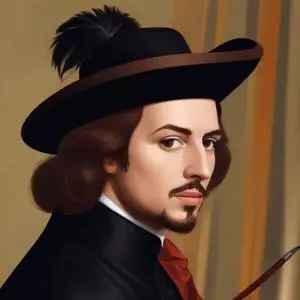
A Renaissance master of words, crafting plays and poems that explored the human condition, and translating ancient texts into English, leaving a lasting impact on literature.
Christopher Marlowe, a luminary of the Elizabethan era, is renowned for his bold, provocative plays that pierced the veil of social norms and dared to challenge the status quo. His repertoire, including Tamburlaine the Great, Doctor Faustus, and Edward II, continues to captivate audiences with its unflinching portrayal of humanity's darker aspects.
Marlowe's life was a tumultuous tapestry of intrigue, scandal, and mystery. Baptised on February 26, 1564, in Canterbury, England, Marlowe's early years were marked by his family's humble circumstances and his own intellectual precocity. His education at Cambridge University, where he received a bachelor's degree in 1584 and a master's in 1587, laid the foundation for his later literary pursuits.
Marlowe's impact on Western literature is immeasurable. His influence can be seen in the works of William Shakespeare, who succeeded him as the preeminent Elizabethan playwright, and in the broader development of English drama. Marlowe's bold, unflinching style paved the way for subsequent generations of writers, from the Romantics to modern-day dramatists.
Marlowe's life was marred by controversy, and his death, under mysterious circumstances in 1593, only added to the enigma. Various theories, ranging from a tavern brawl to espionage and murder, have been proposed to explain his untimely demise. The official coroner's report, discovered in 1925, has done little to dispel the aura of mystery surrounding Marlowe's final days.
"Infinite riches in a little room" - The Jew of Malta
Marlowe's life and works are inextricably linked to the tumultuous, vibrant world of Elizabethan England. His contributions to the development of English drama, his innovative use of language, and his unflinching portrayal of human nature have cemented his place as one of the most important figures in Western literary history.
Marlowe's bold, avant-garde style has drawn comparisons to his contemporaries, including William Shakespeare and Ben Jonson. While each of these playwrights brought their unique perspective to the stage, Marlowe's unapologetic exploration of humanity's darker aspects sets him apart as a singular voice in the Elizabethan era.
Marlowe's personal relationships, including his rumored associations with the espionage community and his possible involvement in a same-sex relationship, remain the subject of ongoing speculation and debate among scholars.
Marlowe's influence can be seen in countless adaptations, parodies, and references in popular culture, from film and theatre to music and literature. His iconic characters, including Doctor Faustus and Tamburlaine, continue to captivate audiences and inspire new generations of artists.
Born in 1564
Renowned playwright and poet behind iconic works like Romeo and Juliet, Hamlet, and Macbeth, whose writings continue to influence literature and theater to this day.
Born in 1572
A prominent figure in the English Renaissance, known for his witty plays and poems that explored themes of love, power, and morality. His works continue to influence literature and theater to this day.
Born in 1590
Early Connecticut leader who played a key role in the colony's development and governance, particularly in the 17th century.
Born in 1580
A prominent Jacobean playwright and poet, known for his collaborations with William Shakespeare and his own works, such as "A Game at Chess" and "Women Beware Women".
Born in 1631
A dominant literary figure of the Restoration era, known for his influential poetry, plays, and critical essays that shaped the English literary landscape. He's often credited with creating a new style of heroic drama and satire.
Born in 1608
Wrote epic poems, including "Paradise Lost", that explored themes of morality, free will, and the human condition.
Born in 1566
A renowned actor and entrepreneur of the Elizabethan era, he founded two esteemed educational institutions that still thrive today. He's celebrated for his theatrical contributions and philanthropic legacy.
