


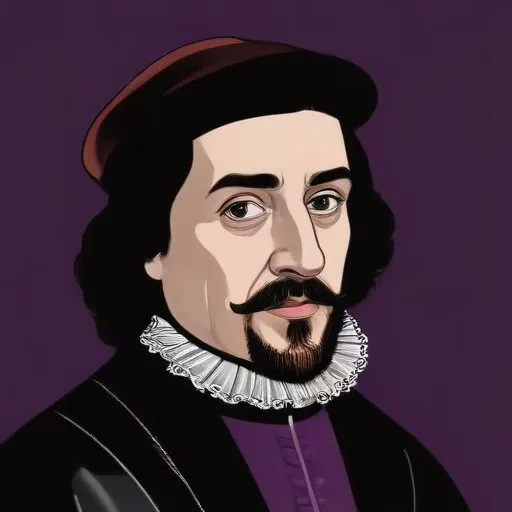
A prominent Jacobean playwright and poet, known for his collaborations with William Shakespeare and his own works, such as "A Game at Chess" and "Women Beware Women".
Thomas Middleton, a luminary of the Jacobean period, is renowned for his remarkable contributions to English literature, penning a staggering array of plays, poems, and pamphlets that continue to captivate audiences to this day. Alongside John Fletcher and Ben Jonson, Middleton formed the triumvirate of the most successful and prolific playwrights of his time, effortlessly navigating the realms of comedy and tragedy.
Born in London in 1580, Middleton's early life was marked by turmoil. His father, a bricklayer-turned-gentleman, died when Middleton was just five, sparking a 15-year battle over his inheritance. This experience would later inform his witty satire against the legal profession. Middleton's education at The Queen's College, Oxford, where he matriculated in 1598, laid the foundation for his literary career, although he did not graduate.
Before leaving Oxford, Middleton published three long poems in popular Elizabethan styles. Although none achieved great success, one of his satirical works, Satyrical Essays, fell foul of an Anglican church ban on verse satire and was subsequently burned. Undeterred, Middleton turned to writing topical pamphlets, including the acclaimed Penniless Parliament of Threadbare Poets, which was reprinted several times and sparked a parliamentary inquiry.
Middleton's early dramatic career was marked by controversy. His collaboration with Thomas Dekker drew him into conflict with Ben Jonson and George Chapman in the War of the Theatres. The grudge against Jonson persisted until as late as 1626, when Jonson's play The Staple of News reignited the feud. Despite these challenges, Middleton remained a free agent, able to write for whichever company hired him, including the Admirals Men, as recorded in Philip Henslowe's diary.
Middleton's impressive oeuvre includes The Revenger's Tragedy, A Game at Chess, and The Witch, showcasing his mastery of both comedy and tragedy. His works continue to influence modern theatre, with The Revenger's Tragedy being revived in 2008 at the National Theatre. Middleton's legacy extends beyond his writings, as he remains one of the few playwrights of his time to achieve equal success in comedy and tragedy.
Middleton's impact on modern society is multifaceted. His plays, infused with satire and social commentary, continue to resonate with contemporary audiences. His influence can be seen in the works of later playwrights, such as Aphra Behn and John Dryden, who drew inspiration from his mastery of comedy and tragedy.
Through his remarkable body of work, Thomas Middleton has left an indelible mark on English literature, cementing his position as one of the most prolific and successful playwrights of the Jacobean era.
Born in 1564
Renowned playwright and poet behind iconic works like Romeo and Juliet, Hamlet, and Macbeth, whose writings continue to influence literature and theater to this day.
Born in 1572
A prominent figure in the English Renaissance, known for his witty plays and poems that explored themes of love, power, and morality. His works continue to influence literature and theater to this day.
Born in 1590
Early Connecticut leader who played a key role in the colony's development and governance, particularly in the 17th century.
Born in 1583
A prominent 17th-century playwright, known for his dark, complex tragedies and comedies that explored themes of morality, power, and social class. His works often featured strong female characters and commentary on contemporary politics.
Born in 1924
Acclaimed storyteller behind epic historical novels and films, including "Shogun" and "The Great Wall", exploring cultural clashes and human drama. 42
38 Years Old
An American actor and musician, known for his roles in TV shows like "The Secret Circle" and "Terminator: The Sarah Connor Chronicles", as well as his music releases.
Born in 1576
A 17th-century wordsmith who crafted plays and poems that explored themes of love, morality, and mortality, leaving an indelible mark on English literature.
