


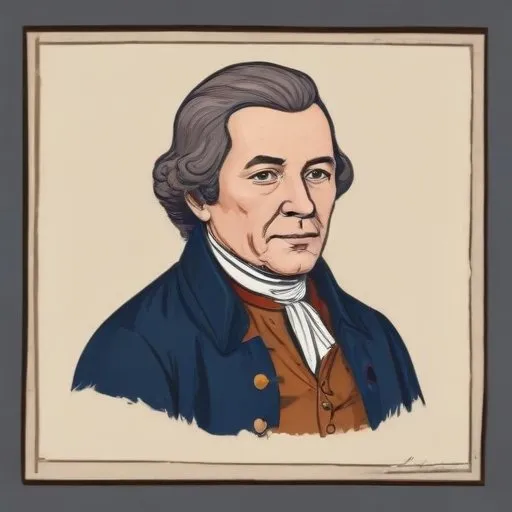
Early Connecticut leader who played a key role in the colony's development and governance, particularly in the 17th century.
Webster's journey to the New World began in the early 1630s, when he traveled to the Massachusetts Bay Colony with his wife and five children. Initially settling in Newtowne (now Cambridge, Massachusetts), he eventually joined Thomas Hooker and his adherents in 1636 to establish Hartford, Connecticut. This relocation marked the beginning of a long and distinguished career in public service, during which Webster held various offices, including magistrate, Deputy Governor, and ultimately, Governor of the Colony of Connecticut in 1656.
One of Webster's most significant contributions to American history is his role in the drafting and adoption of the Fundamental Orders of Connecticut, a landmark document that established one of the earliest forms of constitutional government. As one of the nineteen representatives from the towns of Hartford, Wethersfield, and Windsor, Webster played a crucial part in shaping this foundational document, which has been hailed as a precursor to the United States Constitution.
A notable controversy during Webster's tenure as Governor involved a dispute over communion practices in the First Church of Hartford. When Reverend Samuel Stone announced his intention to relax the rules, allowing non-communicants to vote and have their children baptized, Webster joined a council of critics who opposed this move. The issue eventually reached the General Court in Massachusetts, which ruled against Reverend Stone's stance. This episode highlights the complex intersection of church and state in early colonial America, as well as Webster's commitment to upholding traditional practices.
Today, John Webster is remembered as a pioneering figure in the development of constitutional governance in early colonial America. His contributions to the Fundamental Orders of Connecticut and his dedicated service to the Colony of Connecticut have left a lasting impact on the course of American history. As a testament to his enduring legacy, Webster's name remains an important part of Connecticut's heritage, inspiring future generations to continue his work towards building a more just and equitable society.
Born in 1586
Founded the Colony of Connecticut in 1636, establishing a new settlement that would become a hub for trade, commerce, and education. Known for his leadership and vision in shaping the colony's early years.
Born in 1588
A 17th-century English lawyer and politician who played a key role in establishing the Massachusetts Bay Colony and shaping its early government and laws. He's known for his "City upon a Hill" sermon, which emphasized the colony's mission to create a model Christian community.
95 Years Old
Pioneering liver disease researcher and professor who made significant contributions to the understanding and treatment of liver transplantation and hepatology.
Born in 1591
A charismatic Puritan preacher who challenged the authority of the church and advocated for personal religious experience, sparking controversy and eventually leading to her banishment from the Massachusetts Bay Colony.
Born in 1594
First Governor of the Colony of Connecticut, instrumental in establishing the colony's government and laws, and played a key role in the colony's early development.
Born in 1595
Leader of the Pilgrims who helped establish the Plymouth Colony and facilitated peaceful relations with Native Americans, playing a key role in the colony's survival.
Born in 1823
The 13th Premier of South Australia, serving from 1876 to 1881, known for his significant contributions to the state's infrastructure development, particularly in the areas of railways and telegraphy.
