


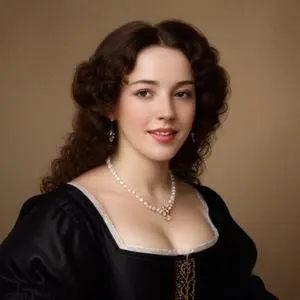
Details about Behn's early life are scarce, with two conflicting accounts of her birth and upbringing. One version suggests she was born to a barber named John Amis and his wife Amy, while another claims she was born to a couple named Cooper. Despite the uncertainty surrounding her early years, Behn's writing career is well-documented.
Behn's writing career took off when she came to the notice of Charles II, who employed her as a spy in Antwerp. Her experiences during this period later influenced her writing, adding depth and authenticity to her works. Upon her return to London, Behn began writing for the stage, earning recognition and accolades for her plays and poetry.
Behn wrote under the pastoral pseudonym Astrea, producing works that showcased her literary versatility. Her notable works include the epilogue and prologue that brought her legal trouble during the turbulent political times of the Exclusion Crisis. She later devoted most of her writing to prose genres and translations, cementing her position as a prominent female writer of the era.
Behn's best-known works are Oroonoko, or, the Royal Slave, sometimes described as an early novel, and the play The Rover. Oroonoko, a pioneering work in the genre of novels, tells the story of a enslaved African prince and his experiences in Surinam. The Rover, a popular play, explores themes of love, power, and identity.
Behn's legacy extends far beyond her own lifetime. She is remembered in Virginia Woolf's A Room of One's Own, where Woolf writes, "All women together ought to let flowers fall upon the tomb of Aphra Behn." Behn's grave, although not located in the Poets' Corner, lies in the East Cloister of Westminster Abbey, a testament to her significant contributions to English literature.
Aphra Behn's trailblazing spirit and literary achievements inspired generations of female writers, including Virginia Woolf, who credits Behn with earning women the right to speak their minds. Behn's work paved the way for women to pursue careers in writing and other creative fields, making her a true pioneer in English literature.
Behn's life was not without controversy. She was known to have had relationships with prominent men of the time, including John Wilmot, Lord Rochester. Her association with the Stuart line and her refusal to write a welcoming poem to the new king William III further added to her reputation as a strong-willed and independent woman.
In conclusion, Aphra Behn's remarkable life and literary achievements serve as a testament to her unwavering dedication to her craft and her unrelenting spirit. Her legacy continues to inspire and empower women to pursue careers in writing and other creative fields, making her a true icon of the Restoration era.
Born in 1631
A dominant literary figure of the Restoration era, known for his influential poetry, plays, and critical essays that shaped the English literary landscape. He's often credited with creating a new style of heroic drama and satire.
Born in 1608
Wrote epic poems, including "Paradise Lost", that explored themes of morality, free will, and the human condition.
Born in 1667
A witty wordsmith who penned scathing social commentaries, including the iconic "Gulliver's Travels", which continue to delight and provoke readers to this day.
Born in 1689
Pioneering epistolary novelist and publisher who penned influential works like "Pamela" and "Clarissa", shaping the English novel and exploring themes of morality and social class.
Born in 1707
Wrote influential and satirical novels of manners, such as "Tom Jones", that explored the social and moral issues of 18th-century England.
Born in 1713
Wrote influential and innovative novels, particularly "Tristram Shandy", that experimented with narrative structure and style, influencing the development of modern literature.
Born in 1882
A pioneering author of modernist literature, known for experimental novels and essays that explored the human experience, blurring the lines between reality and fiction.
