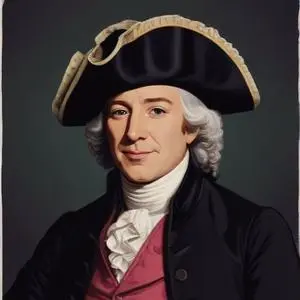
Henry Fielding

Henry Fielding

Henry Fielding was born on April 22nd, 1707

Full Name: Henry Fielding
Profession: Novelist & Playwright
Nationality: English
Birth Date: April 22, 1707
Place of Birth: Sharpham, England
Zodiac Sign: Taurus
Death Date: October 8, 1754
Notable Work: Tom Jones

Wrote influential and satirical novels of manners, such as "Tom Jones", that explored the social and moral issues of 18th-century England.

Written by: Oliver Wren Oliver Wren

Henry Fielding is renowned for his groundbreaking comic novel, The History of Tom Jones, a Foundling, published in 1749, which revolutionized the genre and cemented his status as one of the founders of the traditional English novel, alongside Samuel Richardson.

Born on April 22, 1707, at Sharpham Park, Somerset, Henry Fielding was the son of Lt. Gen. Edmund Fielding and Sarah Gould. His mother's family was of noble descent, and his father was a charming but irresponsible character. After his mother's death when he was just 11, Fielding was placed in the care of his grandmother, and he continued to see his father in London.

Fielding's early years were marked by a lifelong friendship with William Pitt the Elder, which began at Eton College. He went on to study classics and law at Leiden University in 1728, but financial constraints forced him to return to London, where he began his writing career.

Fielding's early writing career was characterized by his use of rhetorical poses, employing both non-ironic pseudonyms and ironic masks to critique the government of Prime Minister Sir Robert Walpole. His satirical works for the theatre were highly successful, leading to the passage of the Theatrical Licensing Act in 1737.

Published in 1749, The History of Tom Jones, a Foundling is considered one of Fielding's masterpieces, showcasing his skillful use of humour and satire. The novel follows the adventures of Tom Jones, a foundling, and his journey towards redemption, love, and social acceptance.

In addition to his literary pursuits, Fielding played a crucial role in the history of law enforcement in the United Kingdom. As a magistrate, he founded the Bow Street Runners, London's first professional police force, in 1749. This pioneering effort marked a significant milestone in the development of modern law enforcement.

Fielding's personal life was marked by scandal and controversy. In 1725, he attempted to abduct his cousin, Sarah Andrews, with whom he was infatuated. He later fled to avoid prosecution. Despite these challenges, Fielding continued to write and publish, leaving an indelible mark on English literature.

Henry Fielding's contributions to literature and law enforcement have had a lasting impact on modern society. His novels continue to be celebrated for their wit, satire, and insight into human nature. His pioneering work in law enforcement paved the way for modern police forces, shaping the course of justice and crime prevention.

  • "I am content to be known as a satirist, for I consider it the most noble and useful of all kinds of writing."
  • "It is not the load that breaks you down, it's the way you carry it."

  • 1707: Born at Sharpham Park, Somerset
  • 1725: Attempted abduction of Sarah Andrews
  • 1728: Studied classics and law at Leiden University
  • 1749: Published The History of Tom Jones, a Foundling
  • 1749: Founded the Bow Street Runners, London's first professional police force
  • 1754: Died on October 8, at the age of 47

Fielding's work was often compared to that of his contemporary, Samuel Richardson. While Richardson's novels tended to focus on the inner lives of his characters, Fielding's works were more concerned with satire, social commentary, and the external world. This distinct approach has led to Fielding being regarded as the more influential of the two writers.

Timeline
1707
Born in Somerset
Henry Fielding was born on April 22, 1707, in Sharpham, Somerset, England to Edmund Fielding and Sarah Gould.
1728
Wrote First Play
Fielding wrote his first play, Love in Several Masques, which was performed at the Drury Lane Theatre in 1728.
1741
Wrote Jonathan Wild
He wrote the novel Jonathan Wild, a satire of the criminal underworld, in 1741.
1749
Wrote Tom Jones
Fielding wrote his most famous novel, The History of Tom Jones, a Foundling, in 1749.
1754
Died in Lisbon
Henry Fielding died on October 8, 1754, in Lisbon, Portugal, where he had gone to recover from his poor health.
Henry Fielding

Henry Fielding Quiz

What literary genre is Henry Fielding primarily associated with?

Score: 0/5
FAQ
What is Henry Fieldings most famous literary work?
Henry Fieldings most famous literary work is his novel Tom Jones, a picaresque romance that follows the adventures of its eponymous hero. The novel is considered one of the greatest works of English literature and has been adapted into numerous film and stage productions.
What is Henry Fieldings contribution to the development of the novel?
Henry Fielding made significant contributions to the development of the novel as a literary form. His innovative use of narrative structure, characterization, and social commentary helped shape the genre and influence later novelists.
How did Henry Fieldings experiences as a playwright influence his novels?
Henry Fieldings experiences as a playwright influenced his novels by incorporating dramatic elements, such as dialogue and plot twists, into his literary works. His theatrical background also helped him develop vivid characters and engaging storylines.
What social issues did Henry Fielding address in his writings?
Henry Fielding addressed various social issues in his writings, including poverty, crime, and social injustice. His works often satirized the social ills of his time, critiquing the morality and values of the upper class.
What is Henry Fieldings legacy in English literature?
Henry Fieldings legacy in English literature is that of a pioneering novelist and playwright who helped shape the development of the novel and influenced later writers, such as Jane Austen and Charles Dickens. His works continue to be widely read and studied today.

Related People:

Samuel Richardson

Born in 1689

Pioneering epistolary novelist and publisher who penned influential works like "Pamela" and "Clarissa", shaping the English novel and exploring themes of morality and social class.

Laurence Sterne

Born in 1713

Wrote influential and innovative novels, particularly "Tristram Shandy", that experimented with narrative structure and style, influencing the development of modern literature.

Jane Austen

Born in 1775

A celebrated author of witty, romantic novels of manners that offer insightful commentary on 19th-century English society, particularly the lives of women. Her works remain beloved for their strong female characters, clever dialogue, and nuanced exploration of relationships.

Jonathan Swift

Born in 1667

A witty wordsmith who penned scathing social commentaries, including the iconic "Gulliver's Travels", which continue to delight and provoke readers to this day.

John Dryden

Born in 1631

A dominant literary figure of the Restoration era, known for his influential poetry, plays, and critical essays that shaped the English literary landscape. He's often credited with creating a new style of heroic drama and satire.

Joseph Addison

Born in 1672

A renowned 18th-century writer and statesman who penned influential essays and plays, shaping English literature and politics. He's most famous for his witty, insightful writings in The Spectator magazine.

Richard Steele

Born in 1672

A pioneering journalist and playwright who co-founded The Tatler and The Spectator, influential publications that shaped 18th-century British literature and culture.