


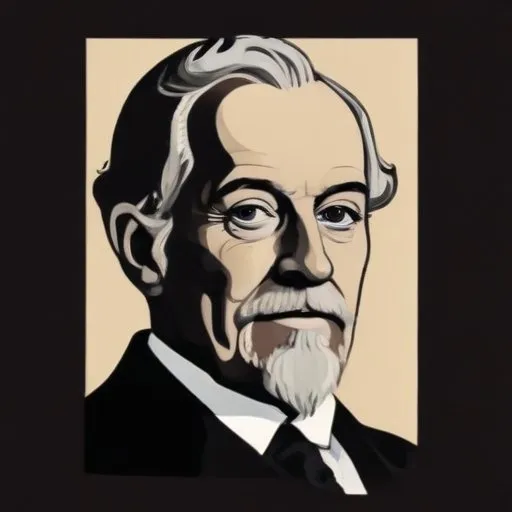
Renowned for meticulously documenting England's antiquities and historical sites, this 16th-century scholar authored Britannia, a seminal work that shaped the country's understanding of its past.
William Camden, a renowned English antiquarian, historian, and topographer, is best known for his monumental work, Britannia, the first comprehensive chorographical survey of the islands of Great Britain and Ireland. This magnum opus, written in Latin, was published in 1586 and has since become a cornerstone of British historical studies.
Born on May 2, 1551, in London, Camden was the son of Sampson Camden, a member of The Worshipful Company of Painter-Stainers. He attended Christ's Hospital and St. Paul's School before entering Oxford's Magdalen College, Broadgates Hall, and finally Christ Church. It was during his time at Christ Church that he met Philip Sidney, who encouraged Camden's antiquarian interests.
In 1577, with the encouragement of Abraham Ortelius, Camden embarked on his life's work, Britannia. His stated intention was to "restore antiquity to Britaine, and Britain to his antiquity." This ambitious project aimed to provide a detailed topographical and historical survey of all of Great Britain and Ireland.
The first edition of Britannia, published in 1586, was an instant success, running through five further Latin editions between 1587 and 1607. The 1607 edition included a full set of English county maps, based on the surveys of Christopher Saxton and John Norden, and engraved by William Kip and William Hole. The first English-language edition, translated by Philemon Holland, appeared in 1610, cementing Britannia's status as a foundational work of British historical scholarship.
Camden's Britannia not only provided a comprehensive historical account of Britain and Ireland but also showcased his innovative approach to cartography. His use of county maps, based on the surveys of Christopher Saxton and John Norden, set a new standard for historical cartography, influencing generations of cartographers and historians.
Camden's work embodied a deep respect for the past, a commitment to accuracy, and a passion for understanding the complexities of human history. His philosophical contributions lie in his ability to synthesize disparate sources, critique received wisdom, and present a nuanced understanding of Britain's rich cultural heritage.
Camden's Britannia has inspired generations of historians, archaeologists, and cultural critics, shaping our understanding of Britain's complex history and cultural identity. His legacy can be seen in the work of numerous scholars, from the 17th-century antiquarian, Thomas Hearne, to modern historians, such as Ian Mortimer and Suzannah Lipscomb.
Today, Camden's pioneering work remains an indispensable resource for anyone seeking to understand the intricacies of Britain's past, a testament to his enduring influence on modern society.
Born in 1564
Renowned playwright and poet behind iconic works like Romeo and Juliet, Hamlet, and Macbeth, whose writings continue to influence literature and theater to this day.
Born in 1561
A 16th-17th century Renaissance figure who pioneered the scientific method and empiricism, and served as a prominent government official.
Born in 1536
A 16th-century scholar who transcribed and published ancient English laws and customs, making them accessible to the public for the first time.
Born in 1813
Pioneering doctor who tracked down the source of a cholera outbreak in London, leading to significant advances in public health and epidemiology. Known for his groundbreaking work in tracing the disease to a contaminated water pump.
Born in 1502
A 16th-century scholar who wrote influential works on English language and literature, particularly his "Itinerary" that described England's antiquities and topography.
