


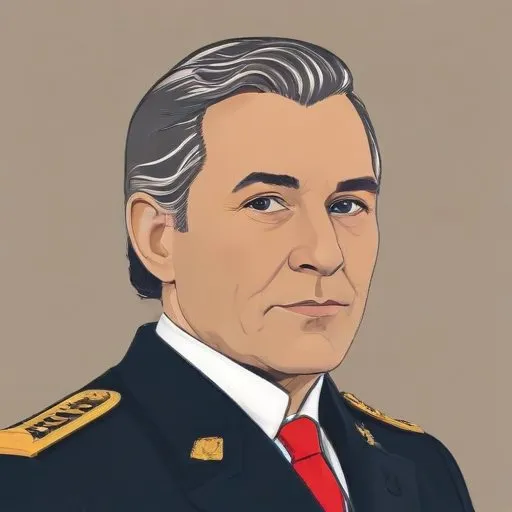
A frontier hero who led troops to victory in the American Revolutionary War and later served in the US House of Representatives, known for his bravery and military strategy.
Daniel Morgan is renowned for being one of the most skilled battlefield tacticians of the American Revolutionary War, leading the Continental Army to victory in the Battle of Cowpens. Born in New Jersey in 1735, Morgan went on to become a prominent figure in American history, leaving an indelible mark on the country's fight for independence.
Morgan was born to James and Eleanor Morgan, a Welsh family, in New Jersey. He was the fifth of seven children, and at the age of 17, he left home following a dispute with his father. He worked at various odd jobs in Pennsylvania before moving to the Shenandoah Valley, where he settled on the Virginia frontier.
In Virginia, Morgan worked as a teamster, running a sawmill, and clearing land. His hard work and determination allowed him to save enough money to purchase a large estate in Winchester, Virginia.
Morgan's military career began during the American Revolutionary War, where he served as an officer in the Virginia militia and recruited a company of riflemen. He played a crucial role in several significant battles, including the Saratoga campaign and the Philadelphia campaign.
After resigning from the army in 1779, Morgan returned to the battlefield following the Battle of Camden and led the Continental Army to victory in the Battle of Cowpens. This victory was a significant turning point in the war, and Morgan's tactics were instrumental in defeating the British forces.
After the war, Morgan retired from the army and focused on developing his estate in Virginia. He was recalled to duty in 1794 to help suppress the Whiskey Rebellion, where he commanded a portion of the army that remained in Western Pennsylvania after the rebellion.
Morgan's political career began when he joined the Federalist Party and ran for the United States House of Representatives. He was elected to the House in 1796 and served until 1799, when he retired from Congress.
Daniel Morgan's contributions to the American Revolutionary War and his role in shaping the country's fight for independence are undeniable. He is remembered as a skilled battlefield tactician, a dedicated soldier, and a patriotic American.
Today, Morgan's legacy can be seen in the many monuments and landmarks that bear his name, including the Daniel Morgan House in Winchester, Virginia, and the Daniel Morgan Monument in Cowpens, South Carolina.
Through his life and legacy, Daniel Morgan has left an indelible mark on American history, and his contributions continue to inspire and motivate Americans to this day.
Born in 1732
The first President of the United States, a military hero who led the country to independence, and set the standard for the office of the presidency. He's known for his honesty, integrity, and leadership skills.
Born in 1742
A skilled military strategist who played a crucial role in the American Revolutionary War, leading the Continental Army to several victories against the British.
Born in 1741
A traitorous American general who defected to the British Army during the American Revolutionary War, leading to a pivotal moment in American history.
Born in 1745
Led a decisive victory at the Battle of Fallen Timbers, securing American control over the Northwest Territory, and later served as a congressman from Georgia.
Born in 1750
First U.S. Secretary of War, instrumental in shaping the country's military and defense strategy, and a key figure in the American Revolutionary War.
Born in 1754
An American Revolutionary War officer and abolitionist who fought for independence from Britain and advocated for the emancipation of slaves. He was a close friend and aide to George Washington.
Born in 1755
First Secretary of the Treasury, founder of the US financial system, and key Founding Father, known for shaping the country's economic and banking infrastructure.
Born in 1743
The principal author of the Declaration of Independence and a strong advocate for individual liberties and limited government, shaping America's foundational principles. He oversaw the Louisiana Purchase, doubling the country's territory.
