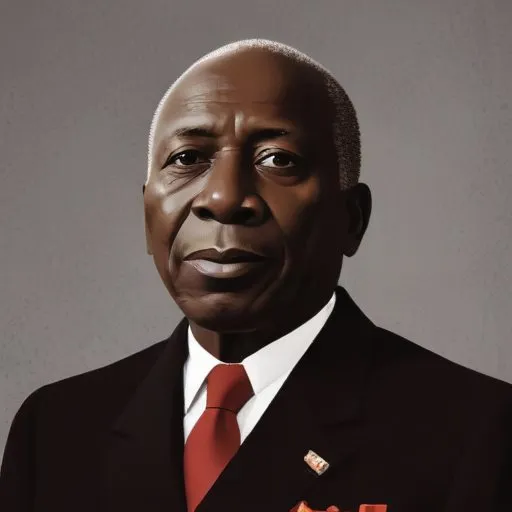
Daniel arap Moi: The Patriarch of Kenyan Politics
A Legacy of Power and Controversy
Daniel arap Moi is synonymous with Kenyan politics, having served as the country's second president from 1978 to 2002. He is the longest-serving president in Kenyan history, leaving an indelible mark on the nation's trajectory.
Early Life and Rise to Power
Born on September 2, 1924, in the Kenyan Rift Valley, Moi hails from the Tugen subgroup of the Kalenjin people. He studied at the Africa Inland Mission school and later trained as a teacher at the Tambach teachers training college. Moi's foray into politics began in 1955, when he was elected a member of the Legislative Council for Rift Valley.
As Kenya approached independence, Moi joined the Kenyan delegation that traveled to London for the Lancaster House Conferences, where the country's first post-independence constitution was drafted. In 1960, he founded the Kenya African Democratic Union (KADU) as a rival party to Jomo Kenyatta's Kenya African National Union (KANU).
Key Milestones and Achievements
- 1964: Moi merged KADU with KANU, and Kenyatta appointed him to his government.
- 1967: Moi became Vice President of Kenya under Kenyatta.
- 1978: Moi took over as president following Kenyatta's death.
- 1991: Moi allowed multiparty elections, leading his party, KANU, to victory in the 1992 and 1997 elections.
ALegacy of Controversy
Moi's regime was marred by allegations of corruption, human rights abuses, and electoral manipulation. Despite initial popularity, his presidency was marked by economic stagnation and declining international relations.
Philosophical Contributions and Beliefs
Moi was known for his "Nyayo Philosophy," which emphasized peace, love, and unity. However, critics argue that this philosophy was used to suppress dissent and justify authoritarian rule.
Personal Milestones and Key Life Events
- 1950: Moi married Helena Bomett, with whom he had eight children.
- 2002: Moi stepped down as president, ending his 24-year rule.
- 2020: Moi passed away on February 4, at the age of 95.
Impact on Modern Society
Moi's legacy continues to shape Kenyan politics and society. While his regime was marked by controversy, he played a significant role in shaping the country's post-independence landscape.
Despite his flaws, Moi remains a complex and fascinating figure in Kenyan history. His life and presidency serve as a reminder of the importance of political accountability, human rights, and democratic governance.
FAQ
What was Daniel arap Mois role in Kenyan politics?
Daniel arap Moi was the second President of Kenya, serving from 1978 to 2002, and playing a key role in the countrys transition from colonial rule to independence.
What were Daniel arap Mois early years like?
Daniel arap Moi was born in 1924 and grew up in a rural area of Kenya, later attending teacher training college and becoming a teacher.
How did Daniel arap Moi rise to power?
Daniel arap Moi rose to power through his involvement in the Kenyan African National Union, becoming Vice President under Jomo Kenyatta, and then assuming the presidency after Kenyattas death.
What were some of Daniel arap Mois notable policies?
Daniel arap Mois notable policies included efforts to promote economic development, improve education, and increase access to healthcare.
What is Daniel arap Mois legacy in Kenyan politics?
Daniel arap Mois legacy in Kenyan politics is complex, with both praise for his efforts to promote economic development and criticism for his authoritarian rule and human rights abuses.