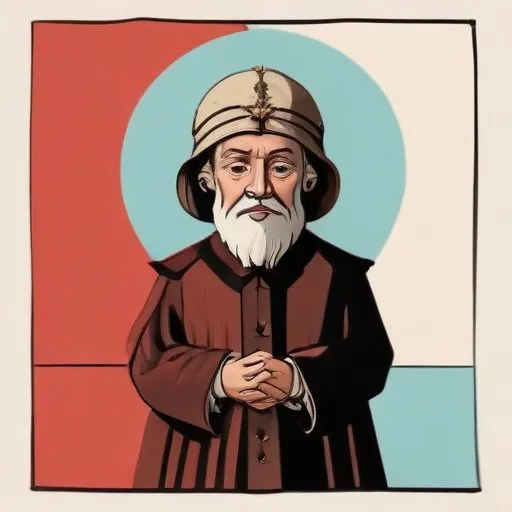
Daniele Barbaro

Daniele Barbaro

Daniele Barbaro was born on February 8th, 1514

Full Name: Daniele Matteo Alvise Barbaro
Place of Birth: Venice, Italy
Profession: Churchman, diplomat, scholar
Nationality: Venetian
Notable Work: Commentary on Vitruvius
Education: University of Padua
Position: Patriarch of Aquileia
Death Date: April 13, 1570

A 16th-century Venetian churchman, diplomat, and scholar who wrote influential commentaries on classical texts and was a key figure in the Renaissance humanist movement. He's also known for his work on perspective and architecture.

Written by: Aisha Patel Aisha Patel

Daniele Barbaro: The Renaissance Mastermind Behind Italy's Grandest Architectural Wonders

Daniele Barbaro, an Italian cleric, diplomat, architect, writer, and mathematician, is best known for his profound contributions to the world of architecture, leaving an indelible mark on Italy's grandest architectural wonders. As a cultural patron, Barbaro's influence on the Renaissance era's most renowned artists and architects is a testament to his visionary leadership and passion for the arts.

Barbaro's thirst for knowledge led him to study philosophy, mathematics, and optics at the University of Padua, where he developed a deep understanding of Vitruvius' works. His writings on architecture, particularly his translation and commentary on Vitruvius' treatise, "De Architectura," demonstrate his mastery of the subject and his dedication to preserving ancient wisdom.

A Diplomat and a Statesman

Barbaro's diplomatic prowess earned him the role of ambassador to the court of Edward VI in London, and later, as a representative at the Council of Trent. His ability to navigate the intricacies of international politics and diplomacy showcased his exceptional leadership skills, cementing his reputation as a shrewd statesman.

A Patron of the Arts

As a patron of renowned artists and architects, Barbaro's influence can be seen in the works of Torquato Tasso, Andrea Palladio, and Pietro Bembo. His friendship with Palladio led to the creation of the iconic Villa Barbaro, a masterpiece of Renaissance architecture, and a testament to the power of creative collaboration.

Barbaro's cultural contributions extend far beyond his own lifetime. His translations and commentaries on Vitruvius have influenced generations of architects, while his patronage of the arts has inspired countless artists and thinkers. As a cultural curator, his legacy continues to shape the world of architecture, Letters, and mathematics.

Key Works and Contributions

  • Translations and commentaries on Vitruvius' "De Architectura"
  • Design of the University of Padua's botanical garden
  • Villa Barbaro, a UNESCO World Heritage Site
  • Friend and patron of Torquato Tasso, Andrea Palladio, and Pietro Bembo

Personal Milestones and Key Life Events

  • Born in Venice on February 8, 1514
  • Studied philosophy, mathematics, and optics at the University of Padua
  • Served as ambassador to the court of Edward VI in London and representative at the Council of Trent
  • Died in Udine on April 13, 1570

Influence on Modern Society

Barbaro's cultural and architectural legacy continues to inspire modern architects, artists, and thinkers. His contributions to the Renaissance era's cultural and artistic landscape have paved the way for future generations of creatives, cementing his place as one of the most influential figures of the 16th century.

Quotes and Memorable Sayings

"The aim of architecture is to create a sense of harmony between the building and its surroundings."

As a testament to his enduring impact, Daniele Barbaro's life and works serve as a beacon of inspiration, illuminating the path for those who seek to create, innovate, and push the boundaries of human expression.

Timeline
1513
Born in Venice
Daniele Barbaro was born in Venice, Republic of Venice, to Francesco Barbaro and Giustiniana Loredan.
1535
Bishop of Aquileia
Daniele was appointed Bishop of Aquileia, a region in northeastern Italy.
1545
Patriarch of Aquileia
Daniele became the Patriarch of Aquileia, a higher rank in the Catholic Church.
1550
Died in Montecchio
Daniele Barbaro died in Montecchio, Republic of Venice, after a long career in the Church.
1569
Works published posthumously
Daniele Barbaros works, including his commentary on Vitruvius De Architectura, were published posthumously.
Daniele Barbaro

Daniele Barbaro Quiz

Daniele Barbaro was a key figure in which intellectual movement?

Score: 0/5
FAQ
What is Daniele Barbaros early life and education?
Daniele Barbaro was born in 1513 and received a humanist education in Venice, studying classical languages, literature, and philosophy, and later pursuing theological studies in Padua.
What are Daniele Barbaros notable achievements in scholarship?
Daniele Barbaros notable achievements in scholarship include his commentaries on Aristotelian philosophy, his translations of classical texts, and his contributions to the development of Venetian humanism.
How did Daniele Barbaro interact with the Catholic Church?
Daniele Barbaro interacted with the Catholic Church through his roles as a bishop, diplomat, and theologian, serving as a papal nuncio and participating in the Council of Trent, where he advocated for Church reform and the promotion of Catholic doctrine.
What is Daniele Barbaros legacy in Venetian history?
Daniele Barbaros legacy in Venetian history is that of a learned and influential figure who promoted humanist values, contributed to the development of Venetian culture, and served the Catholic Church in various capacities.
How did Daniele Barbaro balance his scholarly pursuits with his ecclesiastical career?
Daniele Barbaro balanced his scholarly pursuits with his ecclesiastical career by prioritizing his duties as a bishop and diplomat, while also finding time to write and publish scholarly works, often using his positions to promote education and intellectual inquiry.

Related People:

Andrea Gritti

Born in 1455

Led a successful military campaign against the Ottoman Empire, and later became the Doge of Venice, implementing significant reforms and strengthening the city's power.