


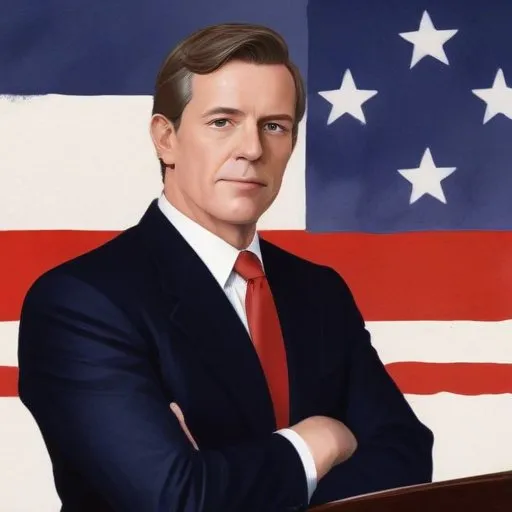
The 29th Governor of New York, a lawyer and politician who served from 1885 to 1891, is most known for his strong advocacy for education and infrastructure development. He also played a key role in the development of the Niagara Reservation, now known as Niagara Falls State Park.
David B. Hill, the 29th Governor of New York, is best known for his remarkable political career, which spanned over two decades, and his unwavering commitment to reform and social justice. From 1885 to 1891, Hill served as Governor, leaving an indelible mark on the state's history.
Born on August 29, 1843, in Havana, New York, Hill was educated locally and went on to study law. He began his legal practice in Elmira in 1864, where he quickly made a name for himself as a skilled lawyer and politician.
In 1882, Hill was elected Lieutenant Governor alongside Grover Cleveland, who later resigned to become President of the United States. Hill succeeded Cleveland as Governor, winning the election in his own right in 1885 and 1888.
During his tenure as Governor, Hill implemented several notable reforms, including:
In 1892, Hill launched an unsuccessful bid for the presidency, running on a platform of bimetallism. Although he lost the nomination to Grover Cleveland, Hill continued to serve the people of New York, representing the state in the United States Senate from 1892 to 1897.
David B. Hill passed away on October 20, 1910, leaving behind a legacy of public service and commitment to reform. His contributions to the state of New York and the nation as a whole continue to inspire future generations of politicians and citizens alike.
Hill's unwavering dedication to social justice and reform has left an indelible mark on American politics. His advocacy for labor rights, environmental protection, and civil service reform continues to shape the political landscape. As a champion of the people, David B. Hill remains an iconic figure in American history.
Born in 1837
The first Democrat elected after the Civil War, he served two non-consecutive terms, earning him a unique spot in history, and is often remembered for his strong leadership and commitment to limited government.
Born in 1858
A pioneering leader who championed progressive reforms, trust-busting, and conservation, earning a Nobel Peace Prize for mediating the Russo-Japanese War. He's also famous for his rugged outdoorsmanship and "big stick" diplomacy.
Born in 1843
The 25th President of the United States, a strong leader who championed high tariffs and annexed Hawaii, is most known for being assassinated at the 1901 World's Fair. He played a significant role in shaping the country's economy and foreign policy.
Born in 1824
The 22nd Vice President of the United States, a prominent banker and politician who served under President Benjamin Harrison from 1889 to 1893, known for his strong advocacy for the gold standard and his role in shaping the country's monetary policy.
Born in 1829
The 21st President of the United States, a strong advocate for civil service reform, is most known for signing the Pendleton Civil Service Act, which transformed the federal government's hiring practices. He's also remembered for his unexpected rise to presidency after the assassination of James A. Garfield.
Born in 1882
Led the United States through the Great Depression and World War II, implementing a series of reforms known as the New Deal and helping to establish the country as a global superpower.
Born in 1782
The first president born after American independence, he's known for being a skilled politician and statesman who navigated the country through the Panic of 1837. He's also remembered for being the first president born a citizen of the United States.
Born in 1800
The 13th President of the United States, a member of the Whig party, is known for being a compromise candidate and signing the Compromise of 1850, which attempted to address the issue of slavery in new states. He's also notable for being one of the lesser-known presidents in U.S. history.
