


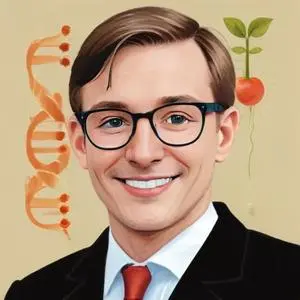
A renowned geneticist and academic who made groundbreaking discoveries in RNA interference, revolutionizing our understanding of gene regulation and earning a Nobel Prize in Physiology or Medicine.
Sir David Baulcombe is a British plant scientist and geneticist renowned for his groundbreaking research on messenger RNA (mRNA) and its role in plant development. His pioneering work has shed light on the complex mechanisms governing plant growth and behavior, earning him numerous accolades and recognition in the scientific community.
Born in 1952 in Solihull, West Midlands, Baulcombe developed an interest in botany at an early age. He pursued his passion at the University of Leeds, where he graduated with a Bachelor of Science degree in botany in 1973. Later, he earned his Doctor of Philosophy degree in 1977 from the University of Edinburgh, under the supervision of John Ingle, for his research on mRNA in vascular plants.
Following his PhD, Baulcombe spent three years as a postdoctoral fellow in North America, dividing his time between McGill University in Montreal, Canada, and the University of Georgia in Athens, Georgia, USA. In 1980, he returned to the UK, joining the Plant Breeding Institute in Cambridge as an independent scientist.
Throughout his career, Baulcombe has held various prestigious positions, including Senior Research Scientist at the Sainsbury Laboratory in Norwich, and later, as a professor at the University of East Anglia. In 2007, he was appointed as the Professor of Botany at Cambridge University, a position he held until 2020, when he was succeeded by Ottoline Leyser.
Baulcombe's contributions to the field of plant genetics have been recognized with numerous awards and honors. He was elected as a Member of the European Molecular Biology Organization (EMBO) in 1995 and was awarded the Royal Medal in 2002. In 2006, he was knighted for his services to science.
Baulcombe's research has far-reaching implications for agriculture, ecology, and environmental science. His work on mRNA has paved the way for the development of novel crop varieties, improved plant breeding techniques, and a deeper understanding of plant responses to environmental stimuli.
Baulcombe's work is guided by a deep appreciation for the intricate complexity of plant biology. He believes that understanding the fundamental mechanisms governing plant growth and behavior is crucial for addressing global challenges such as food security, climate change, and biodiversity conservation.
Although not a household name, Baulcombe's research has contributed significantly to the development of novels crops and agricultural practices. His work has indirectly influenced popular culture, from the food we eat to the environment we inhabit.
Sir David Baulcombe's legacy extends beyond his scientific contributions. He has inspired a new generation of plant scientists and researchers, leaving an indelible mark on the field of plant genetics and beyond.
Born in 1916
Pioneering scientist who discovered the structure of DNA, revolutionizing our understanding of genetics and life itself.
98 Years Old
Discovered the structure of DNA, revolutionizing our understanding of genetics and earning a Nobel Prize. Pioneering work in molecular biology has far-reaching implications for medicine and beyond.
Born in 1920
A British scientist who contributed significantly to the discovery of the structure of DNA, providing high-quality X-ray crystallography images that helped James Watson and Francis Crick develop their famous model.
Born in 1916
A Nobel Prize-winning physicist and biologist who contributed significantly to the discovery of the structure of DNA, using X-ray crystallography to produce the first clear images of the molecule.
Born in 1901
Pioneering chemist and peace activist who won two unshared Nobel Prizes, one for chemistry and one for peace, for his groundbreaking work on the nature of the chemical bond and his tireless efforts to promote nuclear disarmament.
Born in 1850
A Nobel Prize-winning biologist who made groundbreaking discoveries in molecular biology, particularly in understanding the replication of viruses and DNA.
Born in 1925
A pioneering geneticist who discovered bacterial gene recombination and transduction, revolutionizing our understanding of genetic inheritance and earning a Nobel Prize.
