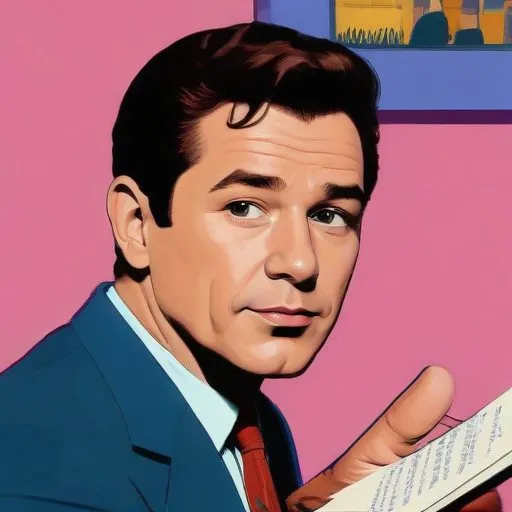
David Goodis: The Master of Noir Fiction
A Life of Crime and Empathy
David Goodis was an American writer of crime fiction, renowned for his output of short stories and novels in the noir fiction genre. His distinctive style and unique perspective on the world of crime and outsiders have made him a household name among fans of the genre.
Early Life and Influences
Born on March 2, 1917, in Philadelphia, Pennsylvania, Goodis was the oldest child of William Goodis and Mollie Halpern Goodis. His father, a Russian-Jewish immigrant, co-owned a newspaper dealership and later ventured into the textile business. Goodis's family background and upbringing had a profound impact on his writing, allowing him to empathize with outsiders, the working poor, and the unjustly accused.
Rise to Prominence
Goodis attended Simon Gratz High School, where he was an active student, editing the school newspaper, serving as student council president, and participating in athletics. He graduated as valedictorian in 1935, delivering a speech titled "Youth Looks at Peace." He continued to pursue his interests in college, contributing to the student newspaper as both a writer and cartoonist. It was during this period that he attempted to write his first novel, "Ignited," which was never published.
Goodis's writing career took off in the 1940s, with the publication of his novel "Dark Passage" in 1946. The book's success was followed by the release of "Nightfall" in 1947, which cemented his reputation as a master of noir fiction. Goodis's unique style, characterized by his dark and gritty portrayals of crime and its consequences, resonated with readers and critics alike.
Major Works and Adaptations
Goodis's notable works include:
- "The Blonde on the Street Corner" (1954)
- "Street of No Return" (1954)
- "The Moon in the Gutter" (1953)
- "Cassidy's Girl" (1951)
- "Of Tender Sin" (1949)
Several of Goodis's novels have been adapted into films, including "Dark Passage" (1947), starring Humphrey Bogart, and "Nightfall" (1957), starring Aldo Ray.
Philosophical Contributions and Beliefs
Goodis's writing was not only entertaining but also socially conscious. He often explored themes of poverty, inequality, and the struggles of the working class. His empathy for outsiders and his ability to identify with their struggles have been cited as a key factor in his writing's enduring appeal.
Legacy and Influences
David Goodis's contribution to the noir fiction genre is immeasurable. His unique style and perspective have influenced generations of writers, including French filmmakers like Francois Truffaut and Jean-Luc Godard, who have often cited Goodis as an inspiration. Today, Goodis's work continues to be celebrated for its gritty realism, complex characters, and thought-provoking themes.
Controversies and Public Perception
Despite his success, Goodis's life was not without controversy. His struggles with personal demons, including depression and addiction, have been well-documented. However, his writing remains a testament to his resilience and dedication to his craft.
Quotes and Memorable Sayings
"I've always been fascinated by the underside of life. The people who live on the margins, who are fighting to survive, who are driven by desperation." - David Goodis
Historical Context and Legacy
Goodis's work is often seen as a reflection of the tumultuous era in which he lived. His writing captured the mood and atmosphere of post-war America, with its themes of disillusionment, anxiety, and social change. Today, his legacy continues to inspire new generations of writers, filmmakers, and readers alike.
FAQ
What genre of fiction did David Goodis primarily write in?
David Goodis primarily wrote in the genre of crime fiction, particularly noir fiction, which explores the darker aspects of human nature and society. His novels and short stories often featured gritty, hard-boiled protagonists and atmospheric, crime-ridden settings.
Which of David Goodiss novels was adapted into a famous film?
David Goodiss novel Dark Passage was adapted into a famous film in 1947, starring Humphrey Bogart and Lauren Bacall. The film was a critical and commercial success, and its success helped to establish Goodis as a prominent writer of crime fiction.
How did David Goodiss life influence his writing?
David Goodiss life had a significant impact on his writing, with his experiences growing up in Philadelphias Jewish community and his struggles with poverty and isolation informing his work. Goodiss writing often explored themes of alienation and social injustice.
What was David Goodiss relationship with the French New Wave movement?
David Goodiss work was highly influential to the French New Wave movement, which emerged in the 1950s and 1960s. French filmmakers such as François Truffaut and Jean-Luc Godard were heavily influenced by Goodiss noir fiction, and his work was frequently adapted into films by these directors.
How did David Goodiss writing style contribute to the noir genre?
David Goodiss writing style was characterized by its dark, poetic, and introspective tone, which helped to establish him as a master of the noir genre. Goodiss writing often explored the psychological and emotional depths of his characters, creating a sense of atmosphere and tension that was central to the noir style.