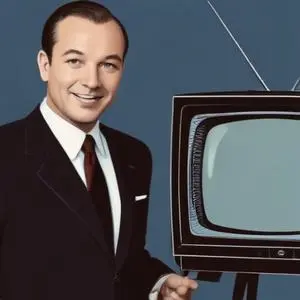
David Sarnoff: The Visionary Who Shaped the Future of Radio and Television
A Pioneer in Electronic Communications
David Sarnoff, a Russian-born American businessman, left an indelible mark on the history of radio and television. He is renowned for leading RCA (Radio Corporation of America) for most of his career, transforming it into a global telecommunications and media conglomerate.
Early Life and Career
Born on February 27, 1891, in Uzlyany, Russian Empire (now Belarus), to a Jewish family, Sarnoff's early life was marked by hardship and perseverance. His father, Abraham, emigrated to the United States, and Sarnoff joined him in New York City in 1900, where he worked as a newsboy to support his family. A chance encounter led him to the Marconi Wireless Telegraph Company of America, where he began a 60-year journey in electronic communications.
Rise to Prominence
Sarnoff's dedication and passion for innovation propelled him from an office boy to commercial manager at Marconi. He worked at various stations, including ships and posts, and installed and operated wireless equipment. In 1911, he installed a wireless station at the New York Wanamaker Department Store. His experiences and self-study in libraries equipped him with a deep understanding of electronic communications.
Leadership and Vision
In 1919, Sarnoff joined RCA, which became his lifelong passion. He played a crucial role in shaping the company's destiny, becoming its general manager in 1921. Under his leadership, RCA developed the first commercial radio broadcasting system, paving the way for a new era in entertainment and communication. Sarnoff's vision extended to television, and in 1939, RCA introduced the first regular television service.
Wartime Contributions and Honors
During World War II, Sarnoff served as a liaison officer between the U.S. Army and the War Department, earning the rank of Reserve Brigadier General of the Signal Corps in 1945. He was thereafter widely known as "The General." His war efforts earned him numerous awards, including the Distinguished Service Medal.
Legacy and Impact
Sarnoff's contributions to radio and television have had a lasting impact on modern society. He was a pioneer in electronic communications, and his leadership transformed RCA into a global powerhouse. He served as a bridge between the early days of radio and the dawn of television, shaping the course of both industries.
Personal Milestones and Key Life Events
- 1900: Emigrated to the United States with his mother and siblings
- 1906: Joined the Marconi Wireless Telegraph Company of America
- 1911: Installed a wireless station at the New York Wanamaker Department Store
- 1919: Joined RCA
- 1921: Became general manager of RCA
- 1939: Introduced the first regular television service
- 1945: Earned the rank of Reserve Brigadier General of the Signal Corps
- 1970: Retired from RCA
Quotes and Memorable Sayings
- "Television is a new drama, and the drama is not just the plot, but the technique itself."
- "The very existence of television is a challenge to the imagination."
Awards and Honors
- Distinguished Service Medal
- Reserve Brigadier General of the Signal Corps
- Inducted into the National Inventors Hall of Fame
Historical Context and Legacy
David Sarnoff's life and achievements serve as a testament to the power of innovation and leadership. His contributions to radio and television have left an indelible mark on modern society, shaping the course of entertainment, communication, and technology. As a pioneer in electronic communications, Sarnoff's legacy continues to inspire generations of inventors, entrepreneurs, and visionaries.
FAQ
What was David Sarnoffs role in the development of radio broadcasting?
David Sarnoff was an American businessman who played a crucial role in the development of radio broadcasting, transmitting the first distress signal from the Titanic and later founding NBC.
How did David Sarnoffs entrepreneurial spirit shape the broadcasting industry?
Sarnoffs innovative spirit and business acumen helped establish NBC as a dominant force in radio and later television broadcasting, shaping the landscape of American media.
What was David Sarnoffs most notable achievement in broadcasting?
David Sarnoffs most notable achievement was his role in the development of television broadcasting, transmitting the first public demonstration of TV in 1929 and later launching NBCs television network.
How did David Sarnoffs military service impact his career?
Sarnoffs service in the US Navy during WWI and WWII influenced his understanding of the importance of communication and technology, driving his entrepreneurial endeavors in broadcasting.
What legacy did David Sarnoff leave on the broadcasting industry?
David Sarnoffs innovative spirit, entrepreneurial drive, and vision for the future of broadcasting left a lasting impact on the industry, shaping the course of American media and communication.