


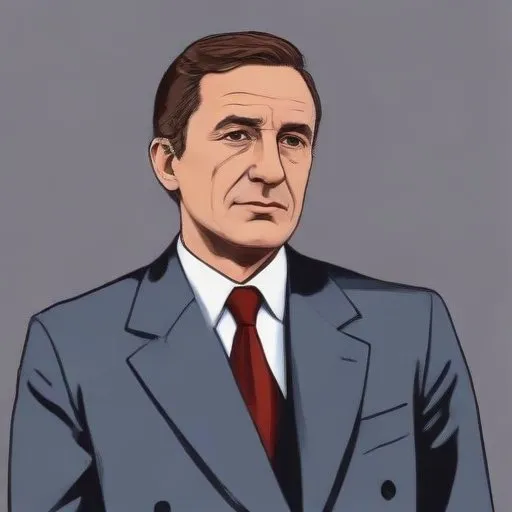
A British businessman and Conservative politician who served as a government minister and was a key figure in Margaret Thatcher's government, known for his role in shaping the UK's economic policies.
David Wolfson, Baron Wolfson of Sunningdale, was a renowned British Conservative politician and businessman, best known for his influential roles in the retail industry and his association with former Prime Minister Margaret Thatcher. Throughout his career, he held various esteemed positions, including director and chairman of prominent companies such as Great Universal Stores (GUS) and Next plc.
Wolfson was born on 3 November 1935 in Willesden, London, to Charles and Hylda Wolfson (née Jarvis). He was educated at Clifton College and Trinity College, Cambridge, where he graduated with a Master of Arts in economics and law in 1956. Furthering his education, he received a Master of Business Administration from Stanford University, California, in 1959.
In 1973, Wolfson became the director of GUS, a company founded by his uncle Isaac Wolfson as a mail-order clothing business. He held this position until 1978 and again from 1993 to 2000, also serving as chairman from 1996 to 2000. During this period, he was introduced to Margaret Thatcher by Alistair McAlpine, the Conservative Party treasurer, in 1975.
Wolfson's influence extended to various companies, including Alexon Group plc, which he chaired from 1982 to 1986, and Next plc, where he held the chairmanship from 1990 to 1998. He also chaired William Baird from 2002 to 2003 and Fibernet from 2002.
In 1984, Wolfson was knighted, and in 1991, he was created a life peer with the title Baron Wolfson of Sunningdale, of Trevose in the County of Cornwall.
Wolfson married three times, with his first wife being Patricia Rawlings, now Baroness Rawlings.
Throughout his remarkable career, David Wolfson, Baron Wolfson of Sunningdale, left an indelible mark on British politics and business, exemplifying his dedication, perseverance, and leadership.
In conclusion, Wolfson's legacy serves as a testament to his unwavering commitment to his country and his industry, inspiring future generations to follow in his footsteps.
Born in 1925
The first female Prime Minister of the United Kingdom, serving from 1979 to 1990, known for her conservative policies and leadership during the Falklands War.
83 Years Old
A former Prime Minister of the United Kingdom, he led the country from 1990 to 1997, playing a key role in shaping the nation's economy and foreign policy during a tumultuous period.
73 Years Old
The former Prime Minister of the United Kingdom who led the country through a transformative period, including the Iraq War, and is known for his charismatic leadership and controversial decisions.
75 Years Old
The Prime Minister of the United Kingdom from 2007 to 2010, known for his key role in shaping the country's economy and response to the 2008 global financial crisis.
59 Years Old
The former Prime Minister of the United Kingdom who led the country from 2010 to 2016, known for his role in the Brexit referendum and austerity measures.
55 Years Old
Former Chancellor of the Exchequer who oversaw the UK's economy during a period of austerity, implementing significant spending cuts and tax reforms. Known for his role in shaping the country's economic policy.
65 Years Old
A British politician who served as First Secretary of State and led the Conservative Party, known for his diplomatic efforts and advocacy for human rights and democracy. He played a significant role in shaping UK foreign policy.
93 Years Old
A Deputy Prime Minister of the UK, known for his influential role in British politics and his leadership of the Conservative Party during the 1990s. He's also a successful businessman with interests in publishing and property.
