


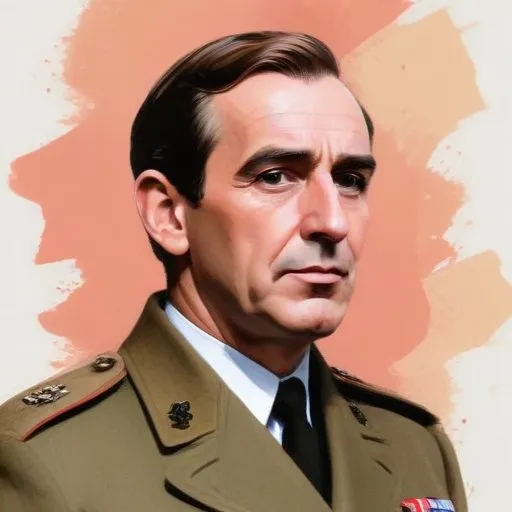
A British politician who served as Chancellor of the Exchequer from 1974 to 1979, known for his efforts to stabilize the UK's economy during a period of high inflation and economic crisis.
Denis Healey, a stalwart of British politics, is best known for serving as Chancellor of the Exchequer from 1974 to 1979 and Secretary of State for Defence from 1964 to 1970. His bushy eyebrows, avuncular manner, and creative turns of phrase made him a household name, but it was his economic acumen that earned him both accolades and criticism.
Healey's political career spanned over four decades, during which he held some of the most influential positions in British politics. As Defence Secretary, he oversaw a significant reduction in defence spending, earning him the title of the longest-serving Defence Secretary to date.
Later, as Chancellor of the Exchequer, Healey navigated the treacherous waters of international finance, securing a loan from the International Monetary Fund (IMF) to stabilize Britain's economy. Though the move was criticized for imposing external conditions on public spending, it helped Britain avoid economic catastrophe.
Healey's economic philosophy was rooted in a mix of socialism and pragmatism. He believed in the importance of a strong public sector, but also recognized the need for fiscal responsibility. His approach often put him at odds with more radical elements within the Labour Party, earning him a reputation as a moderate.
Healey's economic policies, though sometimes contentious, helped shape Britain's economic landscape in the 1970s. His efforts to stabilize the economy and reduce inflation paved the way for future governments to tackle similar challenges.
Healey's decision to seek an IMF loan was widely criticized, with many seeing it as a-loss of sovereignty. Additionally, his policies were often at odds with the more radical elements within the Labour Party, leading to criticisms that he was too centrist.
"The only proposition which is put forward as a means of improving the position of the workers is to increase the purchasing power of the worker. It is a proposition which I believe to be fundamentally sound, but it is a proposition which can only be carried out if the employer is in a position to pay."
Healey's career spanned a tumultuous period in British history, marked by economic crisis, Cold War tensions, and social change. His legacy is that of a pragmatic politician who steered Britain through some of its most challenging times.
Though controversy often followed him, Healey's commitment to public service and his role in shaping Britain's economic landscape have earned him a place in the pantheon of British politics.
Born in 1885
Won the 1952 Olympic Games marathon in Helsinki, Finland, and held the world record in the marathon from 1952 to 1953.
Born in 1912
A British politician who served as Prime Minister from 1976 to 1979, known for his efforts to stabilize the economy and navigate the country through a period of industrial unrest.
Born in 1920
A British politician who served as President of the European Commission, known for his progressive reforms and efforts to create a more unified Europe. He played a key role in shaping the EU's modern identity.
Born in 1925
A pioneering politician who championed socialism and workers' rights, known for his radical views and advocacy for nationalization of key industries.
Born in 1913
A British Labour Party leader and passionate orator who championed workers' rights and opposed nuclear proliferation. He's remembered for his strong socialist stance and charismatic leadership style.
84 Years Old
A Welsh politician who served as Vice-President of the European Commission, known for his efforts to reform the European Union and promote social democracy. He's a prominent figure in British politics, leading the Labour Party in the 1980s.
48 Years Old
South Africa's former rugby team captain and hooker, known for leading the Springboks to World Cup victory in 2007 and becoming the first player to captain a team to 50 Test wins.
75 Years Old
The Prime Minister of the United Kingdom from 2007 to 2010, known for his key role in shaping the country's economy and response to the 2008 global financial crisis.
