


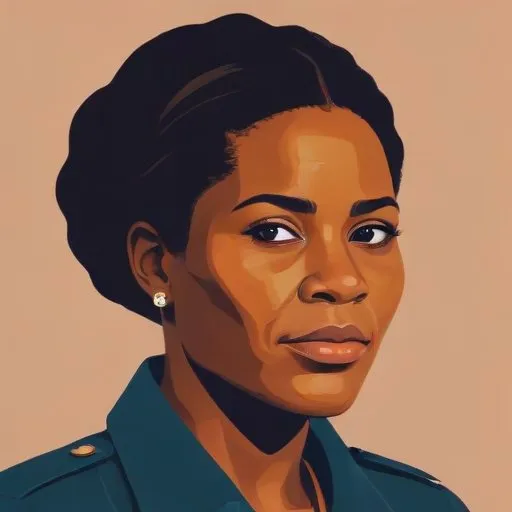
Angolan nationalist and women's rights activist who fought for independence from Portugal and advocated for women's education and equality.
Deolinda Rodrguez de Almeida is widely recognized as a pioneering Angolan poet, writer, and national heroine, celebrated for her powerful voice in the fight against colonialism and her unwavering dedication to the Angolan independence movement. Her remarkable body of work, characterized by its passion, lyricism, and commitment to social justice, has left an indelible mark on the literary landscape of Angola and beyond.
Deolinda Rodrguez de Almeida was born in 1939 in Catete, Angola, during the height of Portuguese colonial rule. Growing up in a society marred by racial segregation and oppression, Almeida's early life was marked by a deep-seated desire for freedom and equality. This conviction would later fuel her literary pursuits, as she became one of the leading voices in the fight against colonialism.
Almeida's poetry is a testament to her unwavering commitment to the Angolan independence movement. Her works, infused with a deep sense of patriotism and social consciousness, addressed the struggles, sorrows, and triumphs of the Angolan people under colonial rule. Through her poetry, Almeida gave voice to the voiceless, capturing the essence of the struggle for independence and self-determination.
Deolinda Rodrguez de Almeida's contributions to Angolan literature and her tireless advocacy for independence have been recognized with numerous awards and honors, including:
Deolinda Rodrguez de Almeida's life and work serve as a beacon of inspiration to generations of Angolans and Africans alike. Her poetry, infused with a deep sense of patriotism and social consciousness, continues to resonate with people fighting for freedom, justice, and equality around the world. As a national heroine, her legacy serves as a testament to the power of resistance, perseverance, and the unwavering commitment to social justice.
Through her remarkable body of work, Deolinda Rodrguez de Almeida has left an indelible mark on the literary landscape of Angola and beyond, cementing her place as one of the most important and influential African writers of her generation.
Born in 1922
Angola's first president and a celebrated poet, he led the country to independence from Portugal and is revered for his nationalistic and literary contributions.
