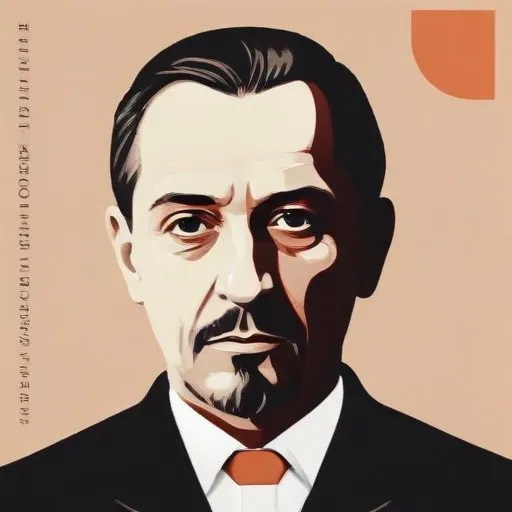
Dominik Tatarka: The Courageous Critic of Stalinism
A Fearless Satirist Unafraid to Speak Truth to Power
Dominik Tatarka is renowned for his daring 1956 satire,
The Demon of Consent, a scathing critique of Stalinism that shook the foundations of the Communist regime in Czechoslovakia. This seminal work, penned during a time of crippling oppression, cemented Tatarka's reputation as a courageous writer unafraid to challenge the status quo.
Early Life and Education
Born on March 14, 1913, in Plevnik-Drienov, Slovakia, Tatarka was the second youngest of eight children to Jozef Tatarka and Sofia Tatarkova. He received his primary education in his hometown before pursuing secondary education at grammar schools in Nitra and Trenčín. Tatarka's academic pursuits continued at Charles University in Prague and later at the Sorbonne in Paris, where he studied Slovak and French languages.
The Road to Dissent
Following his return from studies abroad, Tatarka worked as a French language teacher in Šilina and Martin. During World War II, he joined the illegal Communist Party of Czechoslovakia and participated in the Slovak National Uprising. In the early 1950s, he served as an editor for various Slovak newspapers, including
Pravda and
Národná obroda, and wrote propagandist books and movie scripts celebrating the Communist party's role in defeating fascism.
A Change of Heart
However, Tatarka's initial enthusiasm for the Communist regime began to wane in the late 1950s. He became disillusioned with the cult of personality and lack of debate within the regime, which inspired him to write
The Demon of Consent. This groundbreaking work, penned in 1954, satirically analyzed the role of conformists in maintaining totalitarian regimes.
A Leading Voice of the Prague Spring
In the 1960s, Tatarka emerged as a prominent supporter of the Prague Spring liberalization agenda, which sought to democratize the Communist party. His unwavering commitment to the cause earned him recognition as a leading voice of the era.
Legacy
Tatarka's courageous critique of Stalinism and his role in the Prague Spring have left an indelible mark on Slovak literature and history. His work continues to inspire generations of writers, intellectuals, and dissidents, serving as a powerful testament to the transformative power of courageous dissent.
Major Works
- The Demon of Consent (1956)
- Fiasco (1963)
- The Uninvited Guest (1965)
Quotes and Memorable Sayings
"Conformity is the enemy of humanity."
"Silence is the greatest crime in a totalitarian regime."
FAQ
What is Dominik Tatarka known for in Slovak literature?
Dominik Tatarka is renowned for his influential works of Slovak literature, which often explored themes of social justice, morality, and human relationships.
What was Dominik Tatarkas writing style?
Tatarkas writing style was characterized by its lyricism, philosophical depth, and nuanced exploration of the human condition, earning him critical acclaim in Slovakia and beyond.
What awards did Dominik Tatarka receive for his writing?
Tatarka received several prestigious awards for his work, including the Slovak National Award for Literature and the Czechoslovak State Prize for Literature.
What themes did Dominik Tatarka explore in his writing?
Tatarkas writing often addressed themes of social justice, morality, and human relationships, reflecting his deep concern for the human condition and his commitment to promoting social change.
What is Dominik Tatarkas legacy in Slovak literature?
Tatarkas contributions to Slovak literature have had a lasting impact, inspiring generations of writers and earning him a place among the leading figures of 20th-century Slovak literature.