


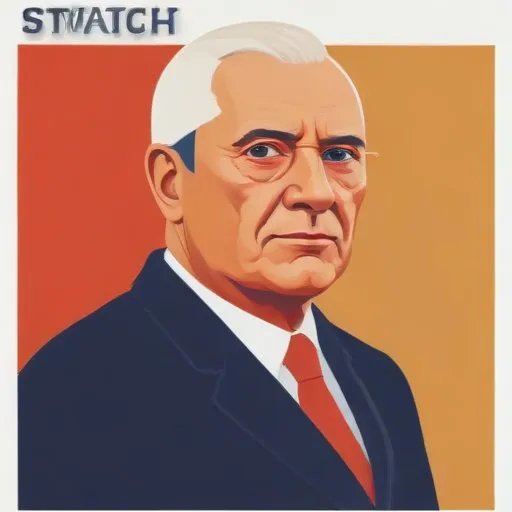
A 19th-century Slovak nationalist who played a key role in the country's language and cultural revival, and is credited with developing the modern Slovak language.
Ťudovít Štúr is revered as one of the most important figures in Slovak history, renowned for his instrumental role in the Slovak national revival in the 19th century and his authorship of the Slovak language standard. He was a multifaceted personality, excelling as a revolutionary, politician, writer, poet, journalist, publisher, teacher, philosopher, linguist, and member of the Hungarian Parliament.
Štúr was born on October 28, 1815, in Uhrovec, in the Austrian Empire (now Slovakia), to Samuel and Anna Štúr. He received his basic education from his father, including the study of Latin. Between 1827 and 1829, he attended a lower grammar school in Gyr, where he improved his knowledge of history, German, Greek, and Hungarian languages.
From 1829 to 1836, Štúr studied at the prestigious Lutheran Lceum preparatory high school and college in Pressburg (now Bratislava), where he became a member of the Czech-Slav Society. This association stimulated his interest in all Slav nations and sparked his admiration for notable figures like Pavel Jozef Šafárik, Ján Kollár, and Josef Dobrovský.
Štúr's literary journey began in 1831, when he penned his first poems. He went on to play a pivotal role in shaping the Slovak language, ultimately codifying the modern Slovak language standard. His efforts aimed to unify the various dialects spoken across Slovakia, fostering a sense of national identity among the Slovak people.
Štúr was an organizer of the Slovak volunteer campaigns during the Hungarian Revolution of 1848. He was elected to the Hungarian Parliament, where he advocated for Slovak rights and autonomy. His revolutionary spirit and commitment to the Slovak cause earned him recognition as a key figure in the Slovak national revival.
Ťudovít Štúr's contributions to Slovak literature, language, and politics have left an indelible mark on Slovak history. He is celebrated as a national hero, and his legacy continues to inspire Slovaks around the world. His commitment to the Slovak cause has made him an iconic figure, symbolizing the struggle for national identity and self-determination.
Today, Štúr's legacy extends beyond Slovakia's borders, serving as a beacon of inspiration for nations and communities fighting for their rights and identities. His remarkable life and work continue to captivate and motivate generations, cementing his position as one of the most important figures in Slovak history.
Born in 1815
A 19th-century Slovak nationalist who played a key role in the country's language and cultural revival, and is credited with developing the modern Slovak language.
Born in 1849
A national poet and playwright who masterfully wove Slovak folklore into his works, earning him a revered place in Slovak literature.
