


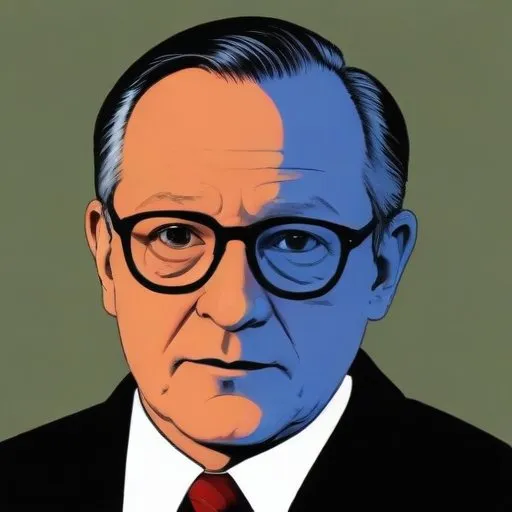
Experimental writer of postmodern short stories and novels that blend playfulness, satire, and philosophical inquiry, known for pushing literary boundaries and challenging traditional narrative forms.
Donald Barthelme, the American short story writer and novelist, is renowned for his playful, postmodernist style of short fiction that defied conventions and redefined the boundaries of literary storytelling. His innovative approach to narrative, characterized by fragmentation, experimentation, and irreverence, earned him a reputation as a pioneer of contemporary American literature.
Barthelme was born on April 7, 1931, in Philadelphia, Pennsylvania, to a family that valued education and creativity. His father, a professor of architecture, and his mother, a student at the University of Pennsylvania, instilled in him a love for learning and an appreciation for the arts. Two years later, the family moved to Texas, where Barthelme would spend most of his life.
Barthelme's early fascination with writing was evident in his high school days, where he won a Scholastic Writing Award in Short Story in 1949. He attended the University of Houston, studying journalism and philosophy, and later started a literary journal called Forum, which published works by prominent writers, including Norman Mailer, Walker Percy, and William H. Gass.
In 1951, Barthelme began his journalism career at the Houston Post, where he wrote articles and later became a reporter. Two years later, he was drafted into the U.S. Army and served in Korea, where he edited an Army newspaper and worked in the Public Information Office of the Eighth Army. After his military service, he returned to the Houston Post and continued his studies at the University of Houston.
Barthelme's writing career spanned over three decades, during which he published numerous short stories, novels, and essays that showcased his unique postmodernist style. His works often featured fragmented narratives, playful use of language, and a blend of humor, irony, and social commentary. Some of his notable works include Come Back, Dr. Caligari (1964), Sadness (1972), and The Dead Father (1975).
Barthelme's contributions to literature extended beyond his own writing. He co-founded the literary magazine Fiction with Mark Mirsky and was a professor at various universities, including the University of Houston, where he helped establish the Creative Writing Program.
Barthelme's innovative writing style and contributions to literature earned him several awards and honors, including a Guggenheim Fellowship (1966), the National Book Award nomination for Snow White (1967), and the Rea Award for the Short Story (1982).
Donald Barthelme's legacy extends far beyond his own works. His postmodernist approach to storytelling influenced a generation of writers, including Thomas Pynchon, Don DeLillo, and David Foster Wallace. His experimentation with form and language paved the way for future innovations in literary fiction.
Barthelme's influence can be seen in various aspects of modern culture, from the fragmented narratives of contemporary television shows to the playful use of language in advertising and social media. His legacy continues to inspire writers, artists, and thinkers who seek to challenge conventions and push the boundaries of creative expression.
89 Years Old
A postmodern novelist known for blending paranoia, history, and surrealism in complex, sprawling narratives that defy easy interpretation. His works often explore the interconnectedness of conspiracy, technology, and human experience.
89 Years Old
Acclaimed author of novels, essays, and plays that explore American culture, politics, and identity, often blending fiction and reality. Known for his unique writing style and thought-provoking themes.
Born in 1922
A postmodern novelist and academic who wrote complex, satirical works that critiqued modern society and the role of art within it.
67 Years Old
Academy Award-nominated actor known for his intense, nuanced performances in independent films and TV series, often playing complex, troubled characters.
Born in 1922
A satirical and socially conscious writer who crafted unique blends of science fiction, humor, and anti-war commentary, leaving an indelible mark on American literature.
Born in 1923
Acclaimed author of satirical novels and plays that critique societal norms, best known for his classic novel "Catch-22".
91 Years Old
A counterculture icon of the 1960s, known for whimsical, humorous, and poignant writings that blended fantasy and reality, often exploring themes of love, nature, and social commentary.
91 Years Old
Counterculture icon and author of psychedelic novels, most famously "One Flew Over the Cuckoo's Nest", which critiques societal norms and explores the human condition.
