


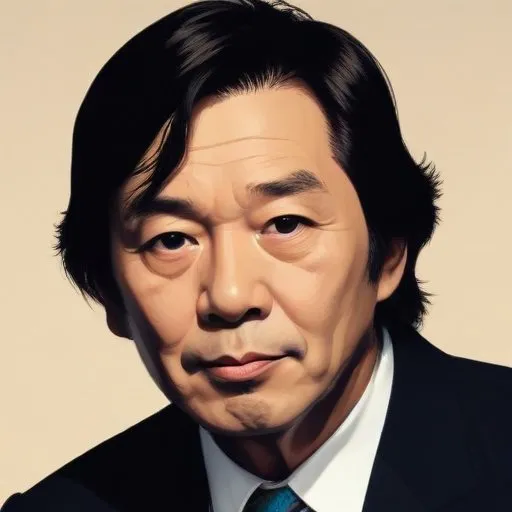
A renowned author and critic who explored Japanese culture, film, and literature, offering insightful perspectives on the country's art and society.
Donald Richie is renowned for his profound impact on the global understanding of Japanese culture, particularly Japanese cinema. As a pioneering film historian, critic, and author, Richie dedicated his life to exploring and sharing the complexities of Japanese film with the world.
Born on April 17, 1924, in Lima, Ohio, Richie's fascination with Japan began during his service in the United States Merchant Marine during World War II. He joined the American occupation force in 1947, and it was during this time that he discovered his passion for Japanese culture and cinema.
Richie's friendship with Kashiko Kawakita, a Japanese translator and writer, introduced him to the revered director Yasujirō Ozu. This meeting marked the beginning of a lifelong journey to promote Japanese film in the West. Richie's collaborations with Kawakita and his subsequent writings played a significant role in popularizing Japanese cinema globally.
Richie's writing career spanned over five decades, during which he published numerous books, articles, and reviews on Japanese film, culture, and history. His seminal work, The Japanese Film: Art and Industry, co-authored with Joseph Anderson in 1959, remains a landmark in Japanese film studies. Some of his notable works include The Film of Akira Kurosawa, The Japanese Movie, and Ozu: His Life and Films.
Richie's creative pursuits extended beyond writing. He directed several experimental films, starting from the age of 17, and even composed music, including a ballet score. His artistic endeavors reflect his boundless curiosity and enthusiasm for innovation.
Richie's open bisexuality and his experiences in Japan, where he found greater tolerance for male homosexuality, are an integral part of his story. He spent most of his life living and working in Tokyo, with a brief marriage to American writer Mary Evans from 1961 to 1965.
Donald Richie's tireless efforts have inspired generations of filmmakers, scholars, and enthusiasts to explore Japanese cinema. His work has played a crucial role in bridging cultural divides, facilitating cross-cultural understanding, and promoting global appreciation for Japanese art and culture.
Richie's unwavering dedication to Japanese culture sometimes led to criticism that he was overly romanticizing Japan. However, his passion and expertise earned him the respect and admiration of both Japanese and international audiences.
"The Japanese have a saying, 'The nail that sticks out gets hammered down.' I was always the nail that stuck out." – Donald Richie
Richie's passing on February 19, 2013, marked the end of an era, but his legacy continues to inspire and educate audiences around the world. His remarkable life serves as a testament to the transformative power of cultural exchange and the importance of fostering global understanding.
Born in 1910
A visionary filmmaker who crafted visually stunning and emotionally resonant movies that explored humanity, often blending Japanese culture with Western influences. His works continue to inspire generations of filmmakers and artists.
85 Years Old
A renowned animator, director, and screenwriter behind beloved films like Spirited Away and My Neighbor Totoro, known for imaginative storytelling and vibrant animation.
Born in 1917
A renowned Japanese actress, celebrated for her iconic roles in classic films, particularly in the 1950s and 1960s, earning her the title "Queen of Japanese Cinema".
Born in 1898
A pioneering filmmaker celebrated for his poignant and visually stunning portrayals of Japanese women's lives, exploring themes of social injustice and personal struggle.
99 Years Old
A pioneering filmmaker known for his gritty, socially conscious dramas that explored the lives of Japan's marginalized communities, earning him international acclaim and numerous awards.
