


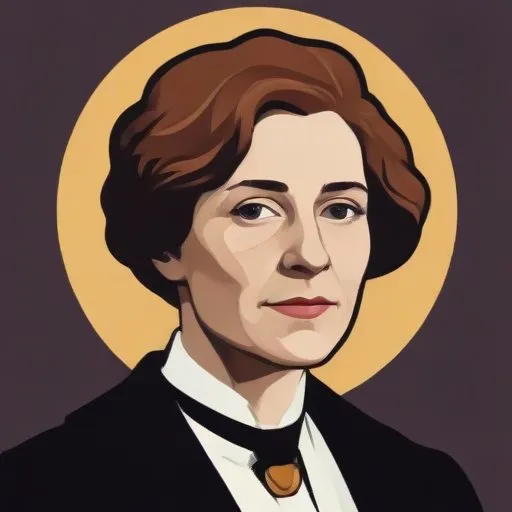
A pioneering educator and women's rights advocate who fought for girls' education and women's suffrage, leaving a lasting impact on British education and society.
Dorothea Beale was a trailblazing figure in the realm of education, known for her tireless efforts to promote women's rights and access to quality education. As the founder of St. Hilda's College, Oxford, and Principal of Cheltenham Ladies' College, she played a pivotal role in shaping the educational landscape for women in the 19th century.
Dorothea Beale was born on March 21, 1831, in London, England, to Miles Beale, a surgeon, and Dorothea Margaret Complin, of Huguenot extraction. She was the fourth child and third daughter in a family of eleven children. Beale's upbringing was marked by a strong emphasis on education and social issues, which would later shape her future endeavors.
Beale's educational journey began at home and partly at a school in Stratford, Essex, until the age of 13. She then attended lectures at Gresham College and the Crosby Hall Literary Institution, where she developed a keen aptitude for mathematics. In 1847, she and her sisters attended Mrs. Bray's fashionable school for English girls in Paris, where she remained until the revolution of 1848 forced the school's closure.
Beale's pursuit of higher education continued at Queens College, Harley Street, London, where she was among the earliest students, alongside notable figures such as Frances Buss and Adelaide Procter.
In 1849, Beale was appointed mathematics tutor at Queens College, London, and later became head teacher in the school attached to the college under Miss Parry. During her holidays, she visited schools in Switzerland and Germany, broadening her educational horizons. In 1856, she anonymously published a pamphlet promoting the Deaconess's Institute of Kaiserswerth, which she had visited, and where she met Elizabeth Ferard.
In 1857, Beale became the head of the Clergy Daughters' School, Casterton, Westmorland, founded by William Carus Wilson. Her tenure was marked by her insistence on improving the school's administration and curriculum, leading to her eventual departure from Queens College and the founding of St. Hilda's College, Oxford.
Beale's philosophical stance on education was rooted in her conviction that women deserved equal access to quality education, free from gender bias and stereotypes. She believed that education was essential for women's empowerment, enabling them to participate fully in society and make meaningful contributions.
Beale's pioneering work in education has had a lasting impact on modern society. Her tireless efforts to promote women's education have paved the way for generations of women to pursue higher education and careers in various fields. Her legacy continues to inspire and motivate individuals to strive for gender equality and social justice.
"Education is the only key to unlock the door of opportunity for women."
"The education of women is the most important question of our time."
Dorothea Beale's remarkable life and achievements serve as a testament to her unwavering commitment to education and women's rights. Her legacy continues to inspire and motivate individuals to strive for a more equitable society, where women have equal access to opportunities and resources.
Born in 1872
A pioneering suffragette who fought for women's right to vote, famously sacrificing her life by stepping in front of the King's horse at the 1913 Derby.
Born in 1880
Co-founder of the Women's Social and Political Union, a leading figure in the UK suffragette movement, fighting for women's right to vote. She played a crucial role in organizing protests, demonstrations, and hunger strikes to achieve this goal.
Born in 1882
A pioneering figure in the fight for women's right to vote, leading protests, hunger strikes, and advocating for workers' rights and socialism. Her artwork also helped raise awareness for the suffrage movement.
Born in 1847
A pioneering suffragist and leading figure in the women's suffrage movement, fighting for women's right to vote in the UK. Her tireless efforts led to significant reforms and milestones in gender equality.
Born in 1815
Pioneering women's rights activist who led the women's suffrage movement, fighting for women's right to vote and own property.
Born in 1820
Pioneering figure in the women's suffrage movement, fighting for women's right to vote and own property. Her tireless efforts led to significant advancements in women's rights.
Born in 1826
A pioneering suffragist and writer who fought for women's rights and abolition, penning influential works that helped shape the women's liberation movement.
