


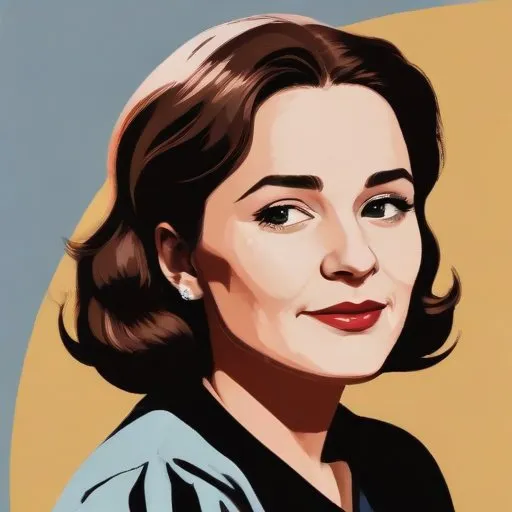
A pioneering voice in Canadian literature, known for exploring themes of love, nature, and social justice through lyrical and accessible poetry.
Dorothy Livesay, a celebrated Canadian poet, left an indelible mark on the literary world with her powerful verse that championed social justice, feminism, and pacifism. Twice a recipient of the prestigious Governor General's Award, Livesay's poetry continues to inspire generations with its passion, conviction, and lyrical beauty.
Born on October 12, 1909, in Winnipeg, Manitoba, Livesay grew up in a family that valued literature and social activism. Her mother, Florence Randal Livesay, was a poet and journalist, while her father, J.F.B. Livesay, was the General Manager of Canadian Press. This influential upbringing shaped Livesay's worldview and nurtured her creative spirit.
Livesay pursued higher education, earning a BA from Trinity College, University of Toronto, in 1931. She furthered her studies at the University of British Columbia and the Sorbonne, refining her skills and broadening her perspectives.
In 1931, while in Paris, Livesay became a devoted communist, drawn to the ideology's promise of equality and social change. She joined the Communist Party of Canada in 1933 and actively participated in various front organizations, including the Canadian Labour Defence League, the Canadian League Against War and Fascism, Friends of the Soviet Union, and the Workers Unity League.
Livesay's commitment to social justice sparked her writing, which often addressed the struggles of the working class, women's rights, and the devastating effects of war. Her poetry became a powerful tool for social commentary, inspiring others to join the fight for a more just and equitable society.
In 1941, Livesay co-founded the poetry magazine Contemporary Verse, which provided a platform for poets outside the dominant Montreal circle. This endeavor not only showcased her own work but also promoted the voices of other marginalized writers.
Throughout her career, Livesay received numerous accolades, including two Governor General's Awards (1944 and 1947) and the prestigious Livesay Award (established in her honor in 1994). Her poetry collections, such as Signpost (1932) and The Phases of Love (1954), are considered some of her most significant works.
After the death of her husband, Duncan Macnair, in 1959, Livesay continued to teach and travel, sharing her expertise with students at various Canadian universities. Her experiences as a field worker for UNESCO in Paris and Northern Rhodesia (now Zambia) from 1960 to 1963 further enriched her writing, as she explored new cultures and themes.
Dorothy Livesay's poetry and advocacy have left an enduring impact on Canadian literature and society. Her unwavering commitment to social justice, feminism, and pacifism continues to inspire generations of writers, activists, and readers.
As a celebrated poet, teacher, and champion of social justice, Livesay's legacy extends beyond her writing to the many lives she touched through her work and activism. Her poetry serves as a testament to the power of art to shape our understanding of the world and our place within it.
Born in 1916
A celebrated poet and artist, known for her vivid imagery and exploration of the human condition through her lyrical verse and visual art. Her work often blended elements of surrealism and mythology.
86 Years Old
A renowned novelist, poet, and literary critic, known for her prophetic and poignant works that explore the human condition, feminism, and environmentalism. Her writing often weaves together mythology, history, and science to create thought-provoking narratives.
Born in 1923
A Canadian literary icon, celebrated for his powerful, socially conscious poetry and plays that often explored themes of love, politics, and the human condition.
Born in 1892
A renowned poet and academic who crafted vivid, accessible verse that explored Canadian identity and the human condition, earning him the Governor General's Award.
