


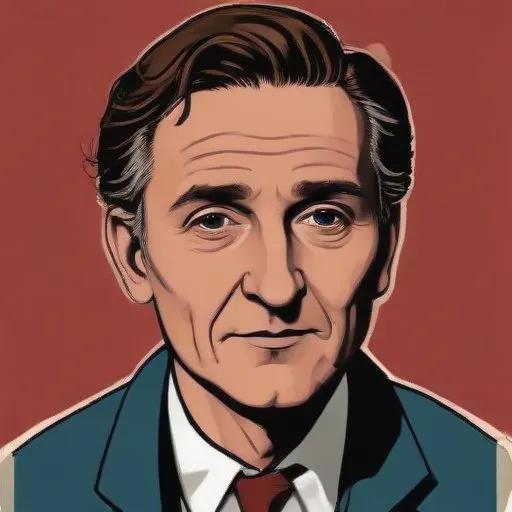
A renowned poet and academic who crafted vivid, accessible verse that explored Canadian identity and the human condition, earning him the Governor General's Award.
E. J. Pratt, a luminary of Canadian literature, is renowned for his evocative poetry that weaves together the tapestry of life, love, and the human condition. With three Governor General's Awards for poetry under his belt, Pratt is hailed as the foremost Canadian poet of the first half of the 20th century.
Born on February 4, 1882, in Western Bay, Newfoundland, Pratt's early life was a testament to the power of family and community. His father, John Pratt, a Methodist minister, instilled in him a deep love for words and a strong sense of morality. Pratt's mother, Fanny Knight Pratt, brought a nurturing spirit to the family, fostering a sense of creativity and compassion in her children.
Pratt's educational journey began at Newfoundland's Methodist College, where he graduated in 1901. Following in his father's footsteps, he became a candidate for the Methodist ministry in 1904. However, it was during his three-year probation that he discovered his true calling – poetry.
Pratt's poetry is a testament to his mastery of language and form. His works often explored the human experience, delving into themes of love, nature, and mortality. With collections like The Witches' Brew (1925) and Brebeuf and His Brethren (1940), Pratt cemented his position as a leading voice in Canadian literature.
Pratt's contributions to Canadian literature were recognized with three Governor General's Awards for poetry: The Fable of the Goats (1937), Brebeuf and His Brethren (1940), and Here the Tides Flow (1944).
Pratt's poetry has had a profound impact on modern Canadian literature. His unique voice and style have inspired generations of writers, including notable poets like Irving Layton and Earle Birney. Pratt's legacy continues to be felt in the country's literary scene, with many regarding him as a national treasure.
"The poet's task is to get beneath the surface, to tap the hidden springs of human emotion, and to express the inexpressible."
Pratt's words continue to resonate with readers, inspiring them to explore the depths of human experience and the beauty of the written word.
Born in 1874
Pulitzer Prize-winning poet and playwright celebrated for rural New England-inspired works that explore human nature, morality, and the American experience.
Born in 1885
A pioneering modernist poet and critic who transformed 20th-century literature with innovative styles and provocative ideas, shaping the course of modern poetry.
Born in 1888
A renowned poet, playwright, and critic who reshaped modern poetry with works like "The Waste Land" and "Old Possum's Book of Practical Cats", influencing literature and art with their unique style.
Born in 1879
A modernist master of language and imagination, crafting innovative, symbolic poetry that explores the human experience and the relationship between reality and the individual's perception of it.
Born in 1883
A physician-turned-writer, known for his modernist poetry and short stories that explored the everyday lives of ordinary people, often using imagery and experimental styles. His work blurred the lines between poetry and prose, creating a unique literary voice.
Born in 1886
A pioneering figure in modernist poetry, known for experimental and emotionally charged works that explored themes of love, identity, and spirituality.
Born in 1879
This celebrated author crafted novels and plays that probed the human condition, exploring themes of social class, morality, and personal relationships, with a distinctive wit and insight. Their works continue to captivate audiences with their nuanced portrayals of English society during the early 20th century.
Born in 1873
A pioneering modernist writer, credited with influencing 20th-century literature through experimental novels and poetry that explored the human condition. Known for his impressionistic style and complex characters.
