


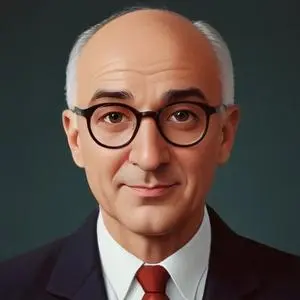
A physician-turned-writer, known for his modernist poetry and short stories that explored the everyday lives of ordinary people, often using imagery and experimental styles. His work blurred the lines between poetry and prose, creating a unique literary voice.
William Carlos Williams, a renowned American poet and physician, is celebrated for his unique fusion of modernism and imagism, which revolutionized the literary world. His poetry, deeply rooted in everyday life, captures the essence of the mundane, making the ordinary, extraordinary.
Williams' life was a testament to his multifaceted personality. By day, he practiced medicine, dedicating himself to the care of his patients, and by night, he poured his heart into writing poetry. This unusual combination not only influenced his writing but also shaped his perspective on life.
Williams was a key figure in the Imagist movement, a literary revolution that sought to break free from traditional poetic forms. Alongside Ezra Pound and H.D., he championed the use of clear, concise language, precision of image, and free verse. This movement paved the way for modern poetry, allowing Williams to explore new forms of expression.
Williams' most celebrated works include Spring and All (1923), Paterson (1946-1958), and Pictures from Brueghel and Other Poems (1962). His poetry is characterized by its accessibility, often focusing on the everyday, the local, and the particular. Two of his most famous poems, "This Is Just To Say" and "The Red Wheelbarrow," exemplify his ability to elevate the ordinary into the realm of the extraordinary.
Williams' poetry often resonated with the visual arts, influencing artists such as Charles Demuth, who created "I Saw the Figure 5 in Gold" in response to Williams' poem "The Great Figure." This intersection of art forms highlights the poet's ability to inspire creative expression beyond the realm of literature.
Williams' posthumous Pulitzer Prize for Poetry (1962) honors his contributions to American literature. His legacy extends beyond poetry, influencing generations of writers, artists, and musicians. Randall Jarrell's observation that Williams "feels, not just says, that the differences between men are less important than their similarities" captures the essence of his democratic vision, where poetry serves as a bridge between people.
Born in Rutherford, New Jersey, in 1883, Williams spent his life in the vicinity of Paterson, which inspired his five-volume poem. He married Florence Herman in 1912, and they had two sons. His commitment to his patients and his poetry remained unwavering throughout his life, earning him a place in the hearts of those who knew him.
Through his poetry, William Carlos Williams continues to inspire generations, reminding us that the beauty of life lies in its everyday moments, waiting to be celebrated and appreciated.
Born in 1885
A pioneering modernist poet and critic who transformed 20th-century literature with innovative styles and provocative ideas, shaping the course of modern poetry.
Born in 1888
A renowned poet, playwright, and critic who reshaped modern poetry with works like "The Waste Land" and "Old Possum's Book of Practical Cats", influencing literature and art with their unique style.
Born in 1879
A modernist master of language and imagination, crafting innovative, symbolic poetry that explores the human experience and the relationship between reality and the individual's perception of it.
Born in 1887
A pioneering modernist poet, known for intricate, precise language and exploration of themes like nature, identity, and morality. Her unique style and intellectual rigor have inspired generations of writers.
Born in 1886
A pioneering figure in modernist poetry, known for experimental and emotionally charged works that explored themes of love, identity, and spirituality.
Born in 1894
A visionary wordsmith who shattered conventions with innovative syntax and punctuation, crafting a unique, expressive voice that continues to inspire generations of writers and artists.
Born in 1926
A leading figure of the Beat Generation, known for his poetry that explores themes of nonconformity, free expression, and social justice. His iconic poem "Howl" is a classic of American literature.
Born in 1922
Pioneering figure of the Beat Generation, known for spontaneous, confessional, and poetic writings that captured the essence of American counterculture in the 1950s and 60s.
