


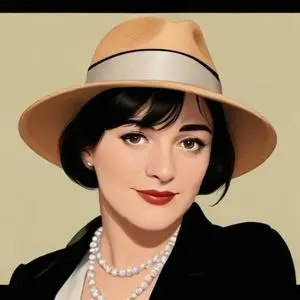
A witty and insightful writer who crafted poetry, short stories, and critiques that continue to delight readers with their clever wordplay and sharp observations.
Dorothy Parker, a renowned American poet, writer, and satirist, is best known for her sharp wit, caustic humor, and biting commentary on 20th-century urban life. Her literary works, which span across multiple genres, including poetry, short stories, plays, and screenplays, have earned her a permanent place in the pantheon of American literary giants.
Born on August 22, 1893, in Long Branch, New Jersey, Parker was the daughter of Jacob Henry Rothschild and Eliza Annie Marston. Her mother, of Scottish descent, died when Parker was just five years old, and her father remarried two years later. Parker grew up in Manhattan, where she developed a deep love for literature and writing.
Parker's writing career took off in the 1920s when her poetry and short stories began appearing in prominent magazines, such as The New Yorker and Vanity Fair. Her unique voice, characterized by its biting wit and sardonic humor, quickly gained her a loyal following. As a founding member of the Algonquin Round Table, a group of wits and writers who met regularly for lunch, Parker's reputation as a clever wordsmith spread far and wide.
In the 1930s, Parker made her way to Hollywood, where she began writing screenplays for major studios. Her work on films such as A Star is Born (1937) and Smash-Up, the Story of a Woman (1947) earned her two Academy Award nominations. However, her involvement in left-wing politics led to her being blacklisted in the 1950s, effectively ending her screenwriting career.
Despite her personal struggles, Parker's literary output continued to thrive. Her poetry and short stories have been widely anthologized, and her works have been translated into numerous languages. Her most famous poetry collection,
Parker's personal life was marked by struggles with depression, loneliness, and substance abuse. She was married three times, including to actor and writer Alan Campbell, with whom she had a tumultuous relationship. Despite her personal struggles, Parker remained committed to her craft, continuing to write until her death on June 7, 1967.
Dorothy Parker's sharp wit, biting satire, and insightful commentary on urban life have influenced generations of writers, comedians, and artists. Her work continues to be celebrated for its cleverness, its ability to capture the essence of the human experience, and its unwavering commitment to social commentary.
Today, Parker's work remains a testament to her enduring legacy as a master wordsmith, a trailblazing feminist, and a sharp observer of human nature. Her writing continues to inspire, delight, and provoke readers, solidifying her place as one of the most important and influential American writers of the 20th century.
Born in 1889
A witty writer and performer who delighted audiences with humorous essays, columns, and film appearances, bringing laughter to the masses with his clever observations on everyday life.
Born in 1887
A renowned theater critic and member of the Algonquin Round Table, known for his sharp wit and acerbic reviews that could make or break a Broadway show.
Born in 1881
Witty columnist and writer of humorous poetry, best known for his clever wordplay and satirical takes on politics and society.
Born in 1885
Humorous short stories and satirical writings that exposed the flaws of American culture, particularly in sports and middle-class life.
Born in 1895
A prominent literary critic and editor who shaped American literary culture with his insightful essays and reviews, influencing generations of writers and intellectuals.
Born in 1896
Author of novels and short stories that capture the essence of the Jazz Age, exploring themes of wealth, class, and the American Dream. Known for timeless classics like "The Great Gatsby" and "Tender Is the Night".
Born in 1899
A legendary writer who crafted sparse, powerful prose, capturing the human experience in novels like "The Old Man and the Sea" and "A Farewell to Arms".
Born in 1905
Pioneering playwright and screenwriter who crafted intricate, socially conscious dramas that probed the human condition, often focusing on moral dilemmas and personal relationships.
