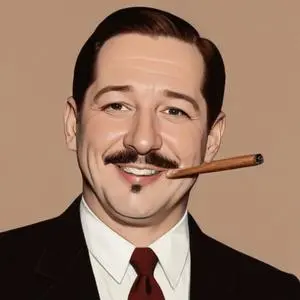
Robert Benchley: The Humorist Who Shaped American Comedy
A Legendary Career in Words and Film
Robert Benchley is best known for his work as a newspaper columnist, film actor, and humorous essayist, whose unique style of wit and satire continues to influence American comedy to this day. With a career spanning over two decades, Benchley's work has left an indelible mark on the entertainment industry, earning him a reputation as one of the most respected and beloved humorists of his time.
Early Life and Education
Born on September 15, 1889, in Worcester, Massachusetts, Benchley was the second son of Charles Henry Benchley and Maria Jane Moran. He grew up in a family of modest means, with his father working as a town clerk and his mother managing the household. Benchley's early life was marked by a strong sense of humor and creativity, which would later become the hallmark of his writing and acting career.
The Harvard Lampoon and Early Writing Career
Benchley's writing career began during his college days at Harvard University, where he was an active member of the Harvard Lampoon, a humor publication that would become a launching pad for many renowned writers and comedians. His work at the Lampoon honed his skills as a humorist, and he quickly gained a reputation for his witty and incisive writing style.
Rise to Fame: Vanity Fair and The New Yorker
After graduating from Harvard, Benchley began writing for various publications, including Vanity Fair and The New Yorker. His essays, which often tackled topics of the day with humor and satire, quickly gained popularity and earned him a reputation as a master of the genre. His work at The New Yorker, in particular, would go on to influence generations of humorists, including the likes of
Woody Allen,
Steve Martin, and Tina Fey.
Awards and Accolades: The Oscars and Beyond
Benchley's work in film was equally impressive, earning him an Academy Award for Best Short Subject for his 1935 film "How to Sleep." He also made memorable appearances in films such as
Alfred Hitchcock's "Foreign Correspondent" (1940) and "Nice Girl" (1941), solidifying his status as a talented comedic actor.
The Algonquin Round Table and Literary Circle
Benchley was a regular member of the Algonquin Round Table, a group of writers, critics, and wits who would meet regularly at the Algonquin Hotel in New York City to discuss literature, politics, and culture. This esteemed group, which included the likes of
Dorothy Parker, Robert Sherwood, and
Harpo Marx, would shape the literary and cultural landscape of the time, with Benchley playing a key role in their irreverent and humorous discussions.
Legacy and Impact on American Comedy
Benchley's legacy extends far beyond his own work, influencing countless comedians, writers, and actors who have followed in his footsteps. His unique brand of humor, which blended satire, irony, and absurdity, has inspired generations of American comedians, from the classic sitcoms of the 1950s to the stand-up comedians of today.
Personal Milestones and Key Life Events
- September 15, 1889: Born in Worcester, Massachusetts
- 1912: Graduated from Harvard University
- 1914: Joined the staff of the Harvard Lampoon
- 1920s: Began writing for Vanity Fair and The New Yorker
- 1935: Won Academy Award for Best Short Subject for "How to Sleep"
- 1940: Appeared in Alfred Hitchcock's "Foreign Correspondent"
- November 21, 1945: Passed away in New York City
Quotes and Memorable Sayings
- "I have tried to know as many people as I could, and I have tried to know them well."
- "The freelance writer is a man who is paid per piece, or per word, or perhaps."
- "I do not like to get things done, but I do like to get the credit for it."
Historical Context and Legacy
Benchley's work and influence can be seen in the broader cultural landscape of the 1920s to 1940s, a time of great social change and upheaval. His humor, which often tackled topics of politics, social norms, and cultural conventions, served as a powerful commentary on the times in which he lived. Today, Benchley's legacy continues to inspire new generations of writers, comedians, and actors, cementing his place as one of the most important and influential humorists of the 20th century.
FAQ
What was Robert Benchleys role in the Algonquin Round Table?
Robert Benchley was a prominent member of the Algonquin Round Table, a group of witty writers and intellectuals who met regularly at New York Citys Algonquin Hotel. He was known for his humorous essays and articles.
What kind of humor did Robert Benchley write about?
Robert Benchleys humor was characterized by his witty observations on everyday life, often focusing on the absurdity and hypocrisy of modern society. He was a master of satire and irony.
What were some of Robert Benchleys most famous writings?
Robert Benchley wrote many humorous essays and articles, including his famous The Wayward Press column in The New Yorker. He also wrote screenplays and appeared in several films.
How did Robert Benchleys career span multiple fields?
Robert Benchley was a versatile writer and performer who spanned multiple fields, including journalism, literature, film, and theater. He was a pioneer of modern humor and a true Renaissance man.
What was Robert Benchleys legacy in American literature?
Robert Benchleys legacy in American literature is that of a master humorist who influenced generations of writers and comedians. He is still widely read and admired today for his clever wit and incisive commentary on modern life.