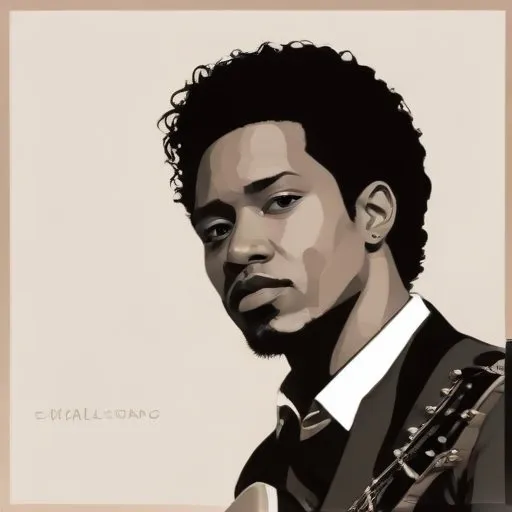
Earl King: The New Orleans Blues Icon
A Legacy of Soulful Sounds and Timeless Classics
Earl King, born Earl Silas Johnson IV, was a legendary American singer, guitarist, and songwriter who left an indelible mark on the blues music scene. As the composer of blues standards like "Come On" and "Big Chief," he was an integral figure in New Orleans R&B, with his music influencing a generation of blues and rock musicians.
Early Life and Musical Beginnings
Born on February 7, 1934, in New Orleans, Louisiana, Earl King was raised by his mother after his father, a piano player, passed away when Earl was just a baby. He began attending church at a young age and started singing gospel music with his mother. However, it was his friend's advice to switch to blues that set him on the path to success.
The Guitar and the Stage
King started playing the guitar at 15 and soon began entering talent contests at local clubs, including the famous Dew Drop Inn. It was at one such club that he met his idol,
Guitar Slim, whose presence had a profound impact on King's musical direction. After Slim's accident in 1954, King was recruited to continue the tour with Slim's band, representing himself as Slim.
A Recording Career Takes Off
King's first recording was made in 1953, releasing a 78rpm record, "Have You Gone Crazy"/"Begging at Your Mercy," for Savoy Records. He later signed with Specialty Records, where he recorded sides like "Mothers Love," which gained local popularity. In 1955, King joined Ace Records, where he scored his first hit, "Those Lonely, Lonely Nights," which reached number 7 on the Billboard R&B chart.
A Songwriter and Influencer
King's songwriting skills soon extended to writing for other artists, including Roland Stone and
Jimmy Clanton. His own music influenced a range of musicians, from
Jimi Hendrix, who covered "Come On," to
Stevie Ray Vaughan, who also recorded King's compositions.
Career Highlights and Legacy
Throughout his career, Earl King released numerous albums and singles, performed at iconic venues like the New Orleans Jazz & Heritage Festival, and collaborated with other notable musicians. His music remains a testament to the rich cultural heritage of New Orleans and the blues tradition.
Personal Milestones and Key Life Events
- 1954: Deputized to continue Guitar Slim's tour after his accident
- 1955: Signed with Ace Records and released his first hit, "Those Lonely, Lonely Nights"
- 1960s: Continued to release music and write for other artists
- 1990s: Performed at the New Orleans Jazz & Heritage Festival
- April 17, 2003: Passed away, leaving behind a legacy of blues and R&B music
Philosophical Contributions and Beliefs
Earl King's music embodied the soul and spirit of New Orleans, reflecting his deep connection to the city's cultural heritage. Through his music, he conveyed the emotional depth and sincerity that defined the blues tradition.
Influence on Modern Society
King's music has had a lasting impact on modern blues and rock music. His influence can be heard in the work of numerous musicians, from
Eric Clapton to
Buddy Guy, and his compositions continue to be celebrated and covered by new generations of artists.
Quotes and Memorable Sayings
"I just wanted to make people happy with my music, that's all." — Earl King
This quote encapsulates King's humble and genuine approach to his craft, reflecting his dedication to spreading joy and soul through his music.