


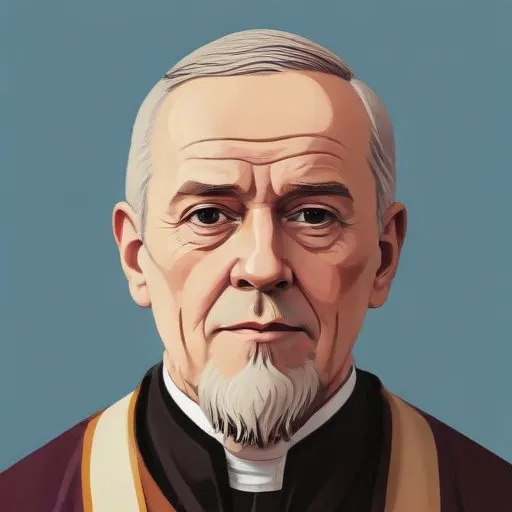
A Scottish minister and theologian who played a key role in the Scottish Secession Church movement, advocating for reform and spiritual revival in the 18th century. He's most known for his passionate preaching and influential writings that shaped the Scottish Presbyterian Church.
Ebenezer Erskine, a Scottish minister born in 1680, is renowned for his instrumental role in establishing the Secession Church, a movement that emerged in the early 18th century as a response to the Church of Scotland's perceived shortcomings. His unwavering commitment to his convictions led to a contentious split from the Church of Scotland, resulting in the formation of a new denomination.
Erskine's father, Henry Erskine, served as a minister in Northumberland, but was ejected from his position in 1662 due to the Act of Uniformity. Despite these challenging circumstances, Ebenezer and his brother Ralph were born during this period. Later, Henry was appointed to the parish of Chirnside, Berwickshire, after the Glorious Revolution of 1688.
Ebenezer pursued his studies at the University of Edinburgh and was ordained as the minister of Portmoak, Kinrossshire, in 1703. A year later, he married Alison Turpie, with whom he remained for 28 years until his transfer to the West Church in Stirling in 1731.
In 1722, Erskine, along with others, was rebuked for defending the doctrines outlined in "The Marrow of Modern Divinity." This event marked the beginning of his troubles with the Church of Scotland. In 1733, a sermon on lay patronage at the Synod of Perth led to further accusations, culminating in his suspension from the ministry by the Commission of Assembly in November 1733.
In response to this sentence, Erskine, along with William Wilson of Perth, Alexander Moncrieff of Abernethy, and James Fisher of Kinclaven, constituted themselves as a separate church court, known as the Associate Presbytery. When summoned to appear before the General Assembly in 1739, they refused, citing its lack of authority.
The consequences of Erskine's actions were far-reaching. In 1740, he and his colleagues were deposed by the Church of Scotland, leading to the formation of the Secession Church. Over time, a significant number of individuals joined their communion, solidifying Erskine's legacy as a champion of reform and religious freedom.
Through his unwavering commitment to his convictions, Erskine played a pivotal role in shaping the religious landscape of Scotland. His influence extended beyond the Secession Church, as his actions contributed to the broader movement for reform within the Church of Scotland.
"If we are faithful, God will be faithful to us, and will make our ministry a blessing to many."
Erskine's legacy serves as a testament to the power of conviction and perseverance in the face of adversity. His unwavering commitment to his beliefs continues to inspire generations, solidifying his place in Scottish religious history.
Born in 1545
A 16th-century Scottish theologian and scholar who played a key role in the Scottish Reformation and was a strong advocate for Presbyterianism. He's known for his debates with King James VI of Scotland and his contributions to the development of the Presbyterian Church of Scotland.
82 Years Old
A British composer and conductor, renowned for his work in the classical music scene, particularly with the BBC Concert Orchestra and Royal Philharmonic Orchestra.
