


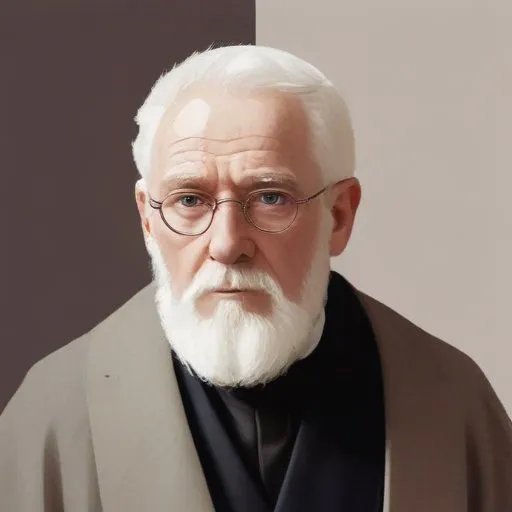
A 16th-century Scottish theologian and scholar who played a key role in the Scottish Reformation and was a strong advocate for Presbyterianism. He's known for his debates with King James VI of Scotland and his contributions to the development of the Presbyterian Church of Scotland.
Andrew Melville was a Scottish scholar, theologian, poet, and religious reformer who left an indelible mark on the academic and ecclesiastical landscape of 16th-century Scotland. He is best known for his instrumental role in shaping the University of Glasgow and St. Andrews, as well as his tireless efforts to establish the Presbyterian form of government in the Church of Scotland.
Born on August 1, 1545, in Baldovie, Scotland, Melville was the youngest son of Richard Melville and Geills Abercrombie. He received his early education at the Grammar School in Montrose and later attended the University of St. Andrews, where he developed a passion for classical languages and literature.
In 1564, Melville traveled to France, where he studied law at the University of Poitiers. During his time in France, he became involved in the defense of Poitiers against the Huguenots and later moved to Geneva, where he was appointed Professor of Humanity. It was during this period that he developed his affinity for the Reformed faith and became acquainted with prominent figures such as Theodore Beza.
In 1574, Melville returned to Scotland and was appointed Principal of the University of Glasgow. During his tenure, he worked tirelessly to establish the university on a solid foundation, founding four chairs in languages, science, and philosophy. His efforts earned him recognition as a champion of educational reform and a strong advocate for the Presbyterian cause.
In 1577, Melville was admitted as minister of Govan, and a year later, he was elected Moderator of the General Assembly of the Church of Scotland. He used his position to advocate for the Presbyterian form of government, opposing the Episcopal tendency in the Church. He played a key role in remodeling the Scottish universities, especially St. Andrews, where he was appointed Principal in 1580.
Melville's strong stance against Episcopacy and his advocacy for Presbyterianism earned him several enemies, including King James VI. In 1582, he was summoned before the Privy Council for alleged treason and imprisoned at Blackness. Despite these challenges, Melville remained resolute in his convictions, continuing to preach and write in defense of his beliefs.
Andrew Melville's contributions to Scottish education, theology, and politics have had a lasting impact on the country's development. He is remembered as a champion of reform, a dedicated scholar, and a passionate advocate for the Presbyterian faith. His legacy continues to inspire and educate generations of Scots and scholars around the world.
Through his remarkable life and works, Andrew Melville has left an enduring mark on Scottish history, education, and theology. His commitment to reform, scholarship, and faith continues to inspire and educate generations to come.
Born in 1509
A French pastor and theologian who played a key role in the Protestant Reformation, shaping Christian theology and influencing Western civilization. He's famous for his teachings on predestination and his role in establishing Calvinism.
Born in 1483
A German monk and priest who sparked the Protestant Reformation, challenging Catholic Church authority and shaping Western Christianity. He's famous for nailing 95 theses to a church door, sparking a religious revolution.
Born in 1484
Leader of the Swiss Reformation, advocating for church reform and inspiring other Protestant movements.
Born in 1489
Leader of the English Reformation, instrumental in creating the Church of England and authoring the Book of Common Prayer.
