


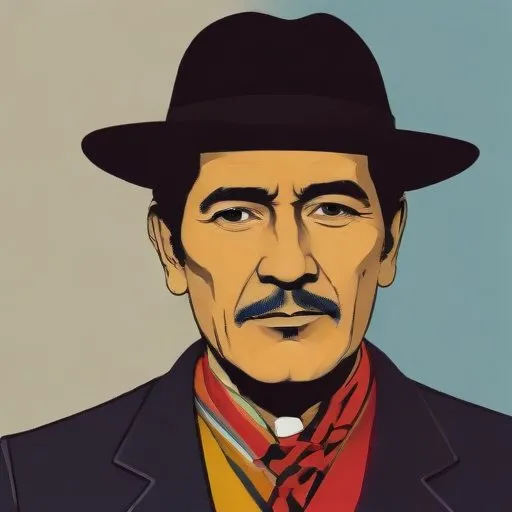
A Bolivian writer and journalist, known for his novels and essays that explore the complexities of Bolivian identity, politics, and culture.
Edmundo Paz Soldán is a Bolivian writer known for his contributions to the Latin American literary movement known as McOndo, which replaces magical realism with modern realism, often incorporating a technological focus. His work has won numerous awards and has been recognized for its unique blend of genres, tackling complex themes such as politics, history, and identity.
Born on March 29, 1967, in Cochabamba, Bolivia, Paz Soldán's interest in writing began at a young age. He published his early work while still in high school, but it wasn't until he moved to Buenos Aires to study International Relations that he started writing seriously at the age of 19.
Paz Soldán's first novel, Días de papel, was a finalist in the 1991 Letras de Oro literary competition and won the Erich Guttentag Prize in 1992. His subsequent novels, such as Río fugitivo (1998) and La materia del deseo (2004), have solidified his reputation as a masterful storyteller.
In 2006, Paz Soldán was awarded a Guggenheim Fellowship, which enabled him to focus on his writing and produce works such as El delirio de Turing (2006), a complex novel that explores the intersection of politics, technology, and identity.
Paz Soldán's work has been recognized for its unique blend of genres, combining elements of detective novels, Bildungsromans, and historical fiction to create a distinctive narrative style. His writing often explores the complexities of Bolivian identity, politics, and history, providing a fresh perspective on the Latin American experience.
Paz Soldán has taught literature at Cornell University since 1997, sharing his passion for Latin American literature with students and scholars alike. His academic background, including a PhD in Hispanic Languages and Literatures from the University of California, Berkeley, has equipped him to provide insightful analysis and critique of literary works.
Edmundo Paz Soldán's contributions to Latin American literature have been significant, providing a fresh perspective on the region's complex history, politics, and identity. His work continues to inspire new generations of writers, scholars, and readers, solidifying his place as one of the most important Bolivian writers of his generation.
Born in 1914
A pioneering figure in magical realism, blending fantastical elements with everyday life in his novels and short stories, exploring the human condition and social commentary.
90 Years Old
A Nobel Prize-winning writer and politician who explored the complexities of Peruvian society through his novels and essays, and later ran for president. His works often blended politics, history, and fiction.
