


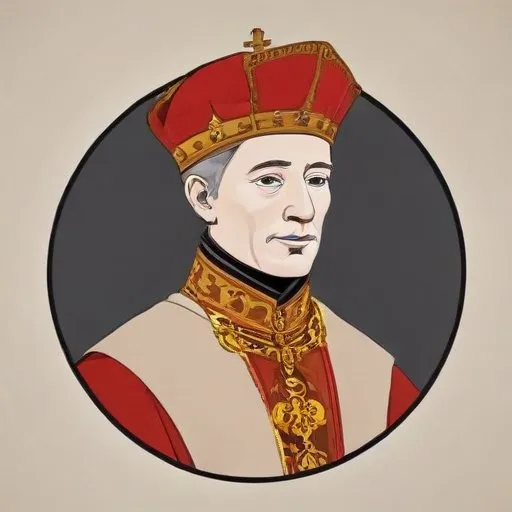
A younger son of King Edward I, he was a powerful nobleman and military leader who played a key role in the reign of his nephew, King Edward III. He's most known for his loyalty to the crown and his efforts to maintain stability during a tumultuous period in English history.
Edmund of Woodstock, 1st Earl of Kent, is remembered for his tumultuous life, marked by shifting allegiances and a propensity for rebellion, culminating in his eventual execution in 1330. As the sixth son of King Edward I of England, Edmund's life was inextricably linked to the royal family, with his loyalties oscillating between his half-brother, King Edward II, and his eventual role in the king's deposition.
Edmund was born on August 5, 1301, at Woodstock in Oxfordshire, to King Edward I and his second wife, Margaret of France. He was the second son born to the king's second marriage, following Thomas, who was born in 1300. Edmund's family dynamics were complex, with his half-brother, Edward II, being the son of King Edward I's first wife, Eleanor of Castile.
In 1321, Edmund was created Earl of Kent, a testament to his growing influence in the royal court. He played a crucial role in Edward II's administration, serving as a diplomat and military commander. During this period, Edmund remained loyal to his half-brother, participating in the suppression of a rebellion in 1321-1322.
However, Edmund's loyalty was eventually tested by Edward II's favoritism towards Hugh Despenser the Younger and his father. As discontent against the king grew, Edmund's allegiance began to waver. In 1326, he joined a rebellion led by Queen Isabella and Roger Mortimer, ultimately contributing to the deposition of King Edward II.
Despite his role in the rebellion, Edmund struggled to find his place in the new administration. His attempts to consolidate power and influence were ultimately unsuccessful, leading to his arrest and execution in 1330 for plotting a new rebellion.
Following the assumption of personal control by King Edward III, Edmund's nephew, the charges against him were posthumously annulled. The title and estates of the Earl of Kent passed to his son, Edmund, and subsequently to his brother, John. While Edmund's reputation was tarnished by his unpredictable political dealings, his legacy as a complex and multifaceted figure in medieval English history endures.
Edmund of Woodstock, 1st Earl of Kent, lived during a tumultuous period in English history, marked by dynastic struggles and power struggles. His life serves as a testament to the complexities of medieval politics, where loyalty, allegiance, and self-interest often collided. While his legacy may be marred by his tumultuous life, Edmund's story remains an essential chapter in the narrative of medieval England.
Born in 1284
The king whose disastrous reign led to his eventual deposition and mysterious death, remembered for his alleged homosexual relationships and power struggles with nobles.
Born in 1287
A powerful nobleman who played a crucial role in medieval English politics, serving as Lord Lieutenant of Ireland and influencing the country's governance.
Born in 1300
A medieval English nobleman who served as Lord Marshal of England, known for his prominent role in the royal court and his involvement in key events of the 14th century. He was a grandson of King Edward I and played a significant part in shaping English history.
Born in 1284
The king whose disastrous reign led to his eventual deposition and mysterious death, remembered for his alleged homosexual relationships and power struggles with nobles.
Born in 1340
A powerful and wealthy medieval English nobleman, known for his immense influence on English politics and his role in the Hundred Years' War. He was also a patron of the arts and a founder of Trinity College, Cambridge.
Born in 1338
A younger son of King Edward III, he played a significant role in Irish politics and was a powerful nobleman in medieval England. He's most known for his military campaigns and attempts to assert English dominance in Ireland.
Born in 1341
Son of King Edward III, served as Lord Warden of the Cinque Ports, playing a significant role in English politics and military during the 14th century. He founded the House of York, a powerful royal dynasty.
