


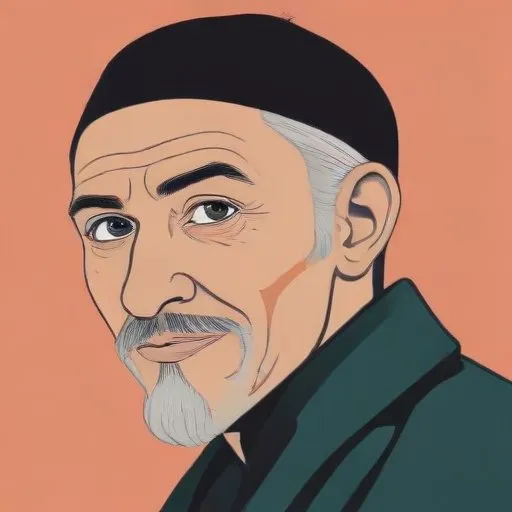
A Croatian artist who created a wide range of works, from paintings to sculptures and illustrations, often blending traditional and modern styles. He's most known for his vibrant, expressive, and emotive pieces that capture the essence of Croatian culture.
Edo Murti, a renowned Croatian painter, is best known for his pioneering contributions to lyrical abstraction and abstract expressionism. With a career spanning over five decades, Murti's work has left an indelible mark on the global art scene, garnering international recognition and accolades.
Born on May 4, 1921, in Velika Pisanica, Croatia, Murti was the second child of Vinko and Franciska Murti. The family relocated to Zagreb, where Murti received his education and nurtured his passion for art. He attended Craft School from 1935 to 1939, studying under esteemed artists Edo Kovaevi, Kamilo Tompa, and Ernest Tomaevi.
In 1939, Murti enrolled in the Academy of Fine Arts in Zagreb, where he was mentored by Ljubo Babi and Krsto Hegedui. During 1940, he attended classes given by Petar Dobrovi in Belgrade, returning to Zagreb in 1941 to complete his studies. The outbreak of World War II saw Murti joining the antifascist movement, designing graphics, posters, and books for the liberation forces.
The post-war era marked the beginning of Murti's remarkable international career. In 1956, he co-founded the March Mart group, a collective of Croatian artists. This led to extensive traveling and exhibiting throughout Europe and North America, earning him recognition and praise from art critics and enthusiasts alike.
Throughout his illustrious career, Murti received numerous international awards and honors, solidifying his position as a leading figure in contemporary art. Some of these notable accolades include:
Edo Murti's profound influence on modern art is evident in his contributions to lyrical abstraction and abstract expressionism. His unique style, characterized by vibrant colors and dynamic compositions, has inspired generations of artists. As a testament to his enduring legacy, retrospective exhibitions continue to be held in major museums, introducing his remarkable work to new audiences.
In addition to his artistic achievements, Murti was an ardent advocate for human rights, serving as a member of the Croatian Helsinki Committee for Human Rights.
Edo Murti passed away on January 2, 2005, leaving behind a rich cultural heritage. His personal life was marked by a deep love for his family and his country, as well as a strong commitment to social justice and human rights.
Today, Edo Murti's art continues to captivate audiences worldwide, a testament to the power of his vision and the enduring legacy of his remarkable career.
