


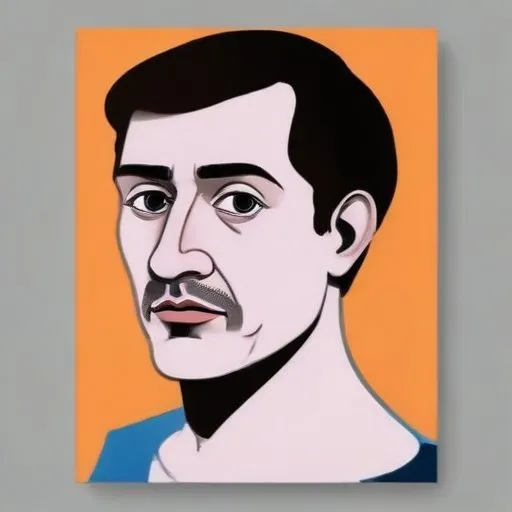
A renowned Croatian sculptor and architect, he's celebrated for his monumental works of art, often blending classical and modern styles, and his designs for public buildings and monuments.
Ivan Metrovi, a Croatian and Yugoslav sculptor, architect, and writer, left an indelible mark on the art world with his contributions to modern Croatian sculpture and his role as a leading artistic personality in contemporary Zagreb. He is celebrated for his iconic works that blended national romanticism with the elegance of Secession, earning him a reputation as one of the most prominent modern Croatian sculptors.
Metrovi was born on August 15, 1883, in Croatia, and his early life was marked by a fascination with art and architecture. He honed his skills at Pavle Bilini's Stone Workshop in Split and later at the Academy of Fine Arts in Vienna, where he was deeply influenced by the Secession movement. This European artistic capital exposed him to the works of masters like Michelangelo, Auguste Rodin, Antoine Bourdelle, and Aristide Maillol, shaping his artistic vision.
Metrovi's artistic journey was characterized by a mix of symbolic themes, national romanticism, and a fascination with ancient and Renaissance art. His early works, such as the "Well of Life," showcased impressionist surfaces inspired by Rodin's naturalism. As he evolved, he turned to national mythological themes, resulting in stunning monumental plastics like the "Kosovo Cycle" (1908-1910). Before World War I, Metrovi shifted away from pathetic epic stylization, embracing emotional expression through wooden reliefs of biblical themes, which blended Archaic, Gothic, Secessionist, and Expressionist styles.
In 1942, Metrovi emigrated to Italy, and later to Switzerland in 1943, before settling in the United States in 1947. He shared his knowledge and experience as a professor of sculpture at Syracuse University and later at the University of Notre Dame in South Bend, Indiana, from 1955 until his passing on January 16, 1962.
Ivan Metrovi's contributions to modern Croatian sculpture and his role in shaping national identity continue to inspire artists and art enthusiasts alike. His legacy is a testament to the power of art in expressing the human experience, and his works remain an integral part of Croatia's cultural heritage.
Through his artistic journey, Metrovi bridged the gap between tradition and modernity, leaving behind a rich cultural landscape that continues to captivate and inspire generations.
Born in 1883
A renowned Croatian sculptor and architect, he's celebrated for his monumental works of art, often blending classical and modern styles, and his designs for public buildings and monuments.
Born in 1856
A pioneering engineer who harnessed the power of alternating current (AC) to transform the world's electrical systems, and is credited with developing groundbreaking technologies like radio communication and X-ray imaging.
