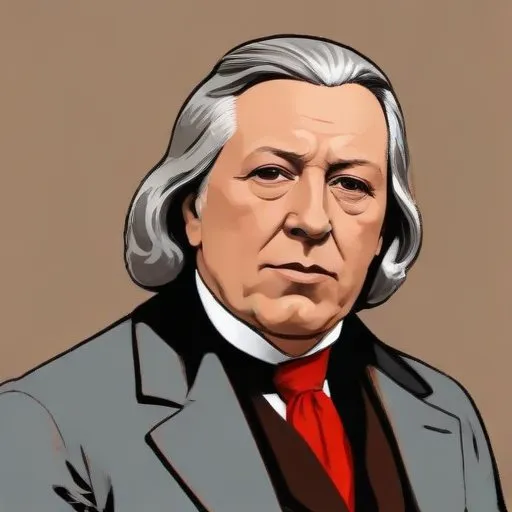
Edward Beecher: The Theologian and Abolitionist
A Champion of Moral Purity and Social Reform
Edward Beecher, born on August 27, 1803, was an American theologian, pastor, and social reformer, renowned for his unwavering commitment to Biblical purity and his relentless crusade against slavery. As the son of Lyman Beecher and brother of
Harriet Beecher Stowe and
Henry Ward Beecher, Edward Beecher's life was marked by a deep-seated passion for moral rectitude and a resolute determination to challenge the status quo.
Early Life and Education
Beecher's intellectual and theological foundation was laid at Yale College, where he graduated in 1822. Subsequently, he pursued advanced theological studies at Andover Theological School, honing his skills as a scholar and theologian.
Pastoral Career and Controversies
In 1826, Beecher assumed the pastorship of Park Street Church in Boston, Massachusetts, where he endeavored to instill a sense of moral accountability among his congregation. His unyielding stance on discipline led to a significant increase in disciplinary actions during his tenure, earning him both admiration and criticism. Beecher's subsequent pastorates at the First Congregational Church of Galesburg, Illinois, and the Parkville church in Brooklyn, New York, were marked by similar controversies and debates.
Abolitionist and Social Reformer
Beecher's commitment to social reform was exemplified by his involvement in the abolitionist movement. As a close friend of Elijah P. Lovejoy, he played a pivotal role in organizing the first antislavery society in Illinois. His wife, Isabella Porter Jones, encouraged her sister-in-law, Harriet Beecher Stowe, to write Uncle Tom's Cabin, a novels that would become a cornerstone of the abolitionist movement.
Literary Contributions
Beecher's literary output was considerable, with numerous publications that reflected his theological and social convictions. Some of his notable works include:
- Addresses on the Kingdom of God (1827)
- Six Sermons on the Nature, Importance, and Means of Eminent Holiness throughout the Church (1835)
- History of the Alton Riots (1837)
- Statement of Anti-Slavery Principles (1837)
- Narrative of Riots at Alton in Connection with the Death of Rev. Elijah P. Lovejoy (1838)
- Baptism, With Reference to its Import and Modes (1849)
- The Conflict of Ages or, The Great Debate on the Moral Relations of God and Man (1853)
- The Papal Conspiracy Exposed, and
Legacy and Impact
Edward Beecher's legacy extends far beyond his own lifetime. As a theologian, pastor, and social reformer, he contributed significantly to the development of American Christian thought and the abolitionist movement. His commitment to moral purity and social justice continues to inspire generations of scholars, theologians, and social reformers.
Philosophical Contributions and Beliefs
Beecher's philosophical contributions were characterized by a deep-seated commitment to the authority of Scripture and the necessity of moral accountability. His theology was marked by a strong emphasis on personal holiness, ecclesiastical purity, and social reform, reflecting his conviction that the Church should be a beacon of moral rectitude in a fallen world.
FAQ
What were the main contributions of Edward Beecher to theology?
Edward Beecher was a prominent American minister and theologian who made significant contributions to the field of theology, particularly in the areas of abolition and social reform. He was a strong advocate for the abolition of slavery and wrote extensively on the subject.
What was Edward Beechers role in the American abolitionist movement?
Edward Beecher played a key role in the American abolitionist movement, using his platform as a minister to speak out against slavery and advocate for its abolition. He was a vocal critic of the Fugitive Slave Act and worked closely with other prominent abolitionists of the time.
How did Edward Beechers theology influence his views on social justice?
Edward Beechers theology was deeply rooted in his belief in the importance of social justice. He believed that Christianity required its adherents to work towards creating a more just and equitable society, and he saw the abolition of slavery as a key step towards achieving this goal.
What were some of Edward Beechers notable writings on theology and social reform?
Edward Beecher wrote extensively on theology and social reform, and his notable works include The God of the Bible Against Slavery and The Conflict of Ages. His writings were widely read and respected, and helped to shape the conversation around abolition and social reform in the United States.
How is Edward Beecher remembered today?
Edward Beecher is remembered today as a pioneering figure in the fight against slavery and for social justice. His commitment to using his platform to speak out against injustice and advocate for the rights of the marginalized continues to inspire people to this day.