


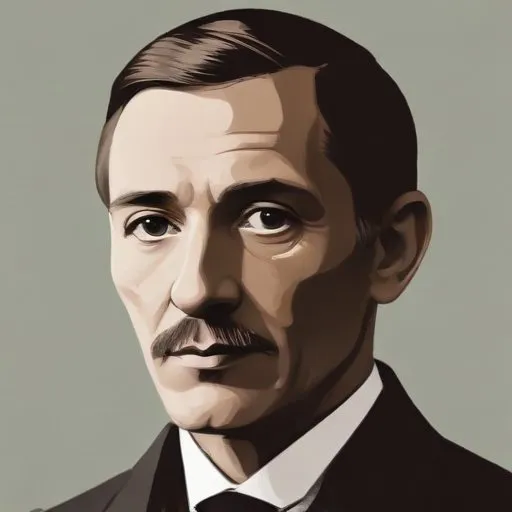
Pioneering anthropologist who defined culture and developed the concept of cultural evolution, shaping modern anthropology.
Edward Burnett Tylor, a renowned English anthropologist, is credited with laying the foundations of social anthropology as a scientific discipline. His groundbreaking works, particularly "Primitive Culture" (1871) and "Anthropology" (1881), have had a profound impact on the field, shaping the way we understand human societies and cultures.
Tylor was born on October 2, 1832, in Camberwell, London, to a wealthy Quaker family. His parents, Joseph Tylor and Harriet Skipper, owned a London brass factory. Tylor's elder brother, Alfred Tylor, became a geologist. He was educated at Grove House School, Tottenham, but due to his Quaker faith and the death of his parents, he left school at the age of 16 without obtaining a degree.
After leaving school, Tylor prepared to help manage the family business. However, he developed tuberculosis at the age of 23, which led him to travel to the Americas in 1855, following medical advice to spend time in warmer climes. This journey proved to be a turning point, sparking his lifelong interest in studying unfamiliar cultures. During his travels, he met Henry Christy, a fellow Quaker and ethnologist, who became a significant influence on his work.
Tylor's ideas are characterized by 19th-century cultural evolutionism. He believed that all societies pass through three basic stages of development: from savagery, through barbarism, to civilization. He also maintained that there is a functional basis for the development of society and religion, which he determined was universal. Tylor's work reintroduced the term "animism," referring to the belief in the individual soul or anima of all things and natural manifestations, which he regarded as the first phase in the development of religions.
Tylor's contributions have had a profound impact on the development of anthropology as a field. He is considered a founding figure of social anthropology, and his scholarly works have helped shape the discipline in the 19th century. His ideas on cultural evolutionism and animism continue to influence anthropological thought to this day.
Tylor's work has inspired numerous anthropologists and researchers, including Bronisław Malinowski, who built upon his ideas on cultural evolutionism. Interestingly, Tylor's fascination with animism has inspired literature and art, with authors such as H.P. Lovecraft drawing upon his ideas in their works.
Tylor was elected as a Fellow of the Royal Society in 1871, recognizing his contributions to the field of anthropology.
Edward Burnett Tylor's life and work have left an indelible mark on the field of anthropology. His pioneering ideas on cultural evolutionism, animism, and the scientific study of anthropology continue to influence researchers and scholars today. As we continue to explore the complexities of human societies and cultures, Tylor's legacy serves as a testament to the power of curiosity and intellectual inquiry.
Born in 1854
This Scottish anthropologist and academic is renowned for his groundbreaking work in comparative mythology and religion, particularly his book "The Golden Bough", which explores the connections between ancient cultures and their mythological stories.
51 Years Old
Founder of Venture for America, a nonprofit promoting entrepreneurship and job creation, and a 2020 presidential candidate who ran on a platform of Universal Basic Income and addressing automation's impact on jobs. Known for his innovative policies and outsider approach to politics.
75 Years Old
A Polish athlete who won Olympic medals in the 400 meters hurdles and 4x400 meters relay at the 1964 Tokyo Olympics, setting multiple national records.
Born in 1908
A founder of modern anthropology, known for structuralism and deciphering the underlying patterns of human culture and society. His work bridges the gap between sociology, psychology, and philosophy.
Born in 1872
A pioneering sociologist and anthropologist who developed the concept of "gift economy" and explored the social significance of exchange and reciprocity in human societies.
