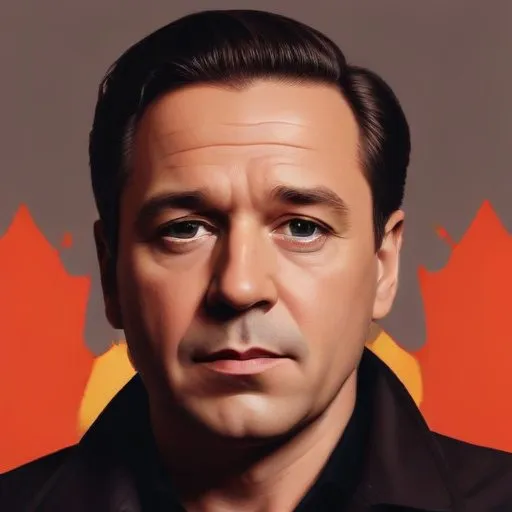
Edward Dmytryk: The Talented but Troubled Film Director
A Master of Film Noir and Controversy
Edward Dmytryk was a Canadian-born American film director and editor, best known for his iconic 1940s noir films and his Oscar nomination for Best Director for
Crossfire (1947). However, his career was also marked by controversy and political turmoil, earning him a spot on the infamous Hollywood Ten list.
Early Life and Career
Born on September 4, 1908, in Grand Forks, British Columbia, Canada, Dmytryk was the son of Ukrainian immigrant parents, Frances Berezowski and Michael Dmytryk. His family moved to San Francisco, California, and later to Los Angeles, where he attended Hollywood High School. Dmytryk's early career in the film industry began as a messenger at Famous Players-Lasky, earning a mere $6 per week. He quickly worked his way up the ranks, becoming a projectionist, film editor, and eventually a director by the age of 31.
Rise to Fame and the Hollywood Ten
Dmytryk's direction of
Crossfire (1947) earned him critical acclaim and an Oscar nomination, solidifying his reputation as a master of film noir. However, his success was short-lived, as he was named as one of the Hollywood Ten, a group of blacklisted film industry professionals who refused to testify to the House Un-American Activities Committee (HUAC) during the McCarthy era. Dmytryk, along with the others, was subsequently blacklisted and served time in prison for contempt of Congress.
The Road to Redemption
In 1951, Dmytryk testified before the HUAC, naming individuals who were suspected of being involved in communist activities, including Arnold Manoff, whose career was subsequently destroyed. This decision sparked controversy and criticism, with many labeling Dmytryk a "friendly witness." However, his testimony allowed him to rehabilitate his career, and he was eventually rehired by independent producer
Stanley Kramer in 1952.
Late Career and Legacy
Dmytryk's most notable film during this period was
The Caine Mutiny (1954), a critical and commercial success that earned him a Directors Guild Award nomination. The film, which starred
Humphrey Bogart, was the second-highest-grossing film of the year and earned several Academy Award nominations. Dmytryk's later career was marked by continued success, with films such as
Rapture (1965) and
The Carpetbaggers (1964). He passed away on July 1, 1999, leaving behind a legacy of iconic films and a complex, troubled history.
Personal Life and Philosophy
Dmytryk's personal life was marked by turmoil and controversy, with his decision to testify before the HUAC sparking criticism and debate. His philosophy on filmmaking was centered around the importance of storytelling and the power of cinema to shape public opinion. He believed that films should be thought-provoking and socially conscious, and his own films often reflected this philosophy.
Impact on Pop Culture
Dmytryk's films have had a lasting impact on popular culture, with
The Caine Mutiny becoming a classic of American cinema. His work has influenced generations of filmmakers, including
Martin Scorsese and
Francis Ford Coppola. His legacy extends beyond his films, with his story serving as a cautionary tale of the dangers of political persecution and the importance of standing by one's convictions.
Trivia and Fun Facts
- Dmytryk was a naturalized citizen of the United States.
- He worked in the editing department on several films, including The Dance of Life (1929) and The Phantom President (1932).
- Dmytryk's father, Michael, was a severe disciplinarian who worked as a truck driver, smelter worker, and motorman.
- He was married twice, first to Madeleine Robinson and then to Mildred Granville.
FAQ
What was Edward Dmytryks most famous film as a director?
Edward Dmytryk was a Canadian-American director and producer, best known for directing the 1944 film noir classic Crossfire, which won several Academy Awards.
What was Edward Dmytryks experience like as a blacklisted director in Hollywood?
Dmytryk was one of the Hollywood Ten, a group of directors and writers who refused to cooperate with the House Un-American Activities Committee (HUAC) during the Red Scare, leading to his blacklisting in the industry.
What was Edward Dmytryks approach to filmmaking?
Dmytryk was known for his visual style and his ability to craft tense, suspenseful scenes, often working in the film noir genre.
What was Edward Dmytryks most notable work in television?
Dmytryk directed several episodes of the popular TV series Alfred Hitchcock Presents and The Twilight Zone.
What was Edward Dmytryks legacy in the film industry?
Dmytryks work as a director and producer has influenced many filmmakers, and his film Crossfire is still studied in film schools today.