


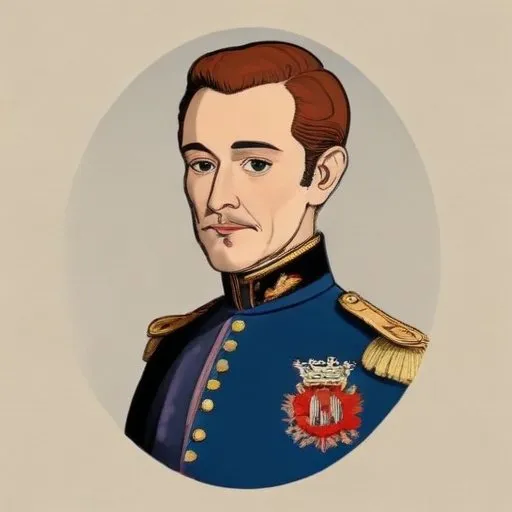
A 17th-century Renaissance man who excelled as a soldier, historian, and diplomat, leaving a lasting legacy in the fields of literature and international relations.
Edward Herbert, 1st Baron Herbert of Cherbury, was a Renaissance man par excellence, leaving an indelible mark on the realms of philosophy, poetry, history, and diplomacy. He is most renowned for his groundbreaking treatise, De Veritate, which positioned him as the father of English Deism, a philosophical movement that emphasized reason and individualism.
Born on March 3, 1583, at Eyton-on-Severn, near Wroxeter, Shropshire, Herbert was the eldest son of Richard Herbert of Montgomery Castle and Magdalen, daughter of Sir Richard Newport. He received private tuition before matriculating at University College, Oxford, as a gentleman commoner in May 1596. At the tender age of 15, he married in 1599.
Herbert's multifaceted career began as a soldier, where he distinguished himself in the Low Countries, serving under the Prince of Orange. He later shifted his focus to diplomacy, playing a crucial role in arranging the marriage between Charles, Prince of Wales, and Henrietta Maria in 1625. His diplomatic efforts were largely centered in Paris, where he honed his skills as a master diplomat.
De Veritate, Herbert's magnum opus, is a seminal work that distinguishes truth from revelation, probability, possibility, and falsehood. This philosophical treatise showcases his commitment to reason, individualism, and the pursuit of knowledge. Additionally, his work De religione gentilium is a pioneering effort in comparative religion, highlighting his intellectual curiosity and eclecticism.
Herbert's poetic endeavors are a testament to his skill as a faithful disciple of John Donne. His autobiography, which covers his life up until 1624, provides a vivid account of his experiences, thoughts, and feelings. This rare glimpse into his personal life humanizes the Baron and offers a unique perspective on his remarkable journey.
Edward Herbert, 1st Baron Herbert of Cherbury, left an indelible mark on the intellectual landscape of his time. His philosophical contributions continue to influence modern thought, and his diplomatic efforts played a significant role in shaping the course of English history. As a Renaissance man, he embodied the spirit of curiosity, intellectual inquiry, and artistic expression.
As we reflect on his remarkable life and legacy, we are reminded of the power of human curiosity, the importance of intellectual pursuits, and the enduring impact of a life well-lived.
Born in 1573
A 17th-century poet and cleric who penned powerful, metaphysical sonnets that explored themes of love, death, and spirituality. His works are celebrated for their complex, intricate language and profound insights into the human experience.
