


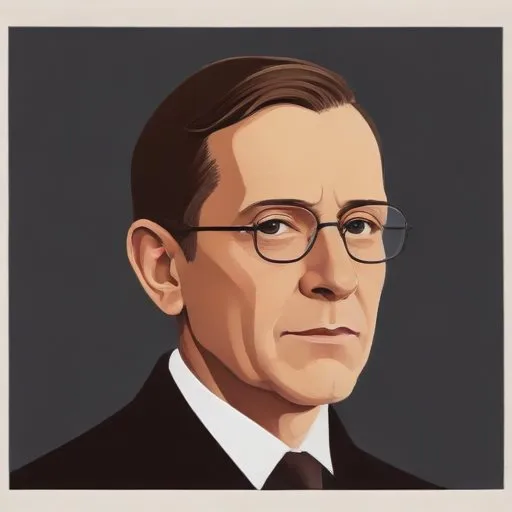
A Quaker minister and folk artist, known for his naive and colorful paintings of animals and landscapes, particularly his iconic "Peaceable Kingdom" series.
Edward Hicks was a celebrated American folk painter and a distinguished religious minister of the Society of Friends, also known as Quakers. He is best known for his iconic paintings, which often featured peaceful landscapes, farm animals, and Quaker themes, showcasing his deep connection with nature and his faith.
Edward Hicks was born on April 4, 1780, at his grandfather's mansion in Attleboro, now Langhorne, Pennsylvania. His parents, Isaac and Elizabeth Hicks, were Anglicans, but after his mother's death when he was just 18 months old, he was raised by Matron Elizabeth Twining, a close family friend and a Quaker, on her farm. This upbringing had a profound impact on Hicks, instilling in him the Quaker values that would shape his life and art.
At the age of 13, Hicks began a seven-year apprenticeship with coach makers William and Henry Tomlinson, where he learned the craft of coach painting. In 1800, he left the Tomlinson firm to work independently as a house and coach painter. During this period, Hicks struggled with his faith and personal life, describing himself as "a weak, wayward young man" who enjoyed "vain amusements" and "profanely swearing." However, he eventually found solace in Quakerism and began attending Quaker meetings regularly.
In 1803, Hicks was accepted as a member of the Society of Friends and soon became a respected Quaker minister. He married Sarah Worstall, a Quaker woman, the same year. To support his growing family, Hicks expanded his trade to painting household objects and farm equipment, which eventually led to his distinctive style of folk art. His paintings often featured serene landscapes, farm animals, and Quaker themes, showcasing his deep connection with nature and his faith.
Hicks' artistic style was characterized by simple, yet vibrant colors and bold compositions. His paintings often featured peaceful landscapes, farm animals, and Quaker themes, which reflected his strong connection with nature and his faith. His use of symbolism and allegory added depth and meaning to his works, making them not only visually striking but also thought-provoking.
Edward Hicks' legacy extends beyond his beautiful paintings to the Quaker community and American folk art as a whole. His unique style and themes have inspired countless artists, and his contributions to the Society of Friends remain a testament to his dedication and faith. Today, Hicks' paintings are highly valued and can be found in prominent museums and collections across the United States.
In conclusion, Edward Hicks was a remarkable individual who left an indelible mark on American folk art and the Quaker community. His beautiful paintings, which continue to inspire and delight audiences today, are a testament to his faith, creativity, and dedication to his craft.
Born in 1743
The principal author of the Declaration of Independence and a strong advocate for individual liberties and limited government, shaping America's foundational principles. He oversaw the Louisiana Purchase, doubling the country's territory.
79 Years Old
A Pulitzer Prize-winning composer, known for blending minimalism with complex rhythms, creating a unique sound that resonates with audiences worldwide.
Born in 1751
The 4th President of the United States, often referred to as the "Father of the Constitution," played a crucial role in drafting the US Constitution and Bill of Rights, shaping the country's government and laws. He was a strong advocate for individual liberties and limited government power.
Born in 1758
The 5th President of the United States was a skilled military leader and statesman who oversaw the acquisition of Florida from Spain and issued the Monroe Doctrine, a policy of opposing European colonization in the Americas. He is also known for being the last of the Founding Fathers to hold the presidency.
Born in 1767
A fiery leader who expanded democracy and shaped the country's economy, known for his populist policies and controversial decisions, including the forced relocation of Native Americans.
