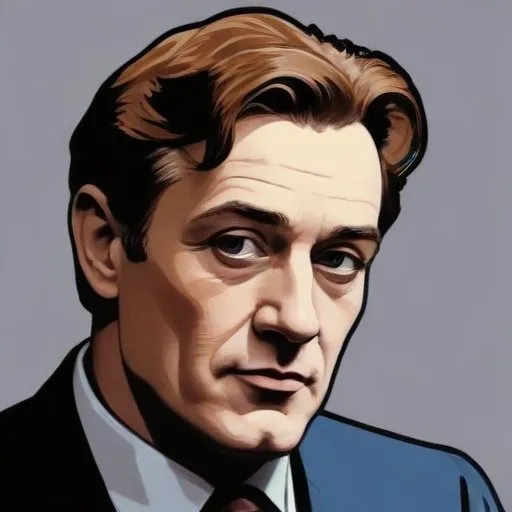
Edward Hodges Baily

Edward Hodges Baily

Edward Hodges Baily was born on March 10th, 1788

Full Name: Edward Hodges Baily
Place of Birth: Bristol, England
Zodiac Sign: Virgo
Profession: Sculptor
Nationality: English
Born: August 10, 1788
Died: May 22, 1867
Known For: Nelsons column

A renowned British sculptor celebrated for creating iconic works, including the iconic Nelson's Column statue in London's Trafalgar Square.

Written by: Aisha Patel Aisha Patel

Edward Hodges Baily: The Master Sculptor Behind British Monuments

Edward Hodges Baily, a prolific British sculptor, left an indelible mark on the world of art and architecture with his stunning creations that adorn the streets and landmarks of Britain. From the iconic statue of Horatio Nelson atop Nelson's Column to the majestic friezes at Buckingham Palace, Baily's works are a testament to his exceptional skill and creativity.

Early Life and Influences

Born on March 10, 1788, in Downend, Bristol, Baily was the son of Martha Hodges and William Hillier Baily, a woodcutter who specialized in carving ships' figureheads. Growing up, Baily was fascinated by his father's craft and developed a passion for modeling and carving. At the age of 14, he began working as an accounts clerk, but his artistic inclinations soon led him to pursue a career in sculpture.

The Apprenticeship and Early Success

In 1807, Baily's talent caught the attention of renowned sculptor John Flaxman, who took him under his wing as a pupil in his London studio. Under Flaxman's mentorship, Baily honed his skills and soon began to make a name for himself. He won the silver medal of the Society of Arts in 1808 for a plaster figure of Laocoön and later entered the Royal Academy Schools, where he won several awards, including the gold medal in 1811 for his model of Hercules restoring Alcestis to Admetus.

A Legacy of Public Monuments and Memorials

Baily's most notable works include the majestic statue of Horatio Nelson on top of Nelson's Column in Trafalgar Square, and the imposing statue of Charles Grey, 2nd Earl Grey, on Grey's Monument in Newcastle upon Tyne. He also carved intricate friezes for both the Marble Arch and Buckingham Palace in London, solidifying his reputation as a master sculptor.

Works in Silver and Gold

In addition to his monumental works, Baily was also a skilled silversmith and goldsmith. He worked as the Chief Modeller for Rundell, Bridge and Rundell, goldsmiths to the royal family, from 1816 to 1846. During this period, he created exquisite designs for the Doncaster Cup trophy in 1843 and the Ascot Gold Cup in 1844, showcasing his exceptional skill in metalwork.

Legacy and Influence

Throughout his illustrious career, Baily created numerous monuments and memorials for British churches and cathedrals, including several in St. Paul's Cathedral. His works continue to inspire awe and admiration, serving as a testament to his enduring legacy as one of Britain's most celebrated sculptors.

Personal Milestones and Key Life Events

Edward Hodges Baily's remarkable life and career serve as a testament to his boundless creativity, dedication to his craft, and enduring legacy as one of Britain's most celebrated sculptors.

Timeline
1788
Birth in Bristol
Edward Hodges Baily was born in Bristol, England, to a family of artists. He would go on to become a prominent sculptor.
1808
Studies in Royal Academy
Baily enrolled in the Royal Academy, where he studied sculpture under the tutelage of John Flaxman.
1819
Exhibited at Royal Academy
Baily exhibited his sculptures at the Royal Academy, where he received critical acclaim and won several awards.
1826
Commissioned by Royal Family
Baily was commissioned by the Royal Family to create several sculptures, including a portrait of King George IV.
1860
Death in London
Edward Hodges Baily passed away in London, leaving behind a legacy of beautiful and intricate sculptures.
Edward Hodges Baily

Edward Hodges Baily Quiz

What is Edward Hodges Baily most famous for creating in London's Trafalgar Square?

Score: 0/5
FAQ
What style of sculpture did Edward Hodges Baily specialize in?
Edward Hodges Baily specialized in neoclassical sculpture, which emphasized simplicity, proportion, and classical forms. He was particularly known for his busts and statues of prominent figures, as well as his decorative sculptures.
What was Edward Hodges Bailys most famous work?
Edward Hodges Bailys most famous work is his statue of Nelson in Trafalgar Square, which is considered one of the greatest works of British sculpture.
Who influenced Edward Hodges Bailys artistic style?
Edward Hodges Baily was influenced by the works of Antonio Canova, the leading neoclassical sculptor of the time. He was also influenced by the art of antiquity, particularly Greek and Roman sculpture, which he studied during his time in Rome.
What awards did Edward Hodges Baily win for his sculpture?
Edward Hodges Baily won several awards for his sculpture, including the gold medal at the Royal Academy in 1817 for his bust of Lord Byron.
What is Edward Hodges Bailys legacy in British art?
Edward Hodges Bailys legacy in British art is significant, with his sculptures continuing to be admired and studied today. He is remembered as one of the leading sculptors of the early 19th century, and his works are considered some of the finest examples of British art of the period.